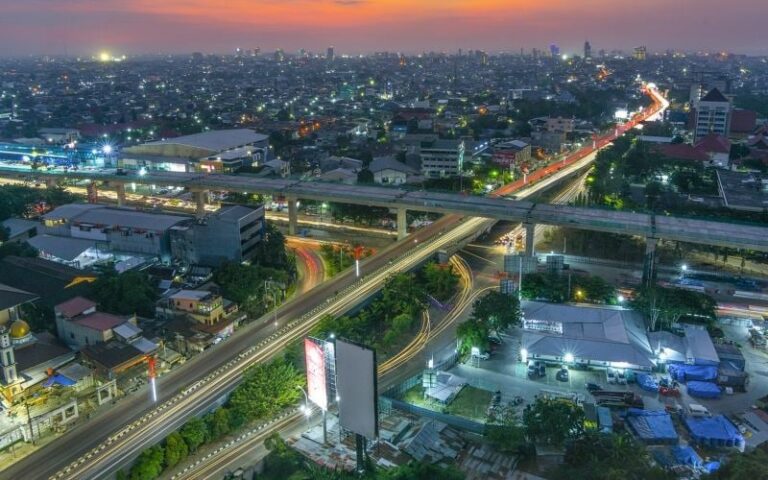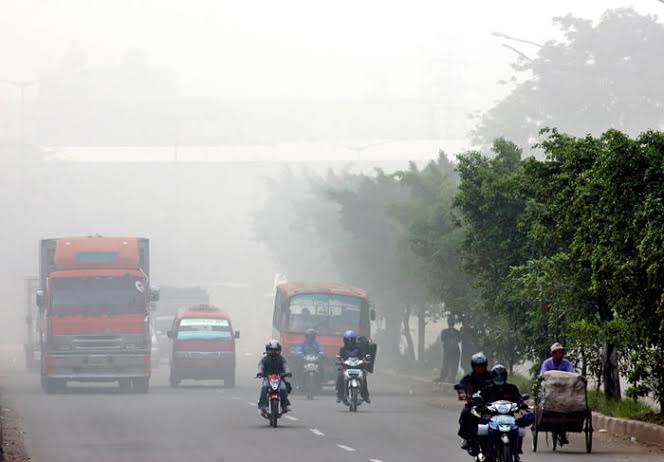

Every day, thousands of people travel across Makassar City to work, study, or meet their daily needs. While these journeys keep the city alive, they also create an invisible problem that many people overlook air pollution. Exhaust fumes from motorized vehicles release harmful pollutants into the atmosphere, affecting not only the environment but also human health. A recent scientific study conducted on ten collector roads in Makassar City revealed that motorized vehicles produce significant amounts of four major air pollutants: nitrogen oxides (NOx), sulfur dioxide (SO₂), particulate matter (PM10), and carbon monoxide (CO). These pollutants are well known for their negative effects on respiratory and cardiovascular health, especially among children, older adults, and individuals with existing health conditions.
Data collection was conducted on 10 collector roads in Makassar City, selected based on Makassar City Regional Regulation No. 4 of 2015. Sampling points were located at the middle of each road section to minimize the influence of turns and intersections on vehicle volume.
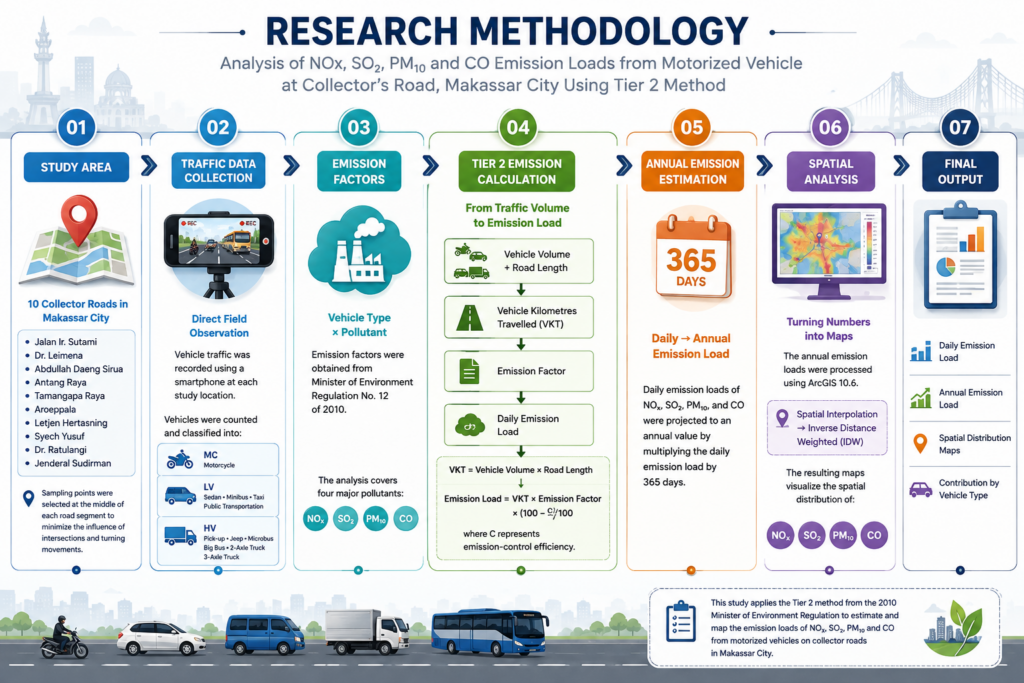
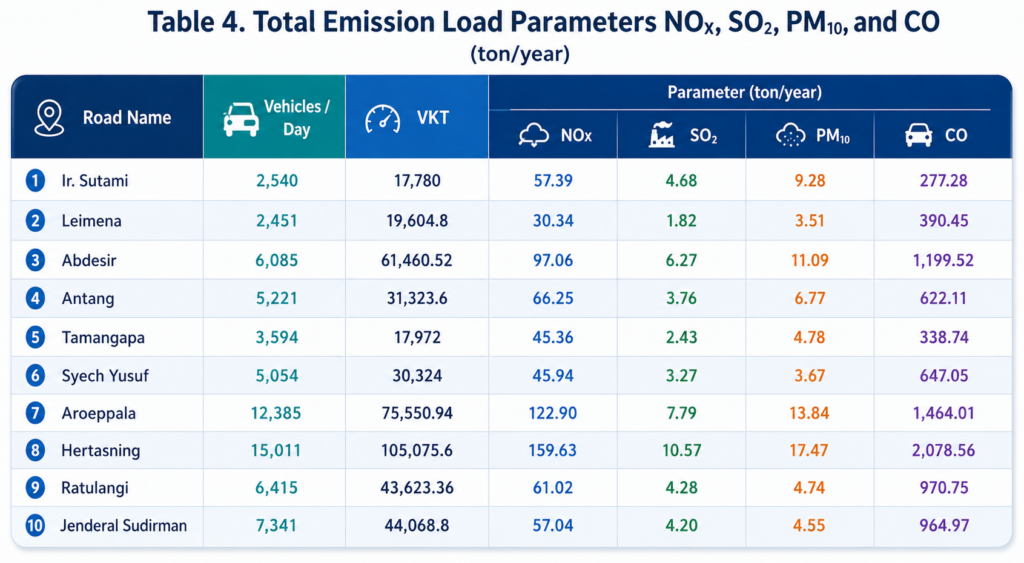
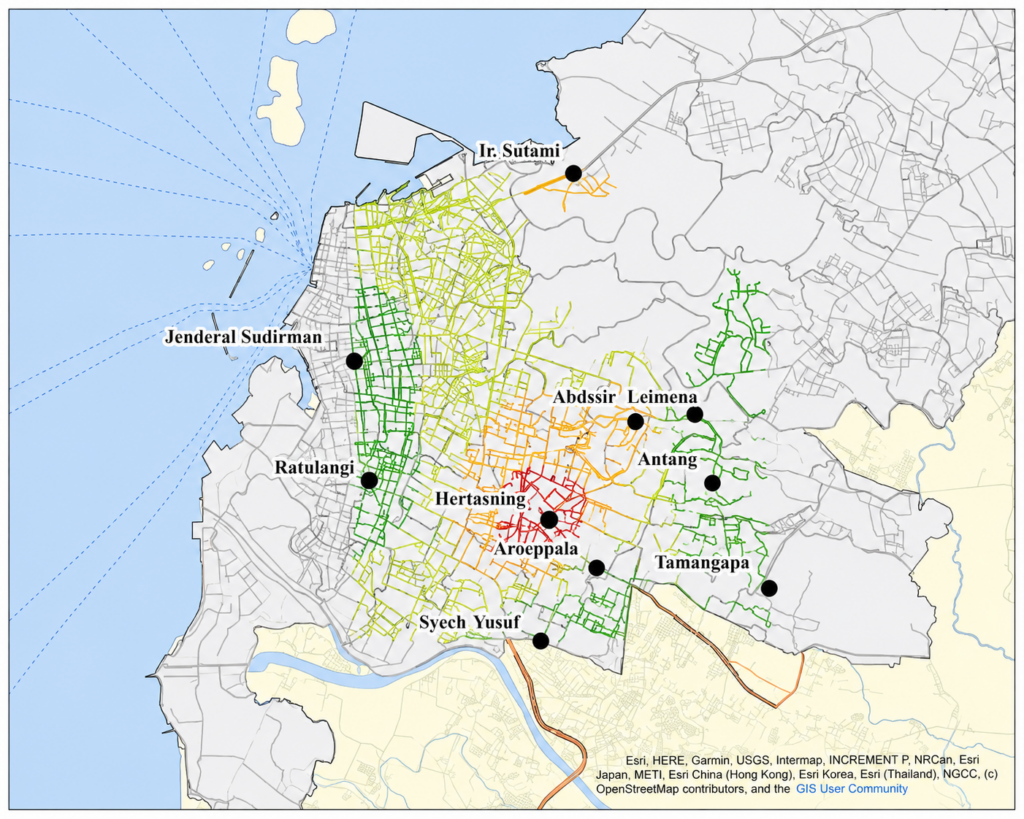
Using the internationally recognized Tier 2 emission calculation method, researchers analyzed traffic conditions on major collector roads throughout Makassar. The study found that Letjen Hertasning Road generated the highest emission loads because it carries an exceptionally large number of vehicles every day. Among all pollutants, carbon monoxide (CO) was identified as the dominant emission, reaching more than 104,000 tons per year on this road alone.One important finding is that traffic congestion directly increases emission loads. The longer vehicles remain on the road, the more fuel they consume and the more pollutants they release into the air. Light vehicles, particularly minibuses, were identified as major contributors to CO emissions because of both their high numbers and relatively large emission factors.
This issue is more than an environmental concern it is also a public health challenge. Long-term exposure to polluted air may increase the risk of asthma, lung diseases, heart problems, and other chronic illnesses. Poor air quality can also reduce people’s quality of life, increase healthcare costs, and affect economic productivity. As cities continue to grow, managing transportation-related emissions becomes increasingly important.
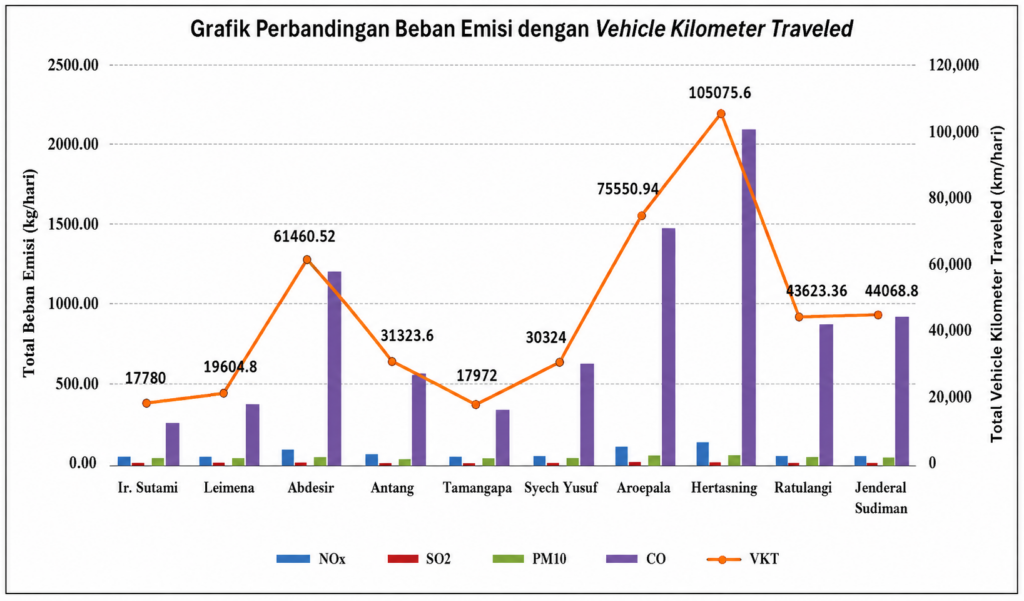
CO was the highest emission parameter, reaching 2,078.56 kg/day on Letjen Hertasning Road, consistent with the highest VKT of 105,075.6 km/day. Meanwhile, SO₂ was the lowest emission parameter, with the lowest value of 1.82 kg/day recorded on Dr. Leimena Road.
This research strongly supports Sustainable Development Goal (SDG) 3: Good Health and Well-being. SDG 3 emphasizes the importance of reducing illnesses caused by hazardous air pollution and creating healthier living environments for everyone. Cleaner transportation systems, better traffic management, stricter vehicle emission standards, and greater use of public transportation can significantly improve urban air quality while protecting community health. Scientific studies like this provide valuable evidence for policymakers. By identifying emission hotspots and quantifying pollution levels, local governments can prioritize mitigation efforts where they are needed most. At the same time, every citizen can contribute by maintaining their vehicles, reducing unnecessary trips, carpooling, cycling, or choosing public transportation whenever possible.
Cleaner air is not achieved overnight, but every decision from government policies to individual travel choices can make a meaningful difference. Building healthier cities begins with understanding the invisible impact of vehicle emissions and taking collective action to reduce them for future generations.