


ROADMAP
Research Sub-Theme
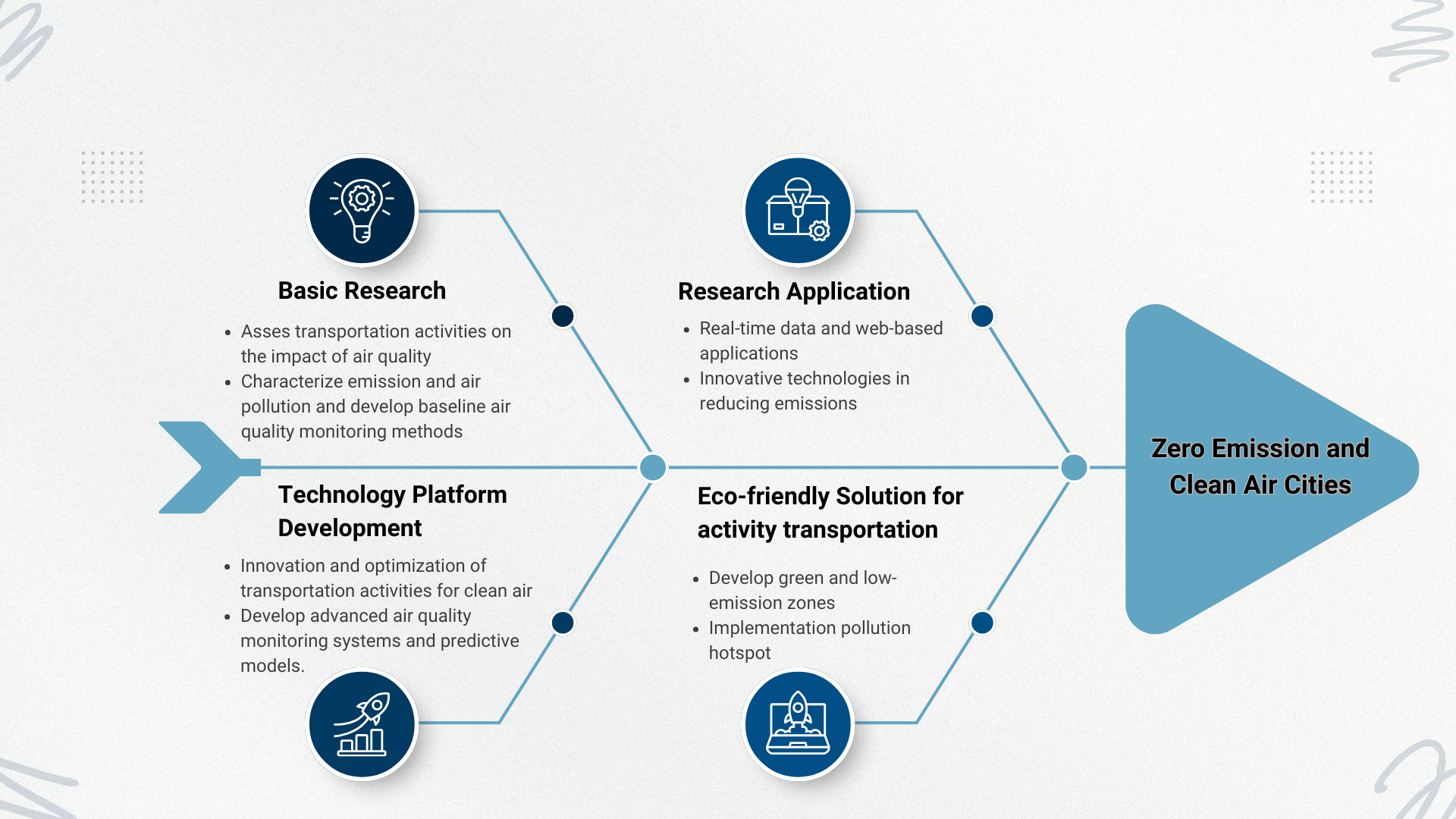
Impact of Transportation as a Source of Air Pollution
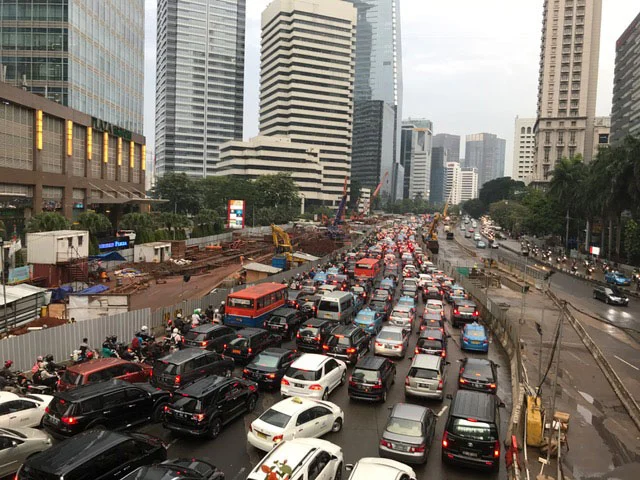
Transportation plays a significant role in contributing to air pollution, especially in urban areas where vehicle density is high. The majority of motor vehicles rely on fossil fuels such as gasoline and diesel, which, when burned, release a variety of harmful pollutants into the atmosphere. These include carbon monoxide (CO), nitrogen oxides (NOₓ), sulfur dioxide (SO₂), volatile organic compounds (VOCs), and fine particulate matter (PM₂.₅ and PM₁₀). The accumulation of these pollutants not only degrades air quality but also poses serious health risks. Prolonged exposure can lead to respiratory illnesses, cardiovascular diseases, and even premature death, particularly among vulnerable groups such as children, the elderly, and people with preexisting health conditions.
Beyond health, transportation-related emissions contribute significantly to environmental issues such as acid rain and global warming due to the release of greenhouse gases like carbon dioxide (CO₂). These effects collectively worsen urban living conditions, reduce overall life expectancy, and increase public health costs. In response, many cities around the world are promoting sustainable transportation solutions, such as expanding public transit systems, encouraging the use of electric vehicles, implementing stricter emission standards, and supporting active mobility like walking and cycling. Addressing transportation as a major source of air pollution is essential for building healthier, more livable cities and mitigating the broader impacts of climate change.
Innovative Solutions for Reducing Vehicle Emissions
Innovative solutions for reducing vehicle emissions are essential to address the growing environmental and health challenges caused by air pollution, especially in urban areas. One of the most promising approaches is the transition to electric vehicles (EVs), which produce zero tailpipe emissions and significantly reduce greenhouse gas output when powered by renewable energy sources. In addition, the development of hybrid vehicles, which combine traditional fuel engines with electric power, offers a transitional step toward full electrification. Improvements in fuel efficiency through advanced engine technologies, lightweight materials, and aerodynamic designs also contribute to emission reductions.
Beyond vehicle design, smart transportation systems and digital technologies play a crucial role. Traffic management tools, such as synchronized traffic lights and real-time navigation apps, help reduce congestion and idling time, leading to lower emissions. Urban planning initiatives that prioritize public transportation, cycling, and walking along with car sharing and ride sharing platforms encourage people to move away from private car dependency. Moreover, implementing stricter emission standards, conducting regular vehicle inspections, and incentivizing the use of clean energy vehicles are key regulatory steps governments can take. Altogether, these innovative strategies represent a multifaceted approach to reducing vehicle emissions and moving toward cleaner, healthier, and more sustainable cities.
Sustainable Transportation
Sustainable transportation is a transportation system designed to meet current human mobility needs without compromising the ability of future generations to meet their own needs. This concept emphasizes the importance of energy efficiency, reducing greenhouse gas emissions and air pollutants, and minimizing negative impacts on the environment and public health.
Sustainable transportation encompasses various types of environmentally friendly modes of transport, such as efficient public transport, electric vehicles, cycling, and walking. Additionally, this concept also involves smart and integrated urban planning, which supports reducing the use of private vehicles and encourages more energy-efficient and low-emission travel patterns.
The main goal of sustainable transportation is to create a mobility system that is safe, affordable, inclusive, efficient, and environmentally friendly, thereby supporting the quality of life for communities, reducing congestion, and preserving the environment and natural resources in the long term.
Air Pollution and Microplastics in Urban Environments
Air pollution and microplastics are two interconnected forms of environmental pollution that are becoming a major concern in urban areas. Air pollution in major cities generally comes from motor vehicle emissions, industry, waste burning, and construction activities. Pollutants such as fine particulate matter (PM₂.₅ and PM₁₀), carbon monoxide (CO), nitrogen oxides (NOₓ), and volatile organic compounds (VOCs) can harm human health, causing respiratory problems, heart disease, and even cancer.
Meanwhile, microplastics, plastic particles smaller than 5 mm, are increasingly found not only in soil and water, but also in urban air. Microplastics can originate from vehicle tire abrasion, synthetic clothing fibers, industrial waste, and even degraded plastic litter. These particles can be inhaled by humans, enter the lungs, and potentially cause long-term health problems. Recent research also shows that microplastics can attach to other airborne particles like PM₂.₅, increasing health risks from combined exposure.
The densely populated urban environment and high economic activity make both types of pollution increasingly complex and difficult to control. Therefore, an integrated approach is needed in managing air quality and plastic waste, including reducing vehicle emissions, improving waste management, and raising public awareness of the impact of pollution on health and the environment. This effort is important for realizing a healthier, safer, and more sustainable city.
Remote Sensing for Air Quality and Prediction Models
Remote sensing is a technology for monitoring the Earth’s surface from a distance using satellite or drone sensors, which is now increasingly developing as an important tool for monitoring air quality. This technology allows for the collection of spatial and temporal data widely and consistently, which is very useful for monitoring the concentration of air pollutants such as PM₂.₅, PM₁₀, NO₂, SO₂, CO, and ozone in the atmosphere, especially in areas that are difficult to reach by ground monitoring stations.
By using satellite imagery such as Sentinel-5P, MODIS, Landsat, and Sentinel-2, researchers can identify pollution distribution, seasonal trends, and the impact of human activities like transportation and industry on air quality. This data is then combined with statistical or machine learning-based prediction models to project future air quality conditions, map high-risk areas, and provide early warnings for extreme pollution events.
The use of remote sensing in air quality prediction systems also enables data-driven decision-making by governments, such as in determining transportation policies, restricting industrial activities, or managing forest fires. By integrating satellite data, surface sensors, and mathematical modeling, this approach provides effective, efficient, and scalable solutions for public health and sustainable development. the use of remote sensing for air quality monitoring and predictive model development makes a significant contribution to understanding the dynamics of air pollution and supporting more accurate and real-time environmental and health risk mitigation.
Air Quality Monitoring Systems
Air quality monitoring systems are divided into two main types:
Fixed Monitoring Stations – typically managed by governments or environmental agencies, equipped with highly accurate but expensive instruments and covering a limited area.
Portable or IoT-based Air Sensors – are cheaper, more flexible, and can be installed at many points, including by individuals or communities, although their accuracy level is lower compared to fixed stations.
Data from this monitoring system can be displayed through an application or digital dashboard, showing the Air Pollution Standard Index (ISPU) or Air Quality Index (AQI), which helps the public understand the daily air quality around them, as well as the self-protection measures that need to be taken when the air is in dangerous condition.
With the advancement of technology, air quality monitoring systems can now also be integrated with remote sensing, artificial intelligence (AI), and big data analytics to produce more intelligent and predictive analyses. Overall, this system plays a crucial role in air pollution control, environmental policy development, and public health protection in the current era of urbanization and climate change.