
Every traffic jam tells a story. While most people see long queues of motorcycles and cars as nothing more than a daily inconvenience, scientists see something else an opportunity to understand how transportation shapes the quality of the air we breathe. Hidden within every passing vehicle are tiny particles known as PM₁₀, pollutants so small that they can remain suspended in the atmosphere for hours, silently affecting both the environment and urban life.
As cities continue to expand, managing air pollution has become one of the greatest challenges for sustainable development. Makassar, one of Indonesia’s fastest-growing metropolitan areas, experiences rapid urbanization, increasing vehicle ownership, and continuously rising traffic density. These developments improve mobility and economic activity, but they also generate growing amounts of airborne particulate matter. The challenge is no longer simply measuring pollution it is understanding why pollution occurs, where it accumulates, and how cities can respond effectively.
To answer these questions, researchers conducted an extensive study across 16 road sections representing two different types of urban roads.
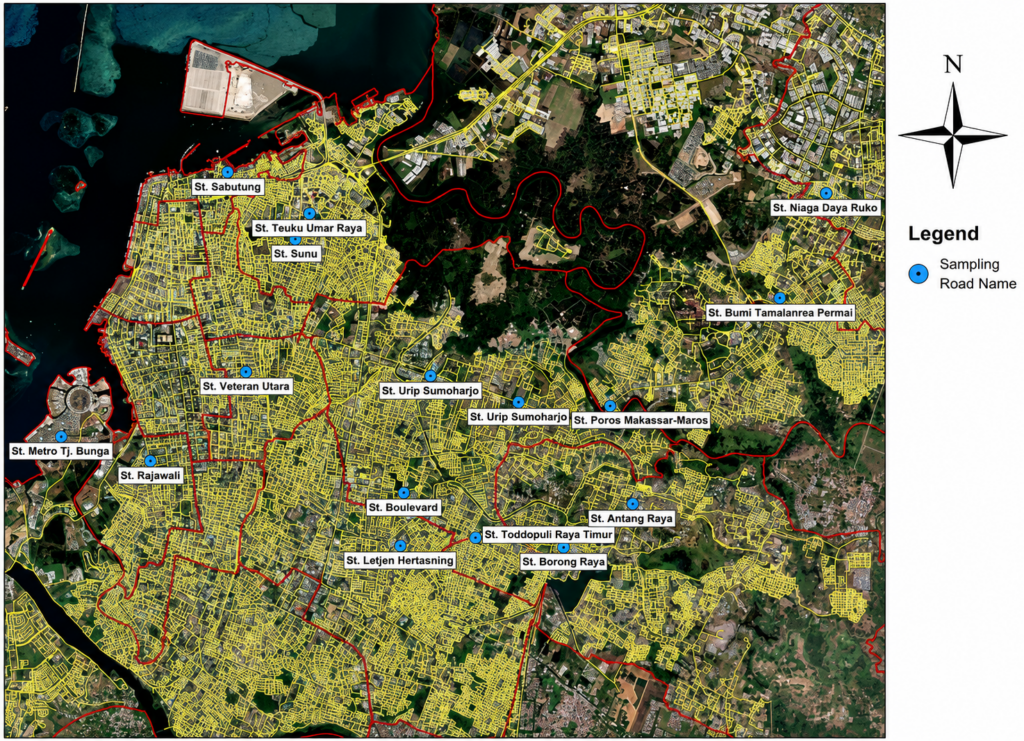
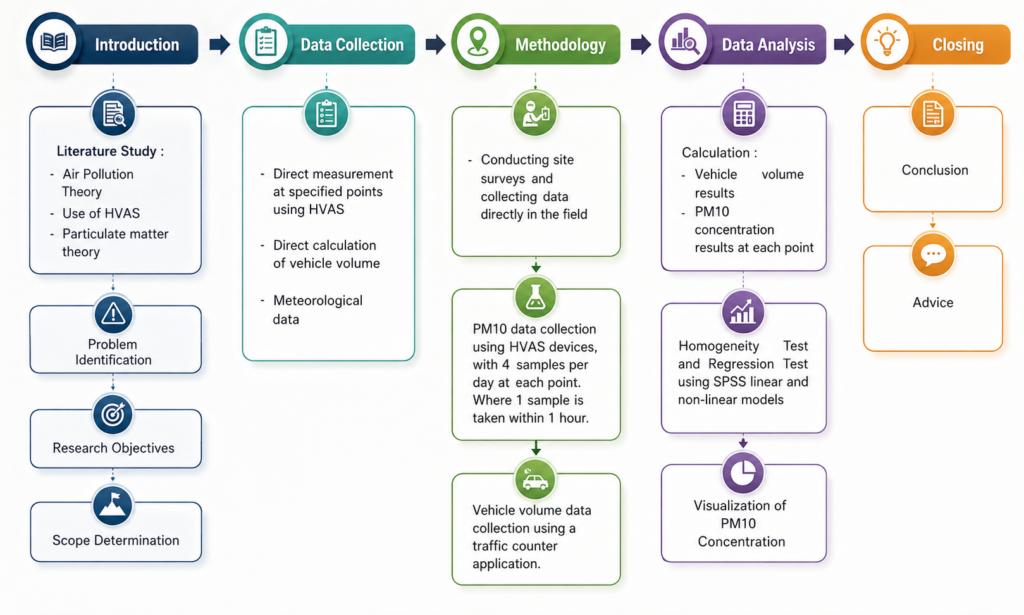
Instead of relying solely on traffic counts, they measured PM₁₀ concentrations using a High Volume Air Sampler (HVAS) while simultaneously recording vehicle volumes at four different observation periods. The collected data were then analyzed using both linear regression and polynomial regression models to determine how strongly vehicle volume influences particulate pollution.
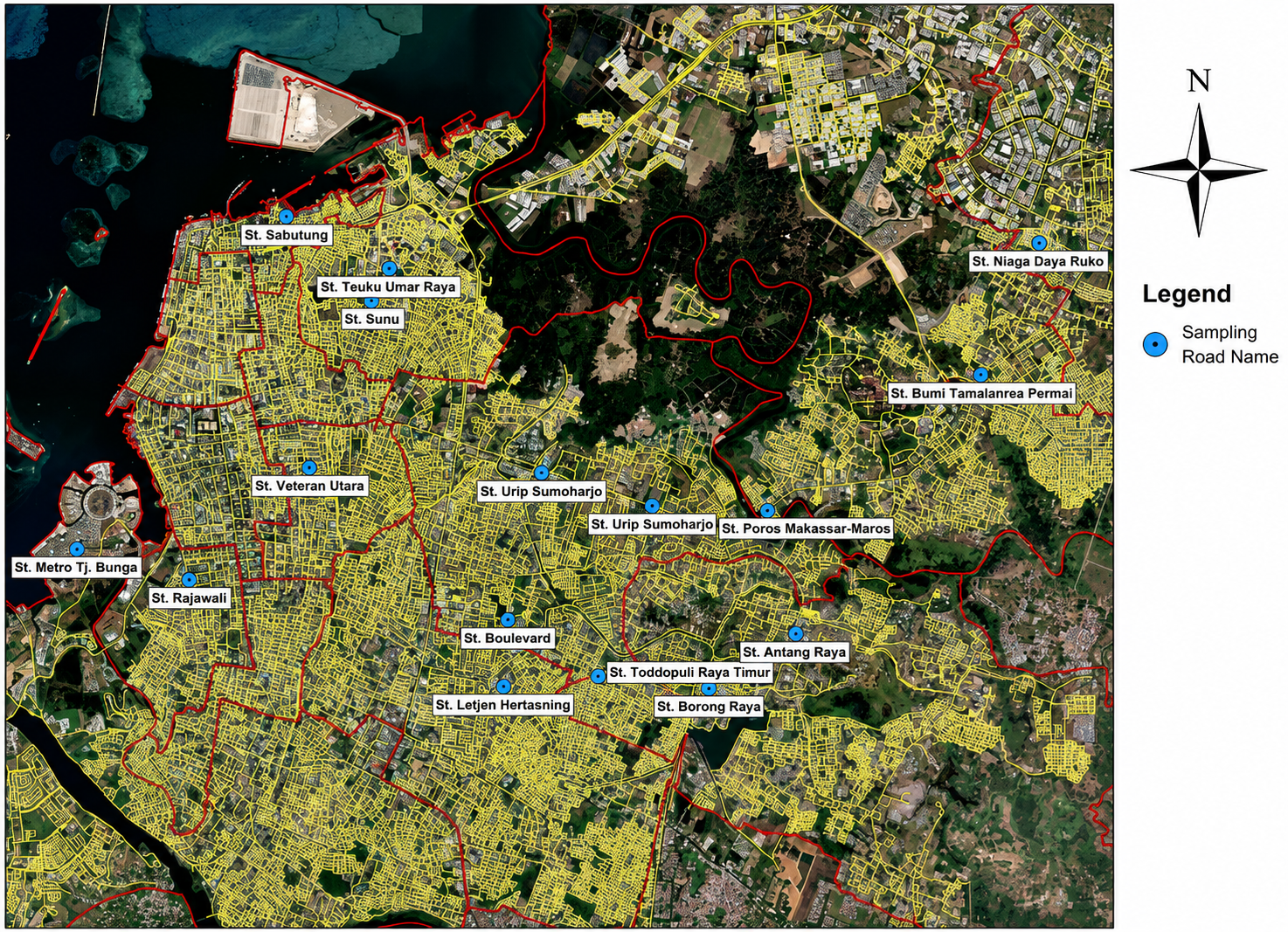
After obtaining the results of the relationship between PM10 concentration and vehicle, volume, to see more clearly the distribution of PM10 concentration, a map visualizing PM10, concentration was created at 8 points on 6/2 D type roads and 2/2 UD type roads to see the. comparison of PM10 concentration distribution on different roads. A clearer description of he research design can be seen.
The results revealed an important lesson: urban air pollution is far more complex than simply counting vehicles. Every observation point exceeded Indonesia’s ambient air quality standard for PM₁₀, indicating that particulate pollution has become a widespread concern throughout Makassar. However, vehicle volume alone explained only a portion of the pollution levels. While the linear regression model showed a moderate relationship, the polynomial regression model demonstrated a substantially stronger predictive capability, suggesting that additional factors such as vehicle speed, road characteristics, weather conditions, and wind patterns also play critical roles in determining air quality.
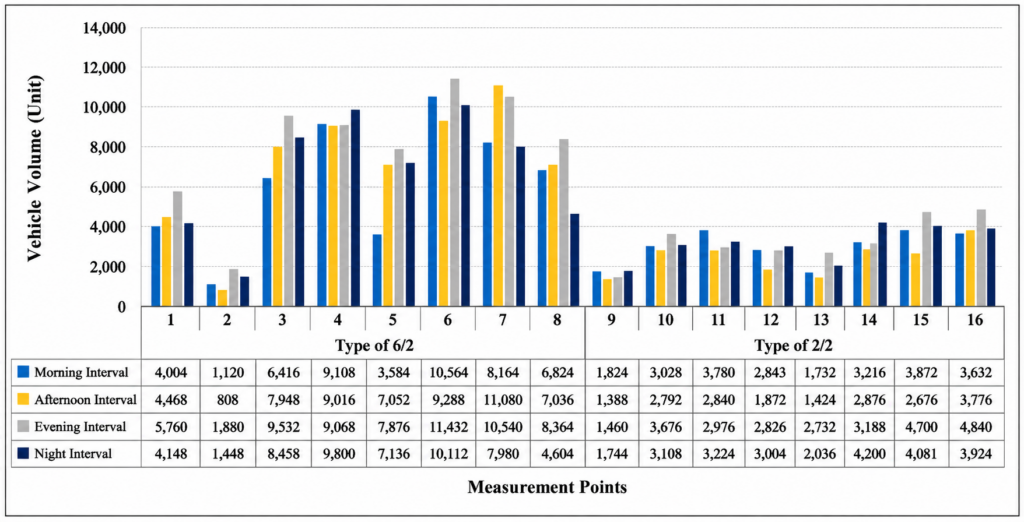
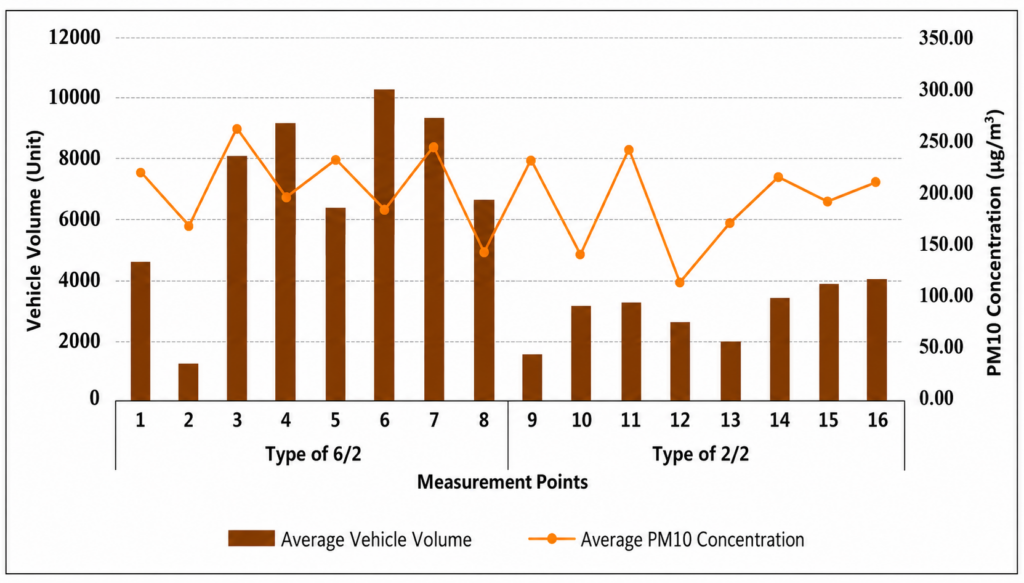
The highest vehicle volume on the 6/2D road section was recorded at Point 6 on Jalan Urip Sumoharjo, with 41,396 vehicles, while the lowest was at Point 2 on Jalan Metro Tanjung Bunga, with 5,256 vehicles. On the 2/2UD road section, the highest volume occurred at Point 16 on Jalan Ujung Bori (16,172 vehicles), while the lowest was at Point 9 on Jalan Sabutung (6,416 vehicles). Overall, vehicle volumes were lower on 2/2UD roads due to their smaller capacity. Motorcycles dominated traffic composition (71.42–82.54%), followed by light vehicles (15.75–27.17%) and heavy vehicles (1.42–1.71%).
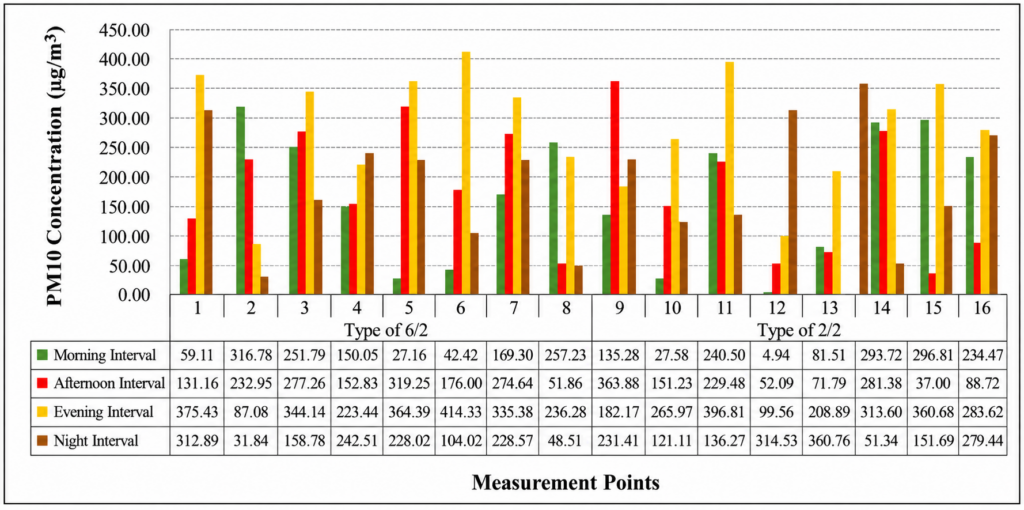
The highest PM10 concentration was recorded at point 3 on Jalan Poros Makassar-Maros (257.99 µg/m³), while the lowest was at point 8 on Jalan Letjen Hertasning (148.47 µg/m³). On the 2/2 UD road section, the highest concentration was at point 11 on Jalan Teuku Umar Raya (250.77 µg/m³), and the lowest at point 12 on Jalan Rajawali (117.78 µg/m³). Overall, both road sections showed high PM10 levels, influenced by traffic density, low vehicle speeds, and environmental factors, potentially affecting air quality and public health.
This finding changes the way we should think about environmental management. Urban pollution cannot be solved through isolated actions or assumptions. Instead, effective solutions require accurate data, reliable scientific methods, and cooperation among multiple stakeholders. Researchers provide scientific evidence, transportation authorities contribute traffic information, environmental agencies conduct monitoring, and local governments transform research findings into practical public policies. Each institution holds a different piece of the puzzle, but only by working together can they create effective and sustainable solutions.
This collaborative approach reflects the essence of Sustainable Development Goal (SDG) 17: Partnerships for the Goals. The study demonstrates that environmental sustainability depends not only on technological innovation but also on partnerships that connect scientific research, environmental monitoring, public institutions, and policymakers. By integrating field measurements, statistical analysis, and transportation data, the research provides an evidence-based foundation for improving urban planning, designing cleaner transportation systems, and strengthening air quality management. These partnerships ensure that scientific discoveries extend beyond academic publications and become practical tools for building more resilient cities.
Ultimately, cleaner cities are not created simply by reducing the number of vehicles on the road. They are built through better understanding, stronger collaboration, and smarter decisions. Every traffic survey, every air quality measurement, and every statistical model contributes to a shared vision where science guides policy, partnerships drive innovation, and sustainable urban development becomes an achievable reality rather than an ambitious aspiration.