
More..
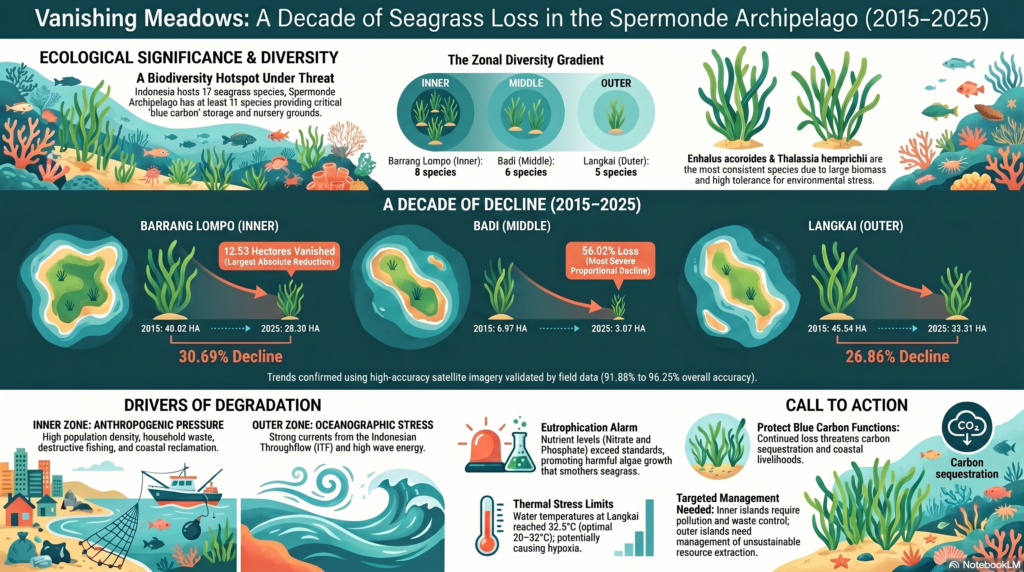
An innovative remote sensing study published in the journal Biodiversitas in February 2026 highlights a quiet environmental crisis unfolding beneath the waves of the Spermonde Archipelago, Indonesia. By pairing historical fieldwork with high-resolution Sentinel-2 satellite data from 2015 to 2025, scientists mapped the rapid decadal decline of vital, blue-carbon-storing seagrass meadows across three distinct island zones. The findings are a stark wake-up call: over just ten years, seagrass coverage plummeted by 30.69% on Barrang Lompo, a staggering 56.02% on Badi Island, and 26.86% on remote Langkai Island. While human activities like destructive fishing and sewage pollution choke out the inner-zone meadows, natural ocean currents drive losses on outer islands. Directly supporting Sustainable Development Goal 14 (Life Below Water), this critical research emphasizes that protecting our oceans requires zone-specific, satellite-informed conservation strategies rather than a one-size-fits-all approach.
More..
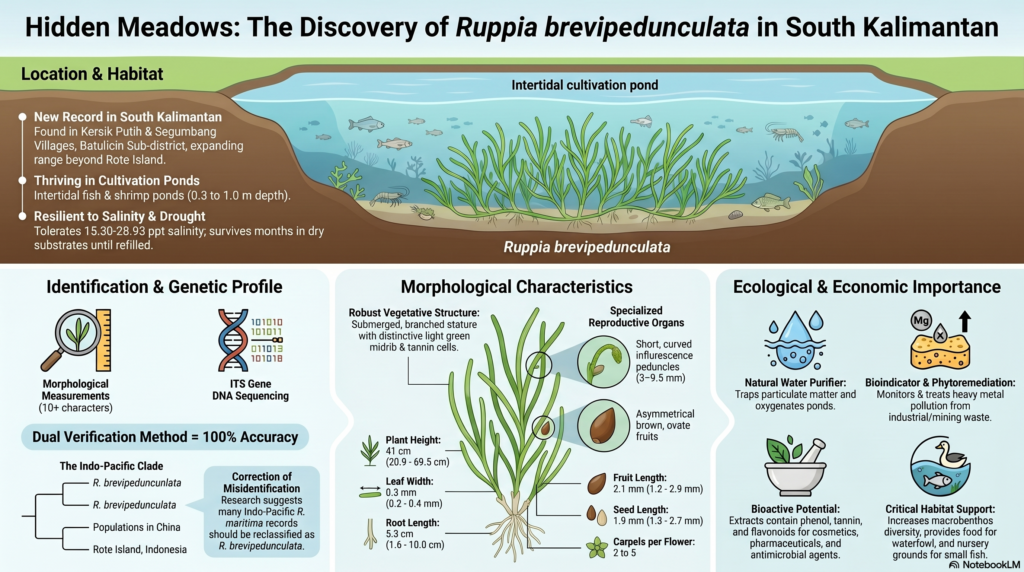
A fascinating genetic detective story published in the journal Biodiversitas in May 2025 has unmasked a hidden ecological champion in the coastal aquaculture ponds of South Kalimantan, Indonesia. Utilizing high-tech DNA sequencing alongside detailed morphological analysis, scientists identified the unexpected presence of the seagrass species Ruppia brevipedunculata—a plant long misidentified as its common cousin, Ruppia maritima. This resilient species serves as an absolute powerhouse for coastal ecosystems by filtering agricultural wastewater, absorbing heavy metal pollution, and providing shelter for marine invertebrates and fish. Remarkably, its seeds can survive five months of severe drought in parched mud, rapidly regenerating when rains return. Directly supporting Sustainable Development Goal 14 (Life Below Water), this key discovery highlights that human-altered landscapes can serve as critical conservation sanctuaries, paving the way for smarter coastal management and biodiversity preservation.
More..
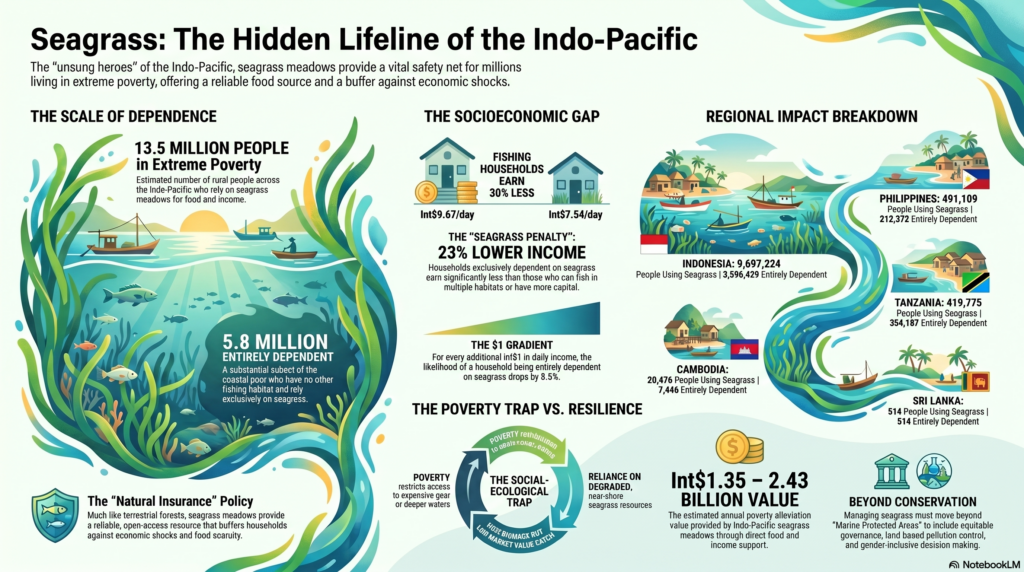
A groundbreaking study titled "Tropical seagrass meadows buffer coastal poverty," published by Elsevier in the journal Estuarine, Coastal and Shelf Science in 2026, reveals the complex connection between marine ecosystems and absolute deprivation. Analyzing 1,705 households across 156 coastal communities in the Indo-Pacific, researchers uncovered that tropical seagrass meadows function as a vital, open-access "natural insurance" for marginalized fishing families during economic hardships. However, a stark socioeconomic paradox exists: households exclusively reliant on nearshore seagrass fisheries earn roughly 23% less than those with alternative fishing grounds, creating a persistent social-ecological trap. Across the region, each additional international dollar gained in daily household income drops exclusive seagrass dependence by 5.5%. Directly advancing Sustainable Development Goal 1 (No Poverty), these critical insights demonstrate that incorporating vulnerable seagrass ecosystems into international policy and aid frameworks is essential to alleviate coastal hardship and secure equitable futures.
More..
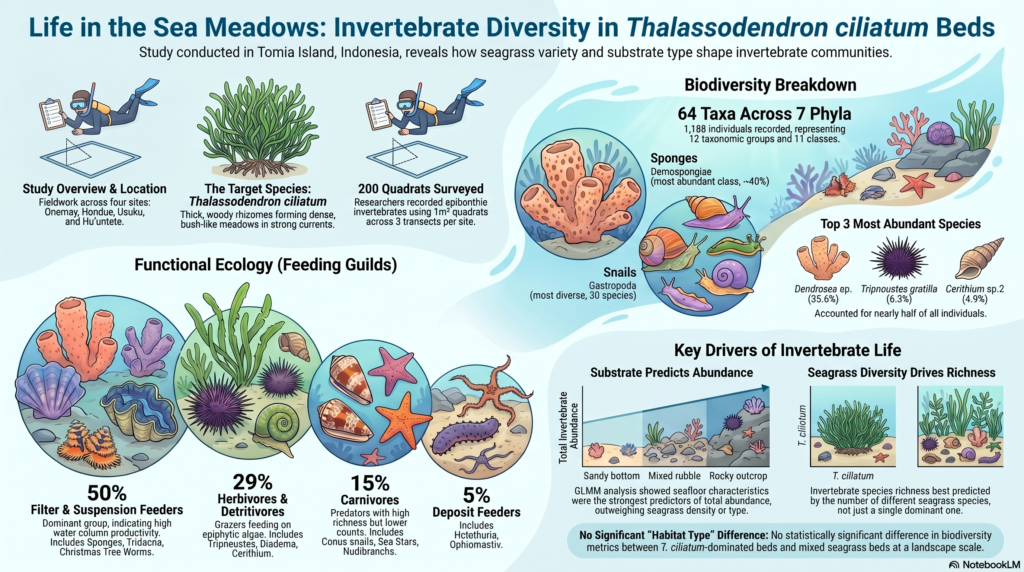
Seagrass meadows are the bustling underwater jungles of our oceans, providing critical homes for countless marine creatures. A fascinating 2026 study conducted around Tomia Island in Wakatobi National Park explored how a unique, woody seagrass species, Thalassodendron ciliatum, shapes local animal communities. By surveying 200 underwater plots, researchers discovered a vibrant world of 64 invertebrate species, including sea urchins, crabs, and sponges. Surprisingly, dense Thalassodendron patches didn’t support more wildlife than ordinary mixed seagrass beds. Instead, overall seagrass variety and the seafloor substrate type proved to be the true drivers of animal abundance. Directly supporting Sustainable Development Goal 14 (Life Below Water), these findings reveal that ocean conservation requires protecting entire, diverse coastal ecosystems rather than focusing on just one plant species, ensuring a thriving future for marine biodiversity.
More..
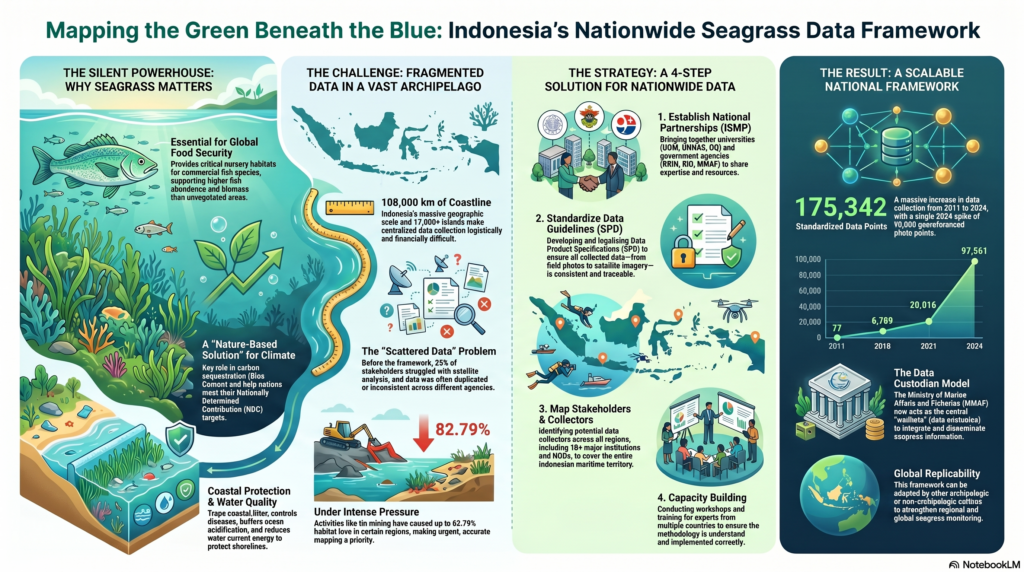
Indonesia’s vast seagrass meadows are essential environmental champions, storing blue carbon and supporting vital global fisheries. However, protecting these fragmented habitats across seventeen thousand islands has historically been a logistical challenge. A groundbreaking study titled A framework for an effective nationwide seagrass data collection: a case study for Indonesia, published in the journal Ocean and Coastal Management by Elsevier in 2026, provides a revolutionary solution. By establishing a standardized data product specification, the Indonesian Seagrass Mapping Partnership successfully united government bodies, universities, and international experts to gather over 175,000 data points. This collaborative framework directly advances SDG 14: Life Below Water by empowering policymakers with precise spatial mapping to create effective marine protected areas and secure blue carbon assets. Ultimately, Indonesia’s unified approach serves as a scalable, inspiring blueprint for global marine conservation.
More..
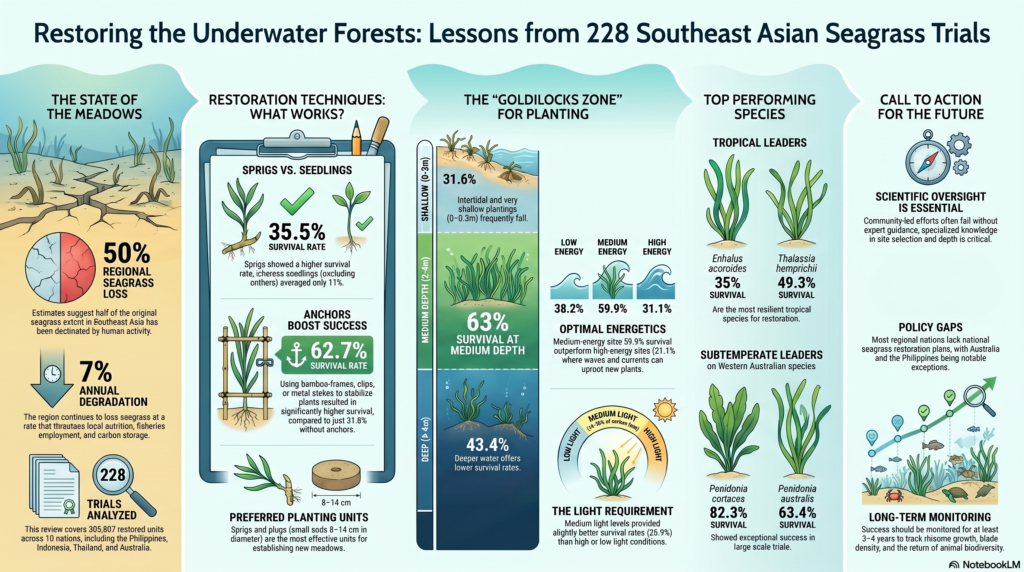
Southeast Asia’s vital seagrass meadows are vanishing rapidly, with nearly half already destroyed by human activities. However, a major review offers a powerful blueprint for recovery. Highlighting the landmark study Seagrass restoration in the greater Southeast Asia region: techniques, species, survival and comparisons among investigations—published by Frontiers in the journal Frontiers in Marine Science on 31 October 2025—the article details an analysis of 228 restoration trials across ten nations. The findings reveal that successful ocean gardening requires expert, scientist-led guidance. Using specific methods like planting "sprigs" at medium depths with anchoring frames yields the highest survival. This research directly advances SDG 14: Life Below Water by protecting biodiversity and coastal fisheries, ultimately urging regional governments to move past small-scale experiments toward large-scale, well-funded conservation policies to secure our oceans' future.
More..
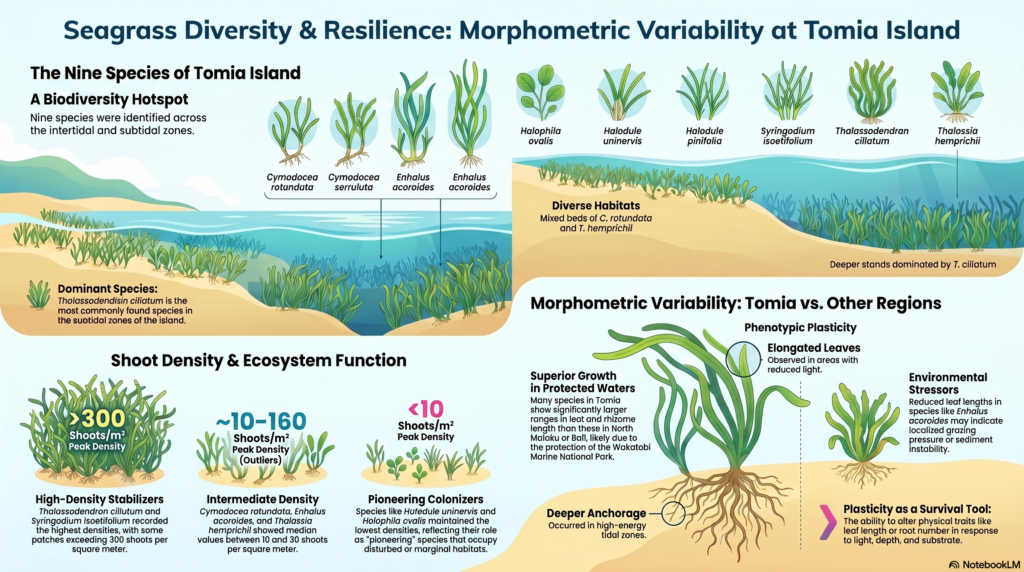
Hidden beneath the waves of Indonesia's Tomia Island lies an extraordinary underwater forest capable of shape-shifting to survive. A groundbreaking 2025 study titled Morphometric variability of seagrass species in a marine-protected area of Tomia Island, published by EDP Sciences in BIO Web of Conferences, reveals the incredible "phenotypic plasticity" of these marine plants. By dynamically altering their physical traits—such as leaf size and root length—in response to shifting environmental conditions, nine local seagrass species successfully maintain coastal health. This biological adaptability is crucial for coastal fishing communities and directly advances Sustainable Development Goal 14: Life Below Water by preserving critical habitats for diverse marine life, including endangered sea turtles and dugongs. Ultimately, the study highlights how understanding nature's subtle adaptations is key to building resilient marine protected areas against global climate change.
More..
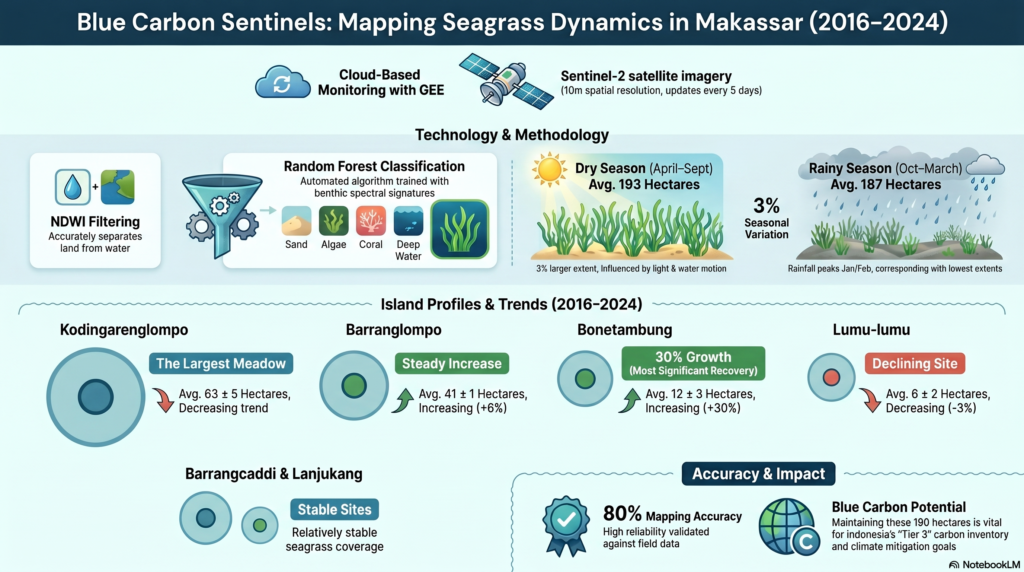
Seagrass meadows are vital "blue carbon" sinks that cool our planet, yet human activities heavily threaten them. To protect these underwater forests, a groundbreaking 2025 study titled The Seasonal Change Detection of Seagrass Extent using Google Earth Engine, published in BIO Web of Conferences by EDP Sciences, utilized advanced satellite technology. By tracking nine islands near Makassar, Indonesia, from 2016 to 2024, researchers discovered that seagrass beds expand by three percent during the dry season—with Kodingarenglompo Island boasting the largest meadow. However, the data also revealed a worrying overall decline due to environmental disruptions. Directly supporting SDG 14: Life Below Water, this innovative tracking tool bridges critical information gaps, empowering communities and policymakers to safeguard marine life and regulate global temperatures before these fragile ecosystems vanish.