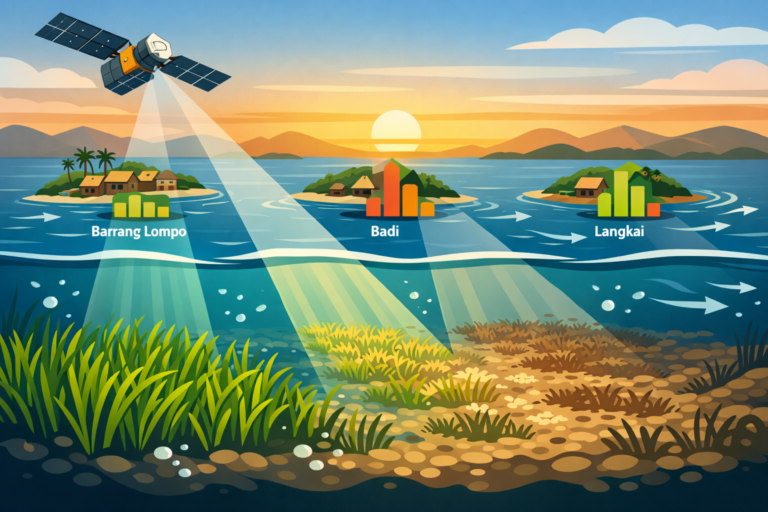
MAKASSAR, Indonesia May 2 2026/SESREG/ – Imagine diving into a vibrant underwater jungle where the seafloor is carpeted with lush green grasses gently swaying in the currents. These are seagrass meadows, the unsung heroes of our oceans. Far beyond their visual beauty, these underwater meadows act as critical nurseries, shelters, and feeding grounds for a spectacular array of marine life, ranging from tiny colorful snails to economically vital fish species. In the pristine tropical waters surrounding Tomia Island, nestled within Indonesia’s famous Wakatobi National Park, enthusiastic researchers have been diving deep into these hidden ecosystems to understand how specific types of seagrass shape the tiny, mysterious creatures that call them home.
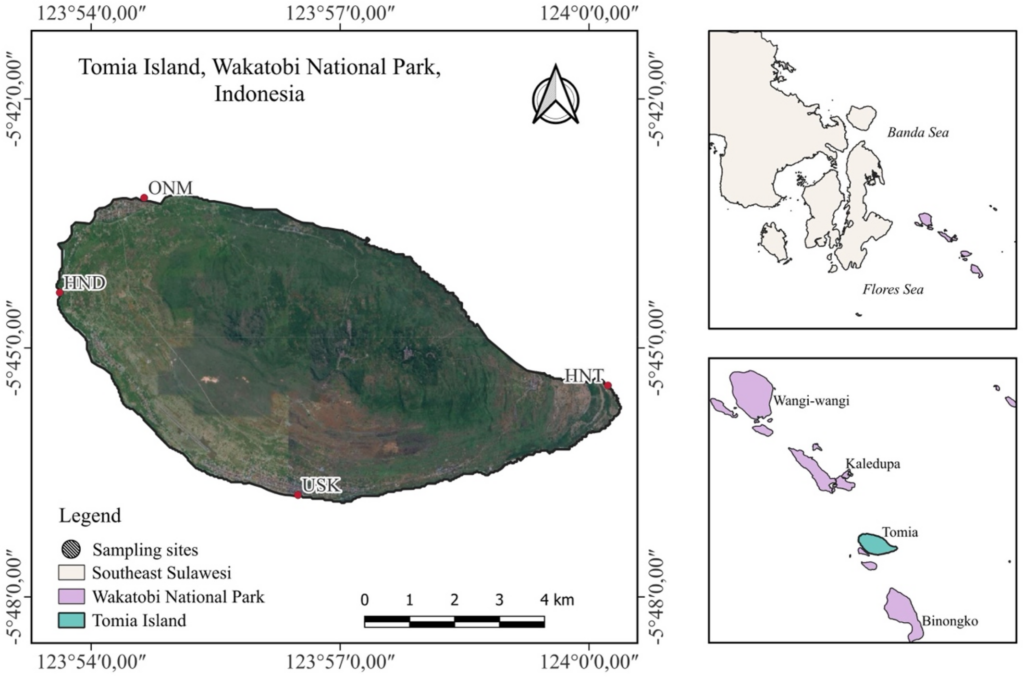
This vital marine research is elegantly detailed in a fascinating study titled Invertebrate community structure and spatial variation associated with Thalassodendron ciliatum beds in Tomia Island, Wakatobi National Park. Published in the prestigious scientific journal Estuarine, Coastal and Shelf Science by the well-known publisher Elsevier in 2026, the paper sheds new light on the intricate relationships between underwater plants and benthic invertebrates, diverse animals without backbones that live directly on the seafloor, including sea urchins, crabs, starfish, and sponges.
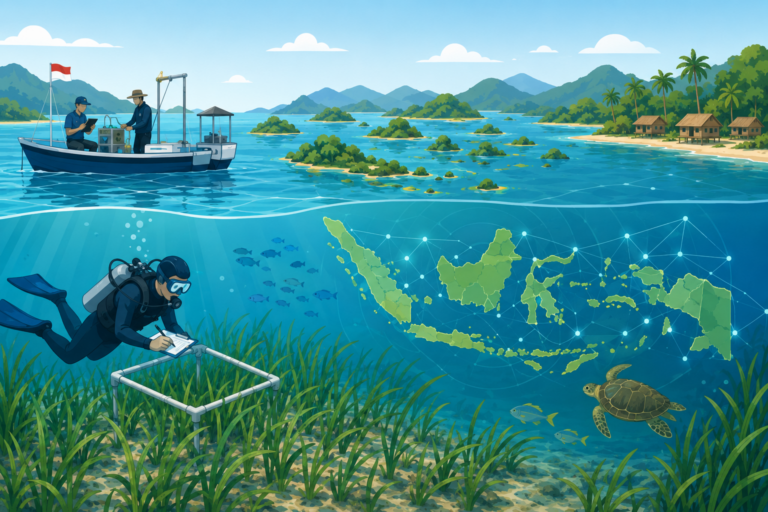
The scientific team focused heavily on a unique tropical seagrass species named Thalassodendron ciliatum, which develops thick, woody rhizomes and grows into dense, bush-like underwater meadows. Because of its complex structural shape, scientists initially hypothesized that these unique bushes would harbor a completely different community of animals compared to standard, mixed-species seagrass meadows. Armed with snorkels and underwater clipboards during low tides, the researchers surveyed 200 distinct plots across multiple coastal sites. They successfully recorded a total of 1,188 individual organisms spanning 64 unique species. They discovered a bustling community dominated by stationary filter feeders like sea sponges, followed closely by mobile, algae-munching sea urchins and tiny gastropod snails.
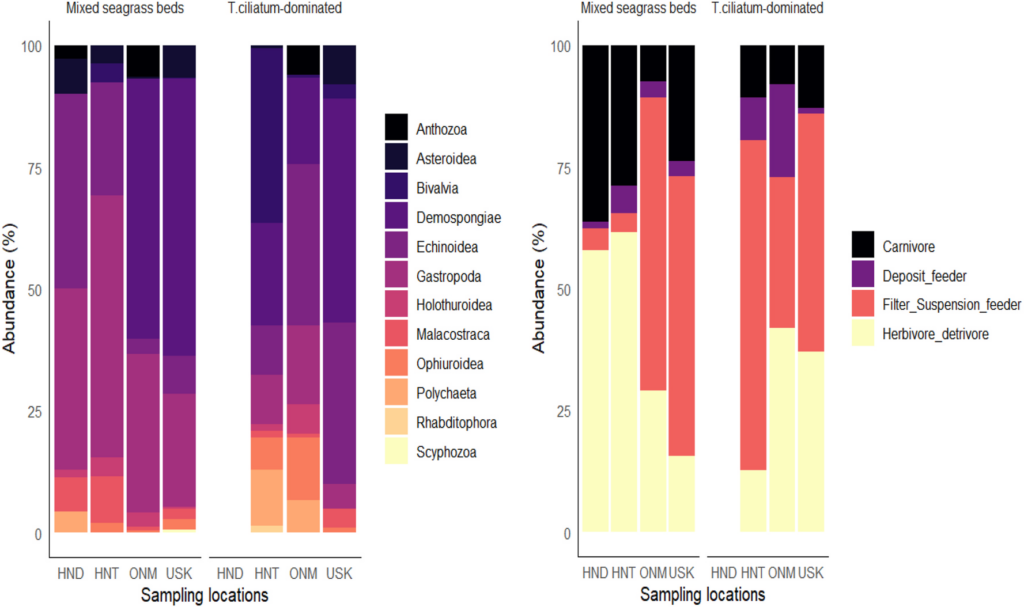
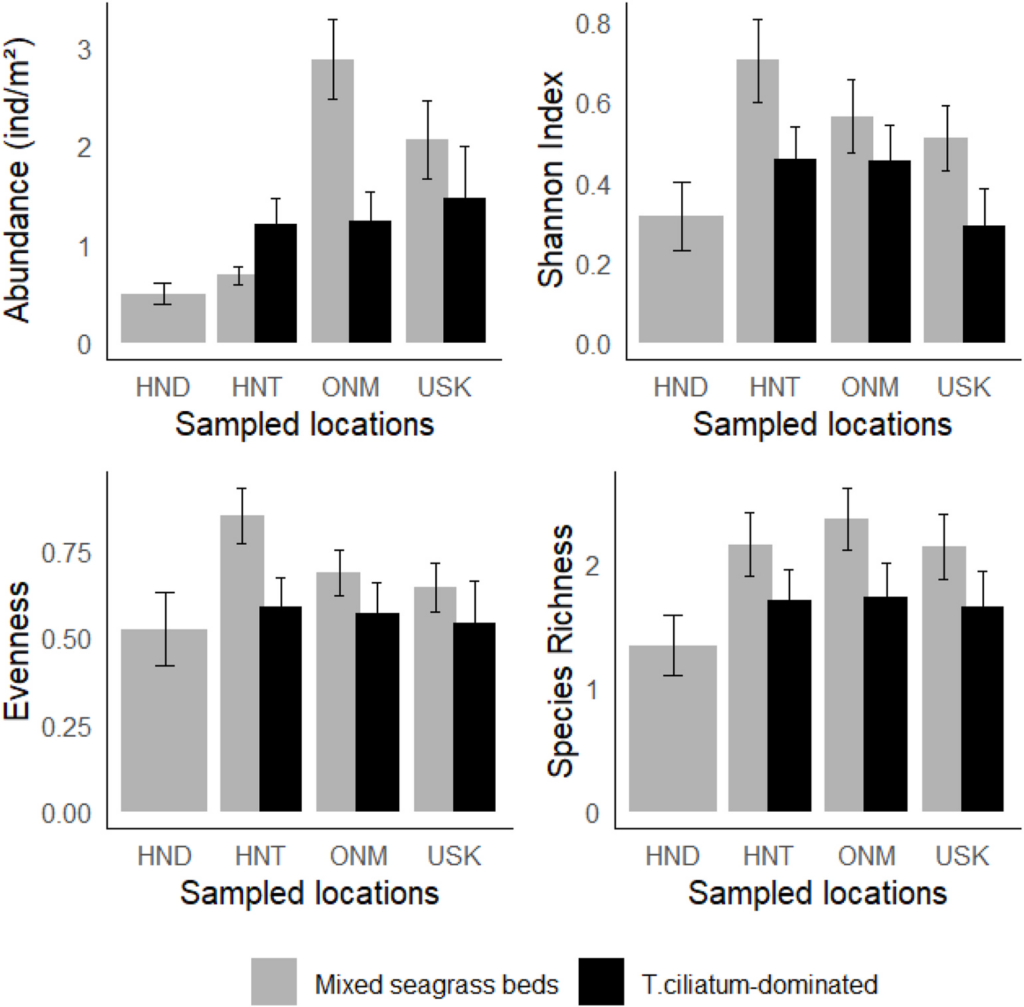
Surprisingly, the study revealed that the dense Thalassodendron meadows did not show significant differences in animal abundance or species richness when compared directly to the mixed seagrass beds. Instead, the variety of invertebrates was best predicted by the overall diversity of the seagrass species present, while their total abundance was strongly linked to the type of substrate below, such as sand, mud, or coral rubble. This clearly demonstrates that broader environmental conditions and local habitat variety matter much more to marine critters than just a single dominant plant species.
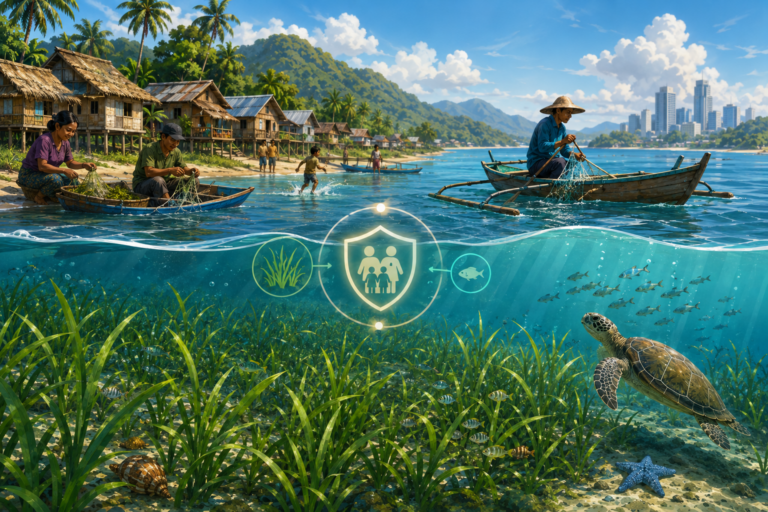
This beautiful discovery aligns perfectly with Sustainable Development Goal 14, which focuses on Life Below Water. By proving that healthy marine communities depend on a diverse mosaic of seagrass species and varied seafloor textures, this research highlights that ocean conservation cannot rely on a uniform strategy. To fully protect precious marine biodiversity and maintain food security for local coastal communities, we must protect entire coastal habitats from human pressures like destructive dredging and coastal construction. Unlocking these underwater mysteries is a major step toward preserving our oceans.
Contact Person:
Prof. Dr. Ir. Rohani Ambo-Rappe, M.Si.
rohani.amborappe@mar-sci.unhas.ac.id
rohani.amborappe@gmail.com