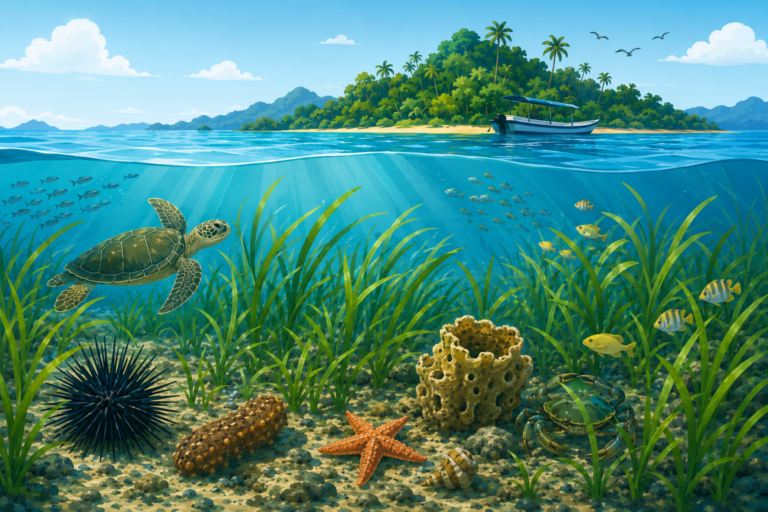

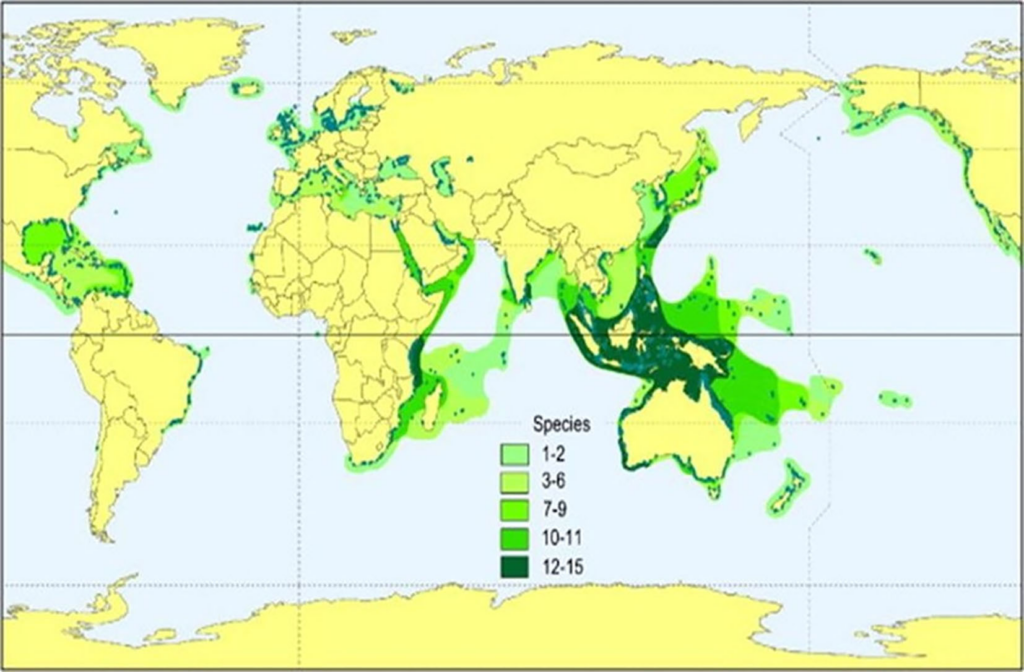
MAKASSAR, Indonesia Nov 30 2025 /SESREG/ – Imagine an underwater meadow teeming with vibrant life, where curious sea turtles graze peacefully and schools of tiny fish hide from predators. Seagrasses are truly the unsung heroes of our oceans, acting as powerful natural weapon systems against global climate change by locking away vast amounts of blue carbon in marine sediments for decades. Yet, across the sprawling tropical coastlines of Southeast Asia, these vital ecosystems are currently facing a silent and devastating crisis. Destructive human activities are destroying these underwater forests at an alarming rate, with scientific estimates suggesting that up to half of the region’s original seagrass meadows have already vanished completely. How can we reverse this dismal tide?
A groundbreaking scientific study offers a brilliant blueprint for hope by exploring exactly how to successfully rebuild these damaged marine habitats. Titled Seagrass restoration in the greater Southeast Asia region: techniques, species, survival and comparisons among investigations, this comprehensive review was published in the prestigious Frontiers in Marine Science journal. Released by the well-known open-access Frontiers network on 31 October 2025, the paper provides an invaluable treasure trove of historical data to guide future marine conservation and environmental management efforts across the globe.
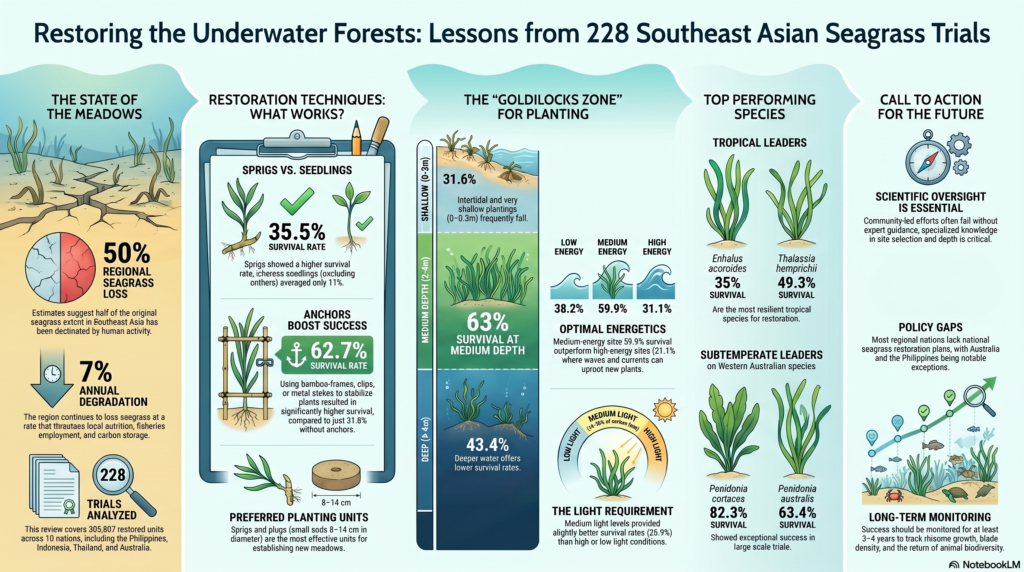
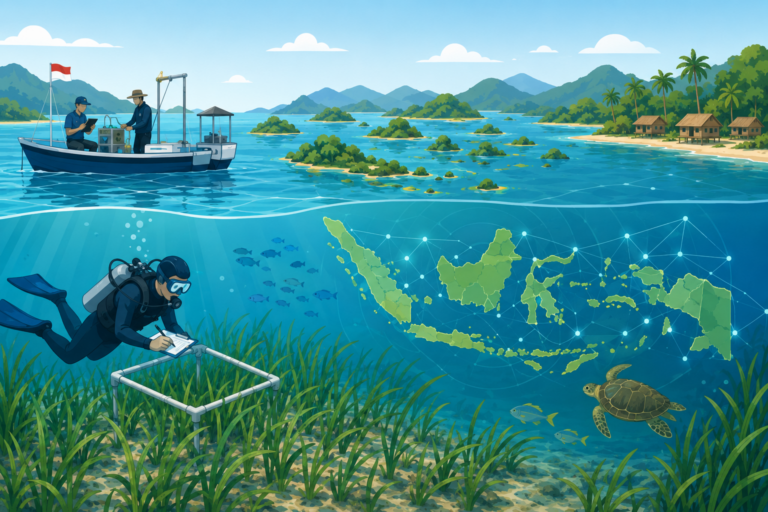
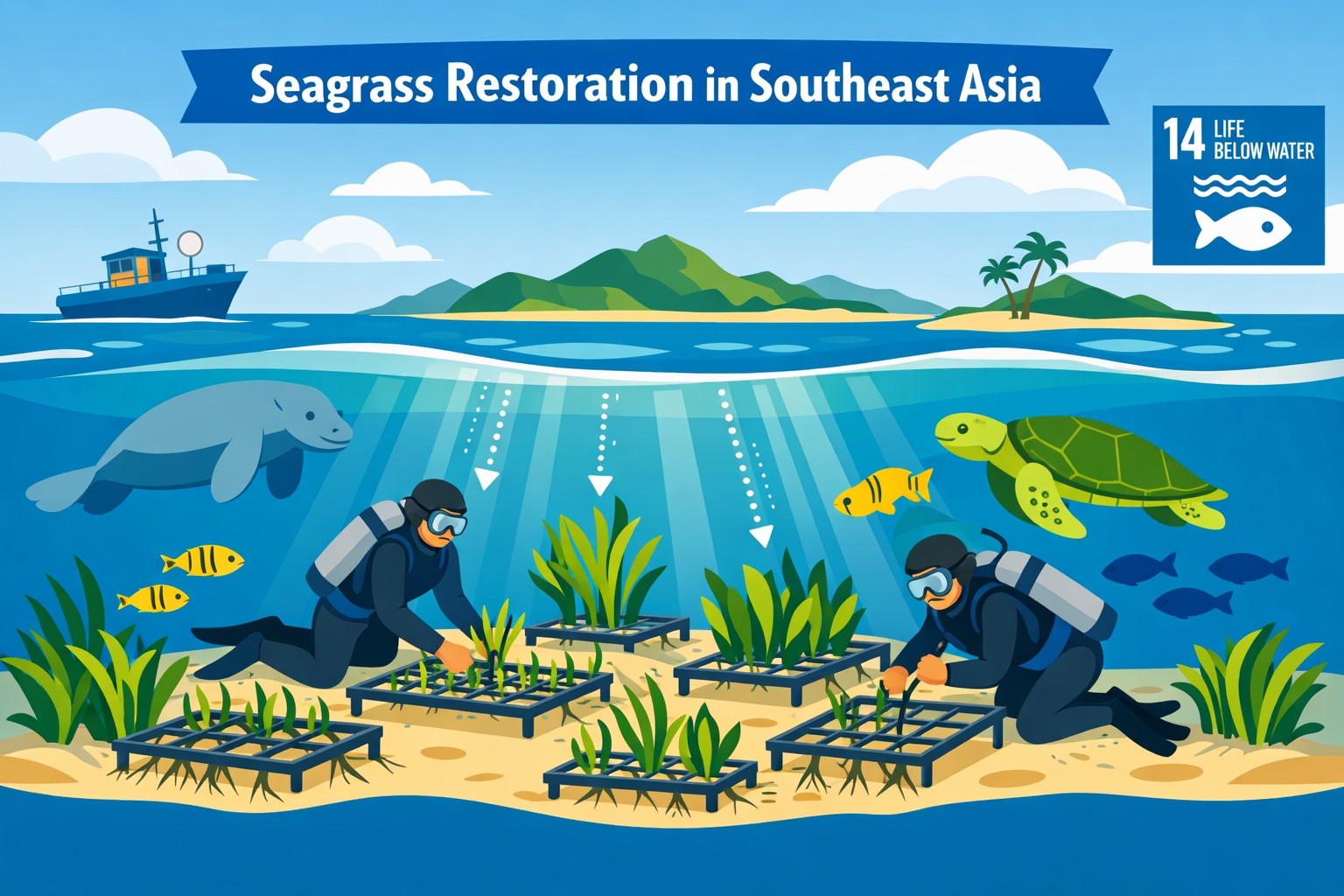
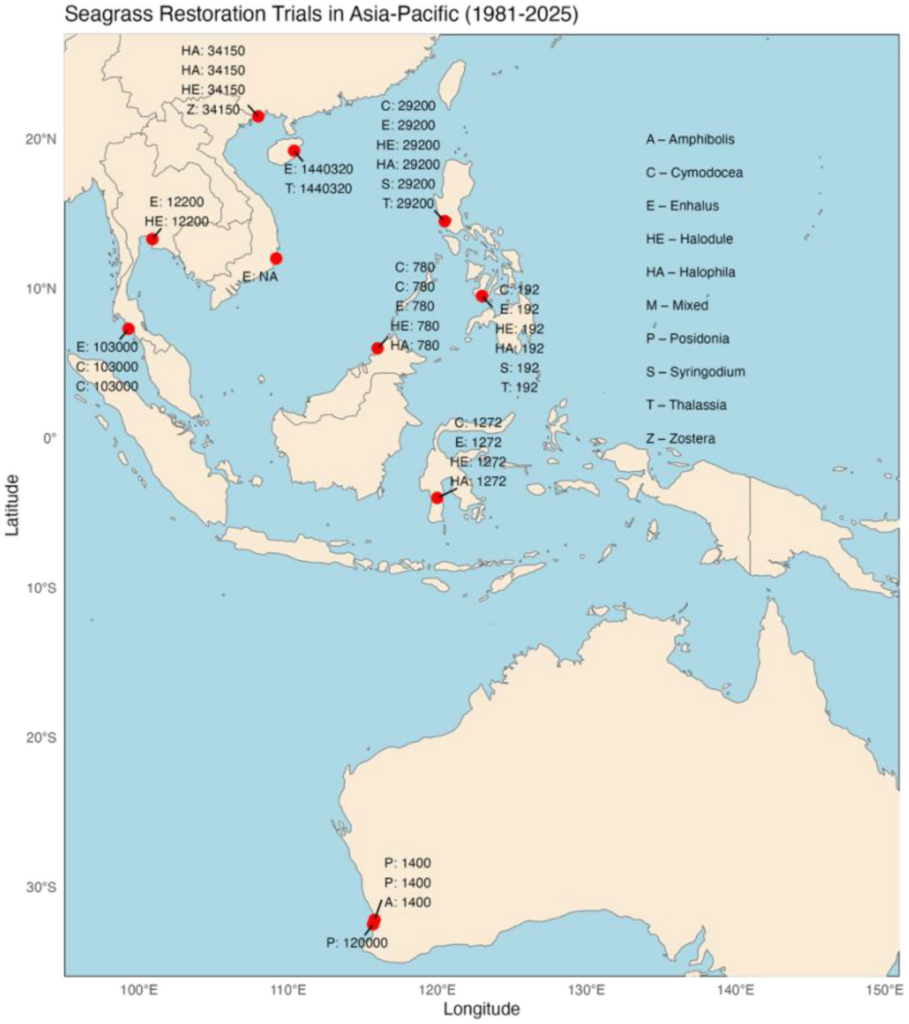
The dedicated research team meticulously analyzed 228 restoration trials spanning ten different nations, examining more than 300,000 individually planted units across an impressive expanse of over 370,000 square meters. Their fascinating findings reveal that successful ocean gardening requires a highly precise scientific touch. Instead of relying on untrained community volunteers, restoration projects led by expert marine scientists yield significantly higher plant survival rates. The study highlights that the specific planting method matters immensely: using small clumps of seagrass known as “sprigs” or “plugs” consistently provides the best biological results. Furthermore, choosing the right location is absolutely key. Seagrasses thrive best when planted at medium depths of two to four meters, where they receive plenty of necessary sunlight while remaining safely protected from the destructive force of violent waves. Additionally, using clever handmade bamboo or metal frames as anchors helps the delicate roots grip the sediment securely.
This vital research directly advances SDG 14: Life Below Water, which aims to conserve and sustainably use the world’s oceans, seas, and marine resources for sustainable development. Restoring these lush green habitats protects marine biodiversity, combats erosion, and secures essential nursery grounds for local coastal fisheries. However, the study points out that massive systemic challenges still remain. Unlike widespread efforts to save coral reefs or coastal mangroves, many regional governments completely lack formal policies or funding for long-term seagrass monitoring and preservation. To truly save our oceans, we must urgently move past small-scale experiments and look toward large-scale restoration plans backed by solid international funding. By bridging the critical gap between science and policy, we can ensure that these vibrant underwater meadows continue to protect our planet for generations to come.
Contact Person:
Prof. Dr. Ir. Rohani Ambo-Rappe, M.Si.
rohani.amborappe@mar-sci.unhas.ac.id
rohani.amborappe@gmail.com