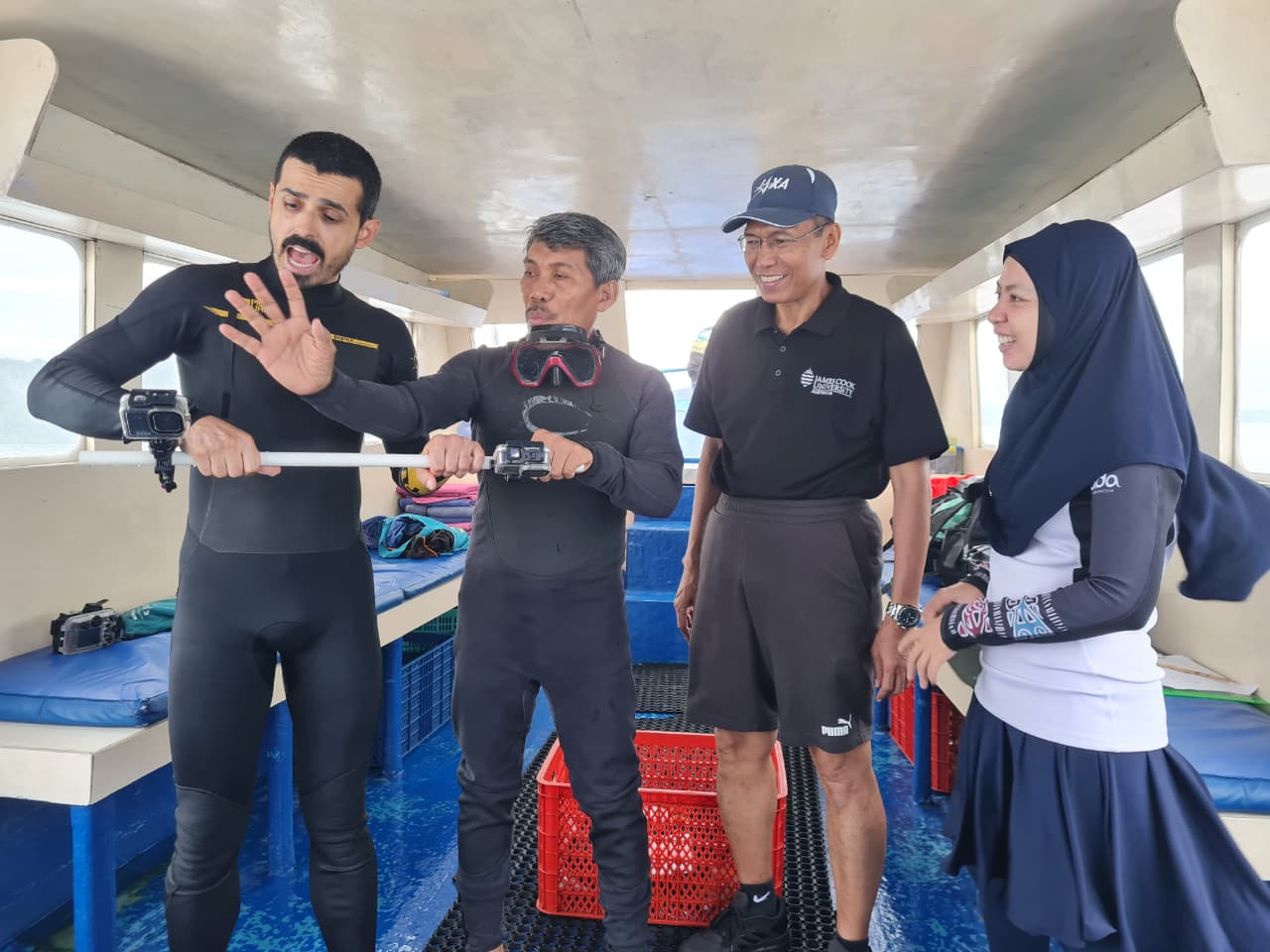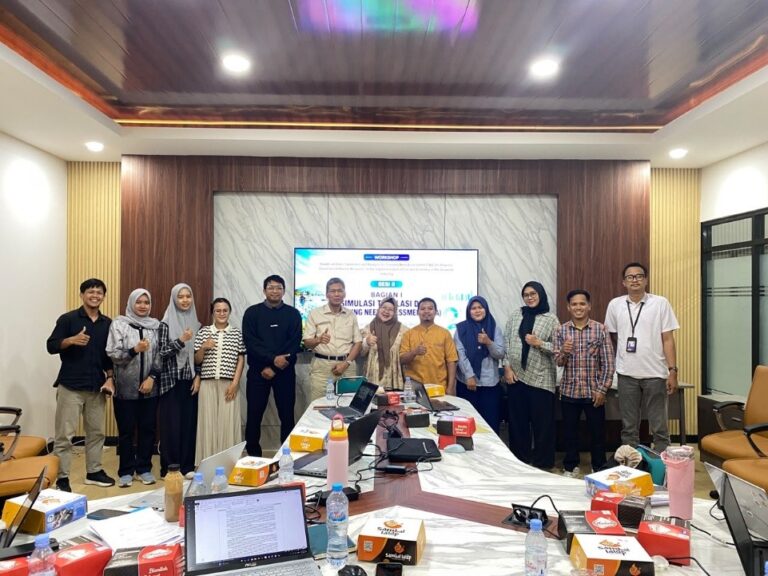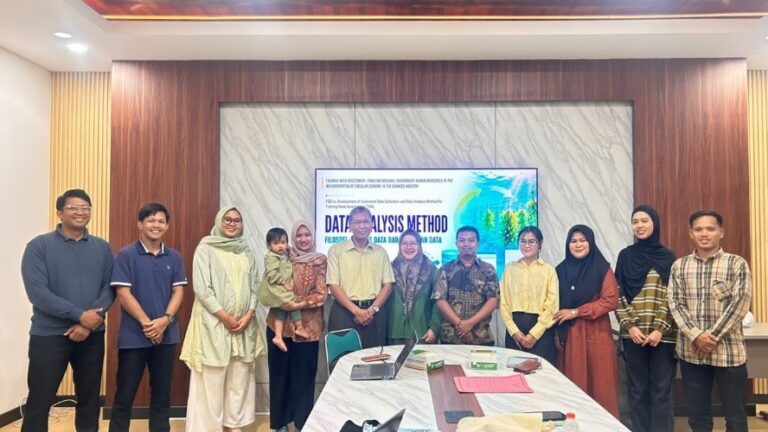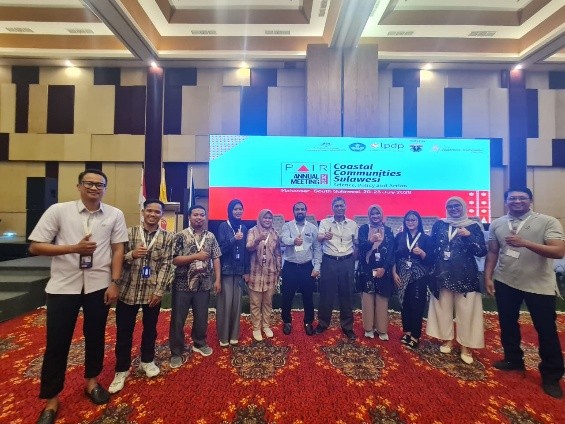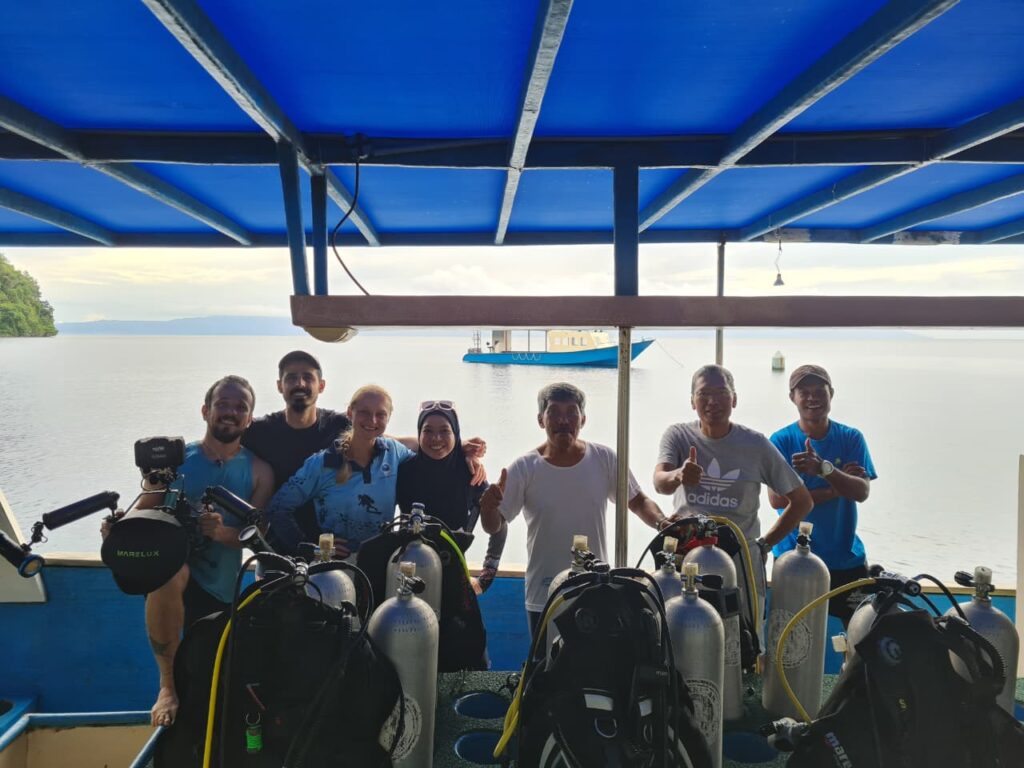
South Halmahera, Indonesia — The Joint Research Indo-France “Reef Footprint,” conducted from June 21 to July 17, 2025, brought together six participants from Indonesia and France for collaborative field research aimed at strengthening scientific understanding of coral reef ecosystems and supporting sustainable marine resource management in South Halmahera. The research was part of the SATREPS project titled “Joint Research Indo-France Reef Footprint in South Halmahera,” which reflects a collaborative effort to advance knowledge and strengthen international research cooperation in marine and coastal ecosystem management. The activity focused on understanding coral reef ecosystems and their ecological importance while generating knowledge that can contribute to evidence-based approaches for sustainable marine resource management.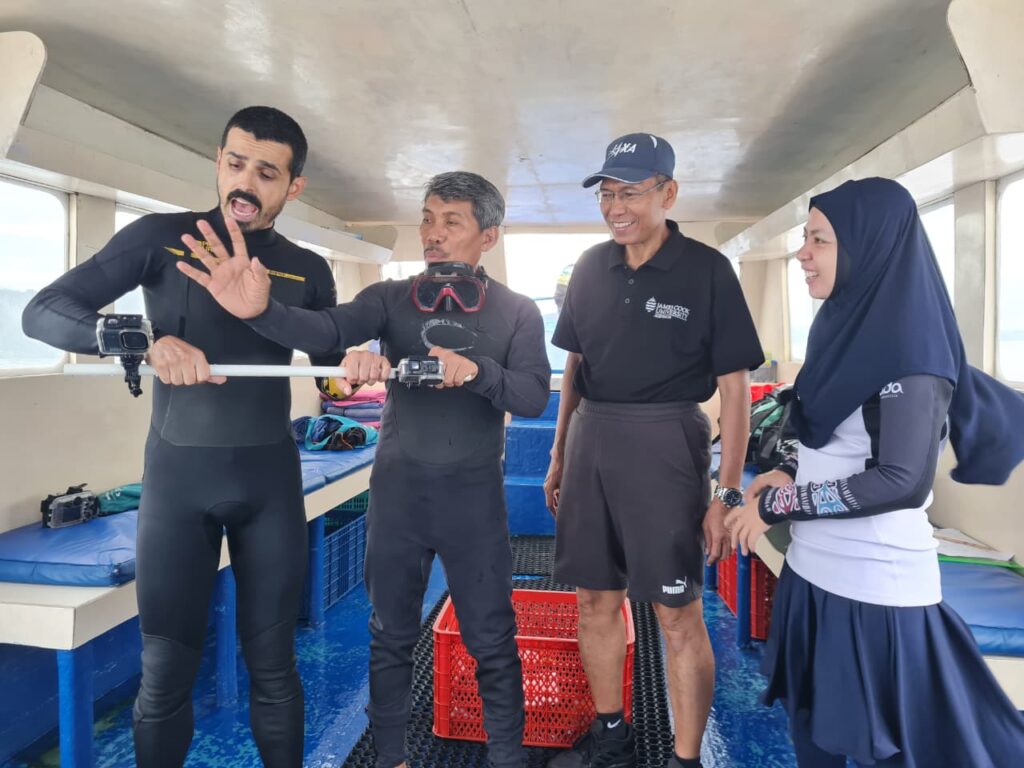
South Halmahera provides an important setting for marine research because of its coastal and island ecosystems and the communities whose livelihoods are connected to marine resources. Coral reefs provide essential ecological functions, including habitat for marine organisms, support for fisheries, and protection of coastal areas. Understanding the condition and dynamics of these ecosystems is therefore important not only from an ecological perspective but also for the long-term well-being of coastal communities. The involvement of researchers from Indonesia and France provided an opportunity to exchange scientific knowledge, field experience, and research perspectives. International collaboration is particularly important in addressing complex marine environmental challenges, as the sustainability of coral reef ecosystems is influenced by interconnected ecological, social, and human factors. Joint research can strengthen scientific capacity while creating opportunities for researchers and institutions to develop shared approaches to marine conservation and management. For Hasanuddin University (UNHAS), the participation of Prof. Dr. Ir. Ambo Tuwo, DEA, represents the university’s contribution to strengthening international research networks and advancing sustainable coastal and marine resource management. His involvement also reflects the role of Indonesian universities in contributing scientific expertise to collaborative research initiatives addressing marine environmental challenges.
The activity directly supports Sustainable Development Goal (SDG) 14: Life Below Water by contributing to scientific knowledge for the sustainable management and conservation of marine ecosystems. It also relates to SDG 1: No Poverty, as healthy marine ecosystems provide resources and economic opportunities that support coastal communities. The research further contributes to SDG 4: Quality Education through scientific knowledge exchange, collaborative learning, and capacity building among researchers from Indonesia and France. At the same time, the international partnership strongly reflects SDG 17: Partnerships for the Goals, demonstrating the importance of cross-border collaboration in addressing shared environmental challenges. The Indo-France “Reef Footprint” research in South Halmahera therefore represents more than a field research activity. It is part of a broader effort to strengthen international scientific collaboration, enhance marine research capacity, and generate knowledge that can support the long-term sustainability of coral reef ecosystems and the communities connected to them