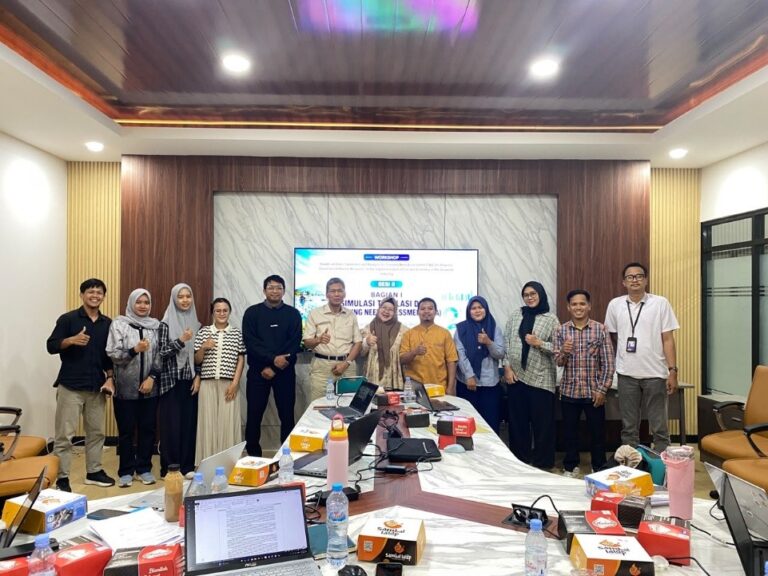
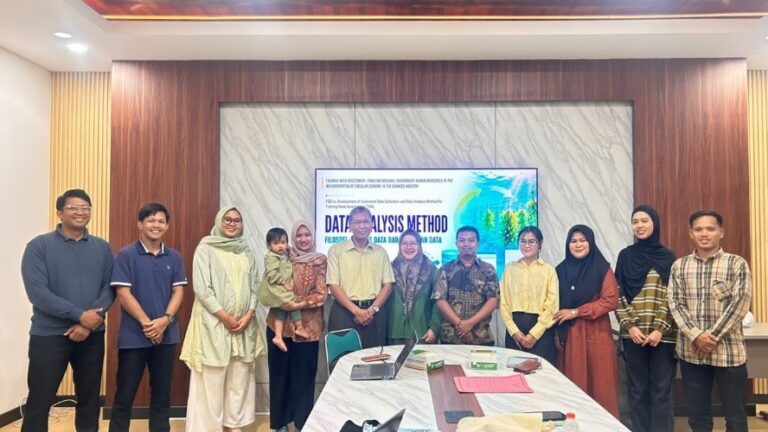
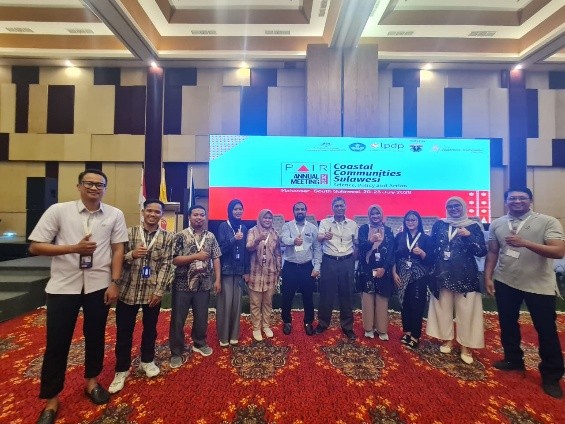
Pinrang, South Sulawesi — The PAIR Program conducted a visit to the One-Stop Integrated Service Office of Pinrang Regency, South Sulawesi, on April 17,2026. The activity aimed to gather information through discussions and interviews concerning policies, public service governance, and institutional support related to local economic development, particularly seaweed farming and business activities. Five participants took part in the activity as part of an information-gathering and knowledge-exchange process with local stakeholders. The visit to PTSP was important for understanding how government governance can support the development of community economic activities. Seaweed development is influenced not only by farming techniques, environmental conditions, and productivity, but also by a supportive institutional environment. Licensing policies, access to government services, inter-agency coordination, and ease of access for business actors are all components of the broader ecosystem that can influence the sustainability of economic activities.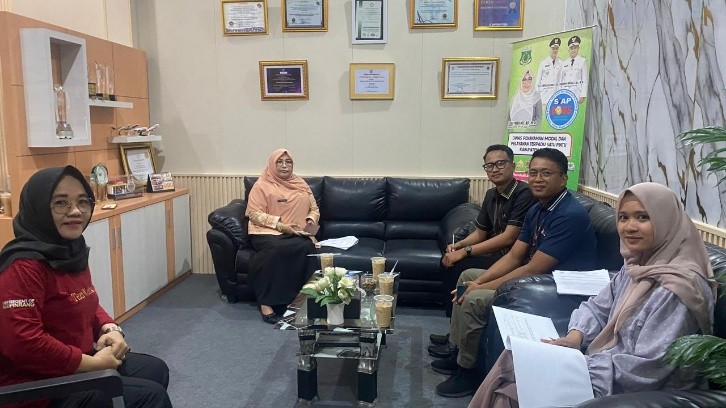 Through discussions and interviews, participants had the opportunity to understand the role of PTSP in providing public services relevant to community and business needs. The information gathered provided insights into the importance of effective, transparent, and accessible public services in supporting local economic activities. This perspective was particularly relevant to the PAIR Program in examining the relationship between public policy, institutional governance, and seaweed commodity development. The activity also encouraged participants to view seaweed development from a broader perspective. As a commodity associated with coastal and marine resources, seaweed development requires a balance between economic interests and environmental sustainability. Appropriate policies and governance mechanisms can help create conditions that enable communities to develop their businesses while maintaining responsible resource management practices. The activity is closely connected to SDG 1 (No Poverty) because supportive governance for business development can create economic opportunities and strengthen community livelihoods. Improved access to government services can also help communities and business actors overcome institutional barriers and develop their economic activities more effectively. From an educational perspective, the activity supports SDG 4 (Quality Education) through field-based learning and knowledge exchange concerning public governance. Participants gained practical insights into how government policies and public services interact with community economic activities and local development. The sustainable development of coastal commodities is also relevant to SDG 14 (Life Below Water), particularly by promoting responsible utilization of marine resources. Meanwhile, the interaction between the PAIR Program and the Pinrang One-Stop Integrated Service Office directly supports SDG 17 (Partnerships for the Goals) through communication, information exchange, and institutional networking. Ultimately, the visit highlighted that successful seaweed development depends not only on production capacity but also on effective governance and appropriate policy support. Through dialogue between the PAIR Program and local government, the activity contributed to a broader understanding of the institutional dimensions of coastal economic development and opened opportunities for collaboration to support inclusive, sustainable, and locally responsive development in Pinrang Regency.