Makassar, Indonesia 29 September 2024/FCVC/-Ideas about the future of food systems increasingly converge on two pillars: inclusivity and technological innovation. Bringing these themes into focus, the Department of Agricultural Socioeconomics, Faculty of Agriculture at Hasanuddin University, in collaboration with the Food Crops Value Chain Research Group, organized an academic forum on September 25, 2024 at the Auditorium of Graduate School, Hasanuddin University, involving an audience of students and academic participants. The session featured Dr. Rida Akzar (Center for Global Food Resources, The University of Adelaide, Australia) alongside master’s and bachelor’s students. This public lecture topic “Inclusivity and Technology Innovation in Food Value Chain”, designed to connect global perspectives with local academic discourse on food systems development which encourages the students to understand the interconnections between agribusiness and value chains in both local and global contexts.
Dr. Rida Akzar introduced the concept of food value chains as an integrated system linking production, processing, distribution, and consumption. It emphasized how these interconnected stages influence broader outcomes such as food security, hunger prevention, and sustainable agricultural practices. The discussion highlighted that inefficiencies within value chains often translate into unequal access to markets and resources, particularly for smallholder farmers. By addressing these structural gaps, inclusive agribusiness models can improve both economic and social outcomes. The session also created space for students to engage with real-world challenges, encouraging them to critically reflect on how theoretical concepts can be applied in practice. Dr. Rida Akzar also also includes a case study on dairy farmers in West Java, Indonesia.
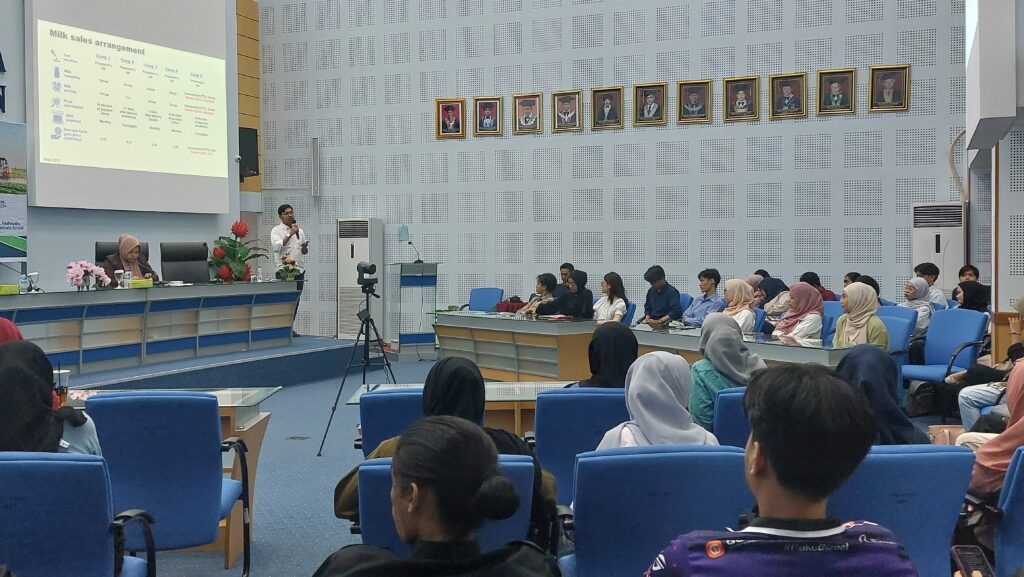
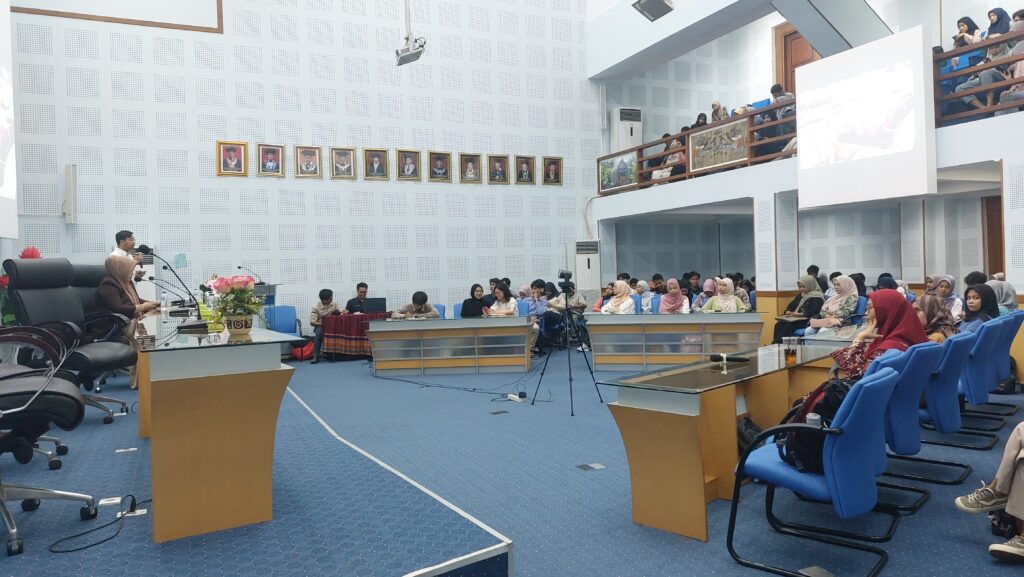
A key theme explored during the lecture was the role of technology in transforming agricultural value chains. Drawing on the example of the dairy sector in Indonesia, the discussion illustrated how innovations such as digital marketplaces, blockchain systems, and precision farming tools can significantly enhance efficiency, transparency, and coordination. These technologies not only streamline supply chains but also help producers respond more effectively to market demands. At the same time, the lecture acknowledged persistent challenges, including limited access to technology, uneven adoption rates, and the need for supportive institutional frameworks. The integration of innovation with inclusive approaches was presented as essential for ensuring that technological progress benefits all actors within the value chain.
This academic activity contributes to SDG 4 (Quality Education) by strengthening knowledge exchange and fostering critical thinking among students, and SDG 17 (Partnerships for the Goals) through collaboration between local institutions and international expertise. The engagement underscores the importance of linking education, research, and global partnerships in addressing complex agricultural challenges. Moving forward, the insights generated from the lecture are expected to support future research initiatives, enrich academic curricula, and encourage the adoption of innovative approaches in food value chain development. By combining inclusivity with technological advancement, the initiative reinforces a pathway toward more resilient and equitable food systems.