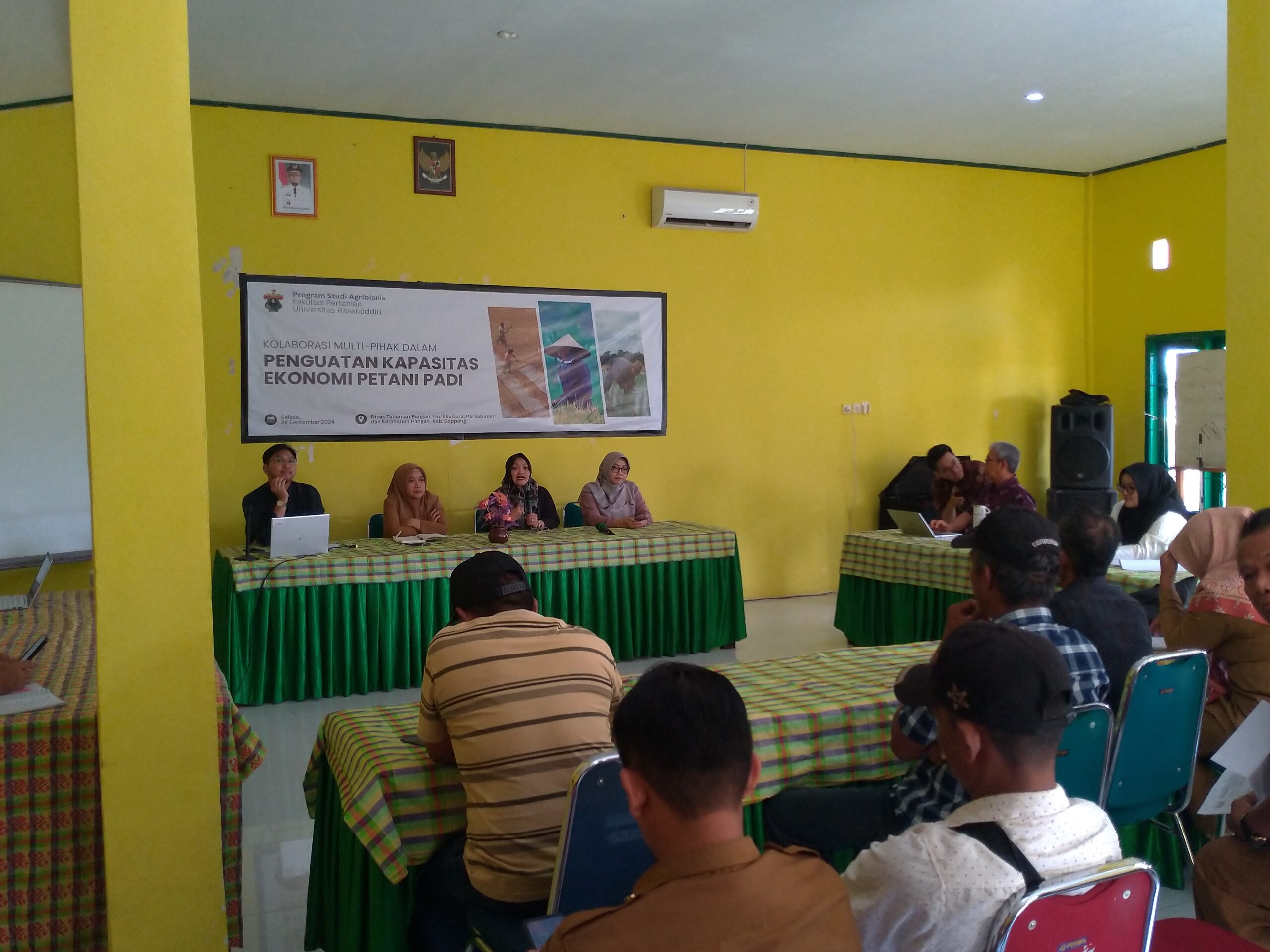

Makassar, Indonesia 28 September 2024/FCVC/-Building resilient agricultural systems requires more than technical solutions; it demands coordinated action among all actors involved in the value chain. In response to this need, the Food Crops Value Chain Research Group conducted a public service activity on September 24, 2024 at the Dinas Tanaman Pangan, Hortikultura, Perkebunan dan Ketahanan Pangan (DTPHPKP), Soppeng Regency, involving an audience of farmers, processors, traders, and institutional stakeholders. The initiative featured Prof. Nixia Tenriawaru, Prof. Rahim Darma,, Dr. Letty Fudjaja, and Ir. Ayu Anisa Amir, M.Si, focusing on the Farmer Empowerment Through Multi-Actor Collaboration” to facilitate dialogue and identify solutions to key agricultural challenges. In this discussion, Dr. Rida Akzar from The University of Adelaide, Australia also participate in this discussion.
The session created a structured forum where stakeholders could openly discuss constraints affecting agricultural productivity and market participation. Central topics included access to inputs, price stabilization, plant protection, water availability, and the effectiveness of agricultural extension services. These issues were examined not as isolated problems but as interconnected elements within broader agricultural systems. The dialogue emphasized that addressing these challenges requires alignment between farmers’ needs and institutional support mechanisms. By bringing multiple actors into the same discussion space, the activity encouraged a more holistic understanding of how decisions at different levels influence outcomes across the value chain. It also highlighted the importance of trust and communication in strengthening relationships among stakeholders.
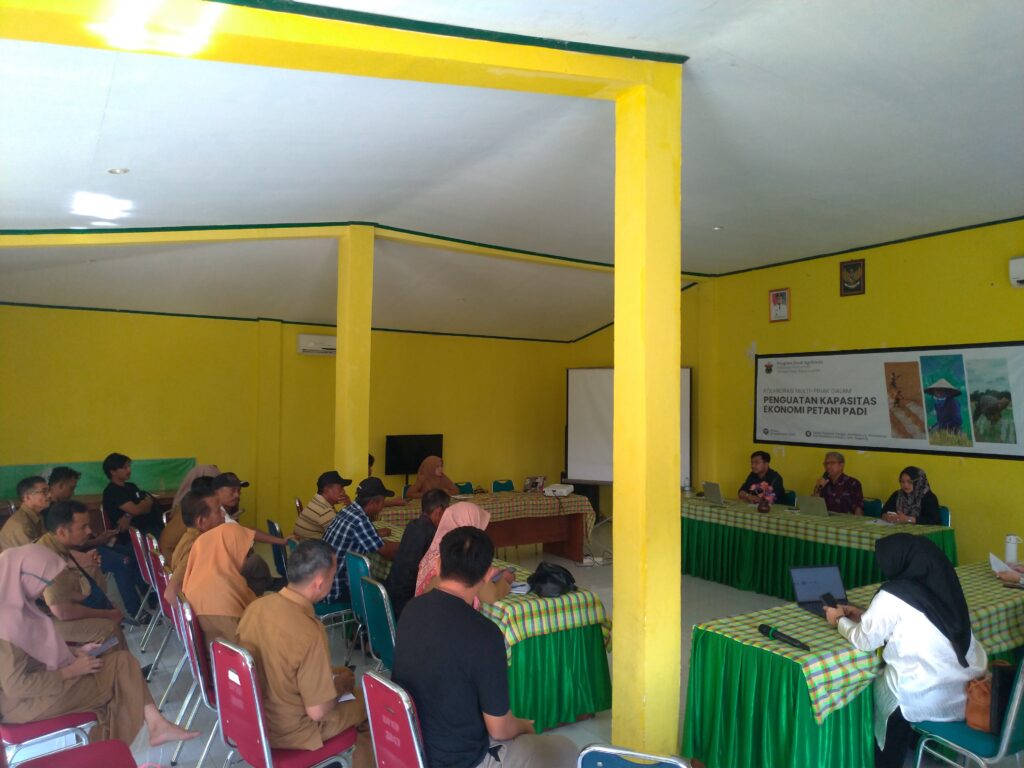
A key outcome of the discussion was the recognition that stronger linkages between supply chain actors are essential for improving both efficiency and equity. Limited access to timely market information was identified as a major constraint for farmers, often resulting in weaker bargaining positions and reduced income opportunities. The discussion also highlighted the importance of enhancing farmer knowledge on market trends, production planning, and risk management. In addition, participants emphasized that policy interventions must be responsive and grounded in field realities to ensure that smallholder farmers are not disadvantaged within competitive markets. These insights reflect the need for integrated approaches that combine education, infrastructure, institutional coordination, and continuous stakeholder engagement.
This activity contributes directly to SDG 1 (No Poverty) by addressing income constraints and improving opportunities for smallholder farmers, SDG 12 (Responsible Consumption and Production) by promoting more efficient and sustainable agricultural practices, and SDG 17 (Partnerships for the Goals) by fostering collaboration among farmers, industry actors, and government institutions. The engagement underscores the importance of inclusive dialogue as a foundation for sustainable agricultural development. Moving forward, the outcomes of this session are expected to support more targeted extension programs, inform policy adjustments, and encourage continued collaboration across stakeholders. By reinforcing the value of collective action, the initiative contributes to building a more adaptive, inclusive, and resilient agricultural system in Soppeng Regency, while also supporting long-term improvements in productivity and rural livelihood systems in Soppeng Regency.