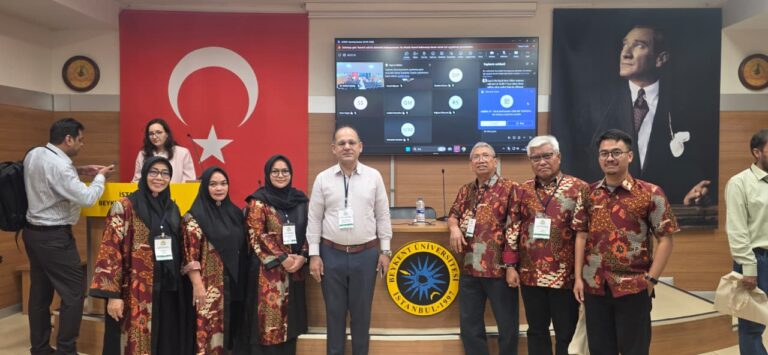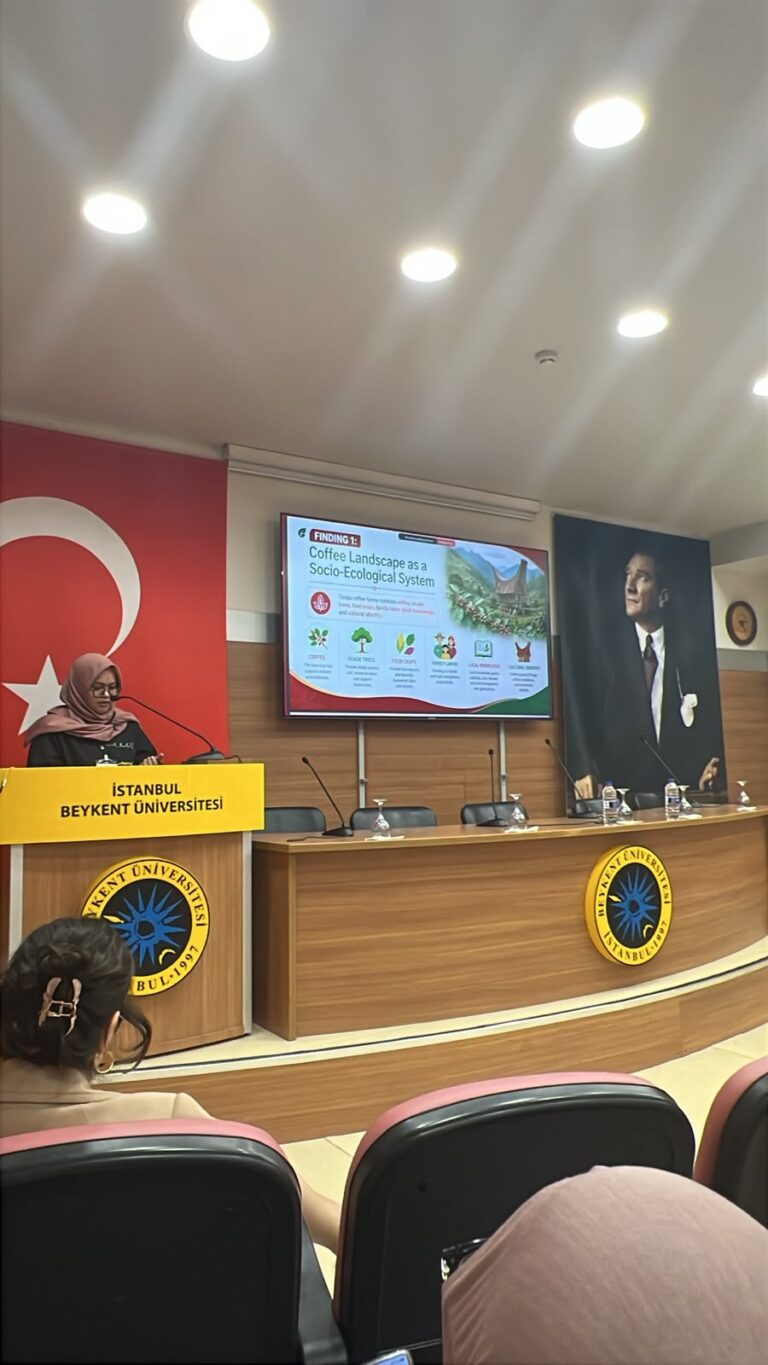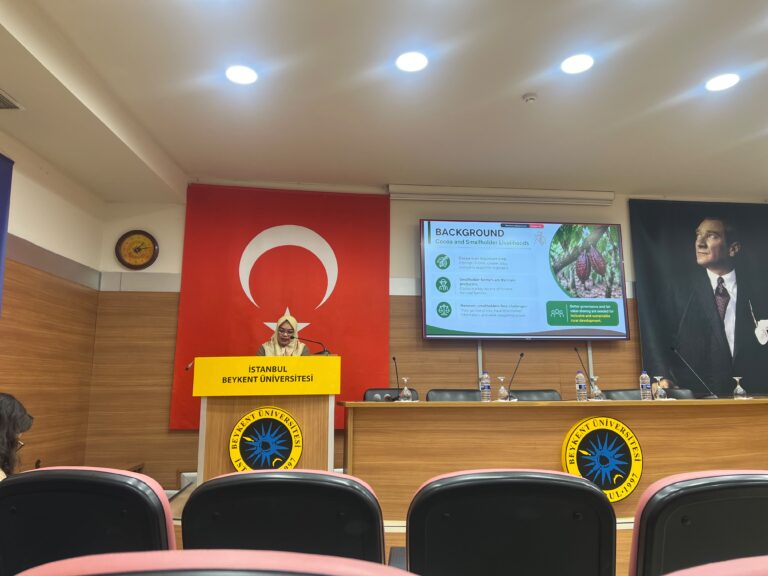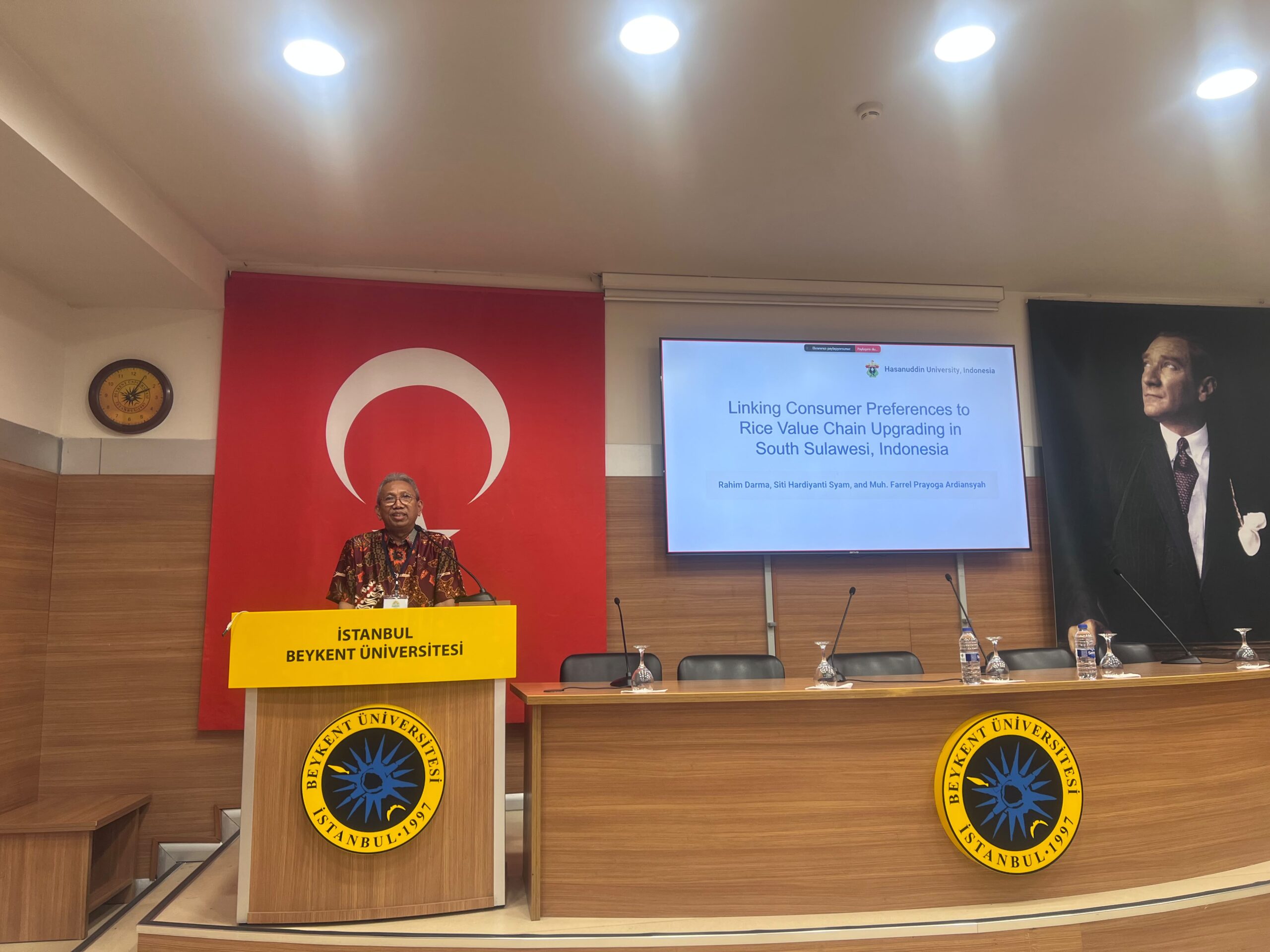

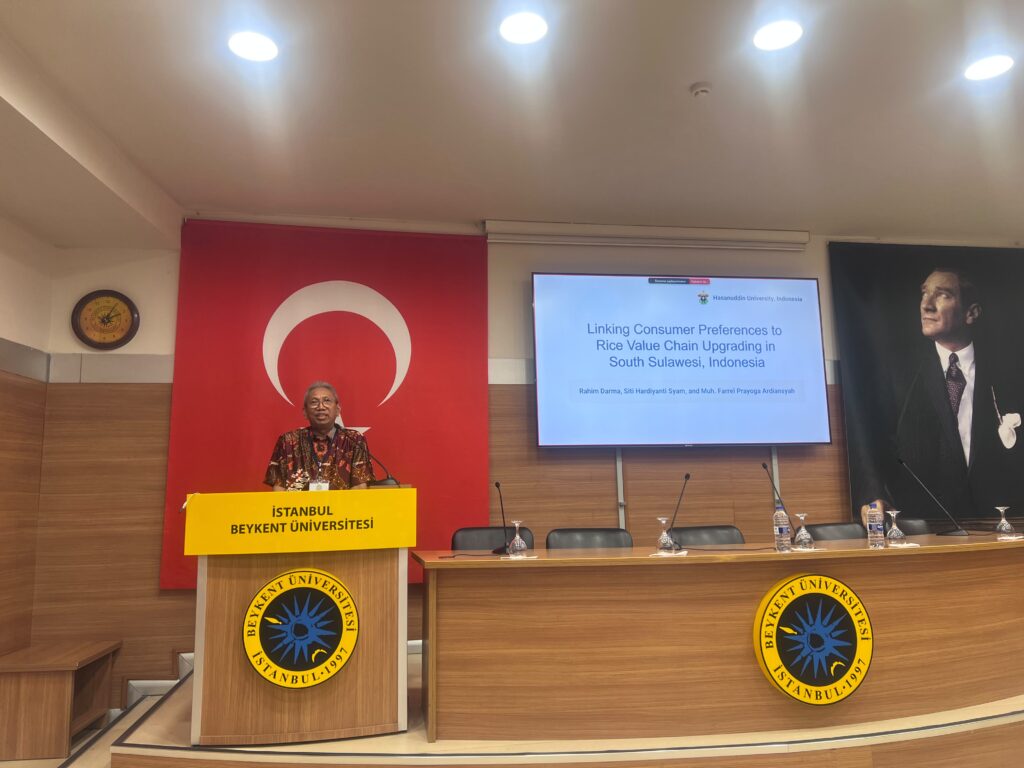
Prof. Rahim Darma, leader of the Food Crops Value Chain Research Group of Hasanuddin University presented research on consumer preferences and rice value chain upgrading in Indonesia at the VIII International Agricultural, Biological and Life Sciences Conference (AGBIOL 2026), held on 6–9 September 2026 in Istanbul, Türkiye. The presentation explored how changing consumer expectations can encourage improvements in rice quality, marketing, and supply systems, addressing the challenge of translating demand for higher-quality rice into economic opportunities for farmers and other value chain actors. The paper, titled “From Consumer Preferences to Value Chain Upgrading: Aligning Rice Quality, Marketing, and Supply Systems in Indonesia,” was co-authored by Ms. Siti Hardiyanti Syam, M.Si, and Mr. Muh. Farrel Prayoga Ardiansyah, M.Agb, researchers from the Food Crops Value Chain Research Group.
Organized by the International Researcher Association, Istanbul Beykent University, and Trakya University, AGBIOL 2026 provided an international platform for researchers from diverse academic backgrounds and countries to share scientific findings, exchange perspectives, and explore collaboration opportunities. The presentation formed part of a collaborative research project with the University of Adelaide, Australia, conducted during 2024–2025, and contributed to a research initiative under the Thematic Research Group (TRG) Scheme of the Institute for Research and Community Service (LPPM), Hasanuddin University. This collaboration demonstrates the value of combining expertise to address agricultural marketing challenges and support evidence-based food system development.
The study employed a mixed-methods approach, integrating consumer survey data from urban households in Makassar City with qualitative insights from farmers, traders, millers, and retailers across South Sulawesi. It examined how consumer expectations are communicated and addressed throughout the rice value chain. The findings revealed a significant mismatch between consumer preferences and prevailing production and marketing practices. Although consumers value rice attributes such as texture, aroma, cleanliness, food safety, packaging, and product consistency, supply systems remain characterized by limited product differentiation, weak quality-based pricing mechanisms, and insufficient standardization. Information asymmetries and fragmented coordination further constrain the transmission of market demand to producers.
These findings have implications for agricultural marketing policy, food security, and rural economic development. The study emphasizes the need to move beyond volume-oriented production toward more demand-responsive rice value chains, supported by better market information, stronger coordination among value chain actors, and incentives that reward improvements in quality. Such measures could create opportunities for value addition, strengthen market competitiveness, and improve smallholder farmers’ participation in higher-value market segments. The research also contributes to SDG 1: No Poverty, by addressing smallholder livelihoods and market opportunities; SDG 2: Zero Hunger, through its relevance to food quality and the development of sustainable food systems; SDG 4: Quality Education, through scientific dissemination and international knowledge exchange; and SDG 17: Partnerships for the Goals, through collaborative research and academic partnerships.
Participation in AGBIOL 2026 strengthened opportunities to communicate research findings internationally and develop future academic collaborations. The research provides a foundation for further scholarly publications and multidisciplinary studies connecting consumer behavior, agricultural economics, food marketing, and value chain governance. By aligning market demand with production and marketing strategies, these efforts aim to support a more competitive, inclusive, and sustainable rice sector in Indonesia.