Makassar, Indonesia 01 October 2024/FCVC/-Public policy plays a decisive role in shaping how agricultural value chains function, particularly in regions where smallholder farmers remain central to production systems. Recognizing this, the Food Crops Value Chain Research Group convened a strategic engagement on September 26, 2024 in Makassar, Indonesia. The session brought together the representative of the Food Crops Value Chain Research Group of Hasanuddin University, Prof. Rahim Darma, Prof. Nixia Tenriawaru, Siti Hardiyanti Syam, Muh. Farrel Prayoga Ardiansyah, Lily Febriyanti along with Dr. Rida Akzar (The University of Adelaide), and the Head of the Agriculture Bureau of South Sulawesi Province. A Focus Group Discussion (FGD) with the Agriculture Bureau of South Sulawesi Province aim to assess policy strategies for strengthening agricultural value chains, providing a platform to connect research insights with policy priorities.
The discussion unfolded as a structured exchange between policymakers and researchers, focusing on how existing policy frameworks can better support agribusiness development. Key themes included the role of government in price regulation, the need for targeted interventions to stabilize agricultural markets, and the importance of strengthening rural infrastructure. Participants emphasized that agricultural value chains cannot function efficiently without adequate investment in irrigation systems, transportation networks, and institutional support mechanisms. In addition, improving access to credit for smallholder farmers was identified as a critical step toward enabling participation in higher-value markets. The conversation also extended to emerging opportunities, such as integrating digital technologies and e-commerce platforms to reduce inefficiencies and improve market transparency.
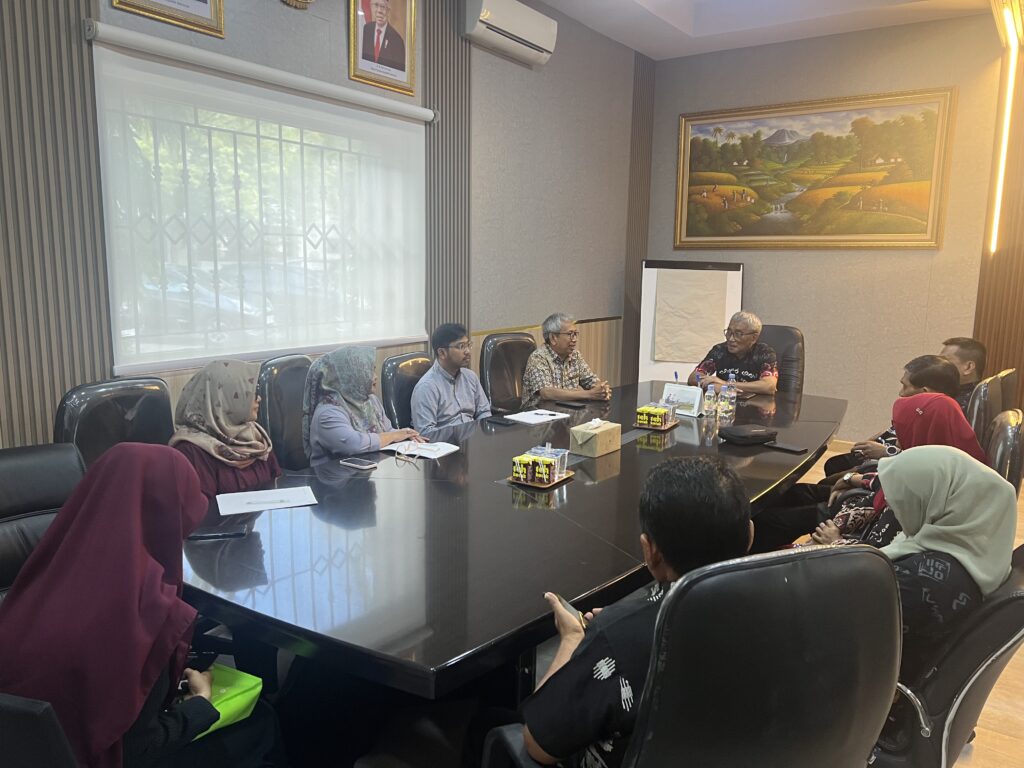
A central concern raised during the session was how to ensure that economic benefits are distributed more equitably across all actors in the value chain. The discussion highlighted that farmers, processors, and distributors often operate under unequal conditions, with farmers typically facing the greatest constraints. Strengthening coordination across these actors was identified as a key priority, alongside the need for policies that are responsive to real market dynamics. The main activity: a Focus Group Discussion (FGD) with the Agriculture Bureau of South Sulawesi Province to assess policy strategies for strengthening agricultural value chains reinforced the importance of evidence-based policymaking, where research findings are actively used to inform interventions. By aligning institutional roles and improving communication between stakeholders, the discussion pointed toward more inclusive and efficient value chain systems.
This engagement contributes directly to SDG 1 (No Poverty) by addressing structural barriers that limit farmer income, SDG 8 (Decent Work and Economic Growth) through efforts to strengthen agribusiness development, SDG 12 (Responsible Consumption and Production) by promoting more efficient and sustainable value chain practices, and SDG 17 (Partnerships for the Goals) by fostering collaboration between government, academia, and research institutions. The outcomes of this session underscore the importance of integrated policy approaches that combine infrastructure investment, market regulation, and innovation. Moving forward, the insights generated are expected to inform future research outputs, support policy refinement, and contribute to building a more resilient and inclusive agricultural economy in South Sulawesi.