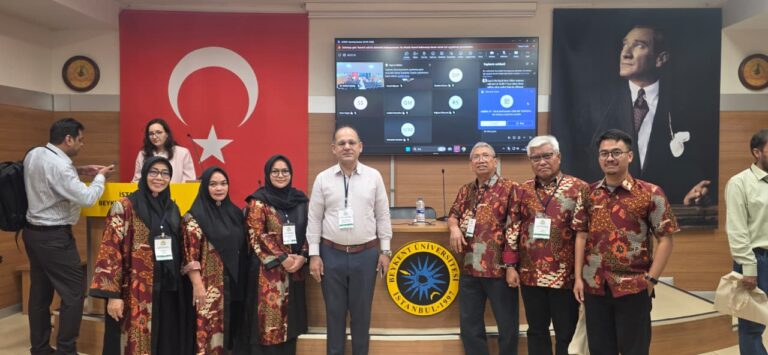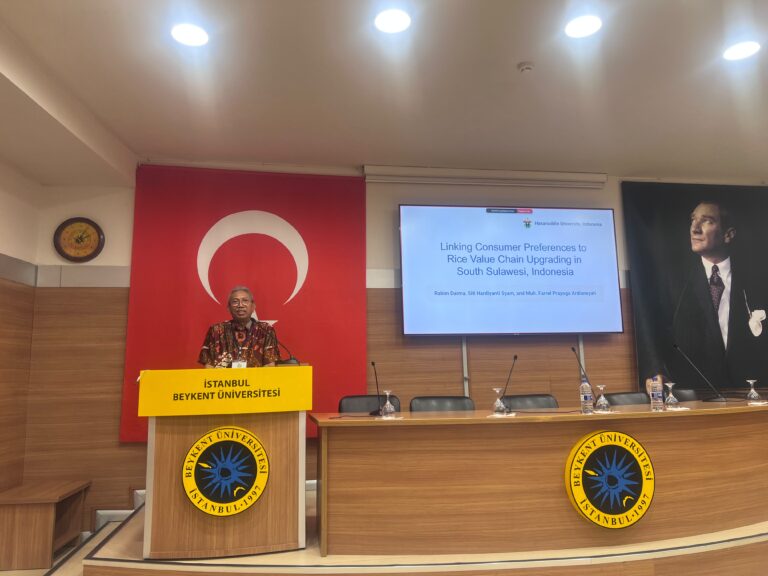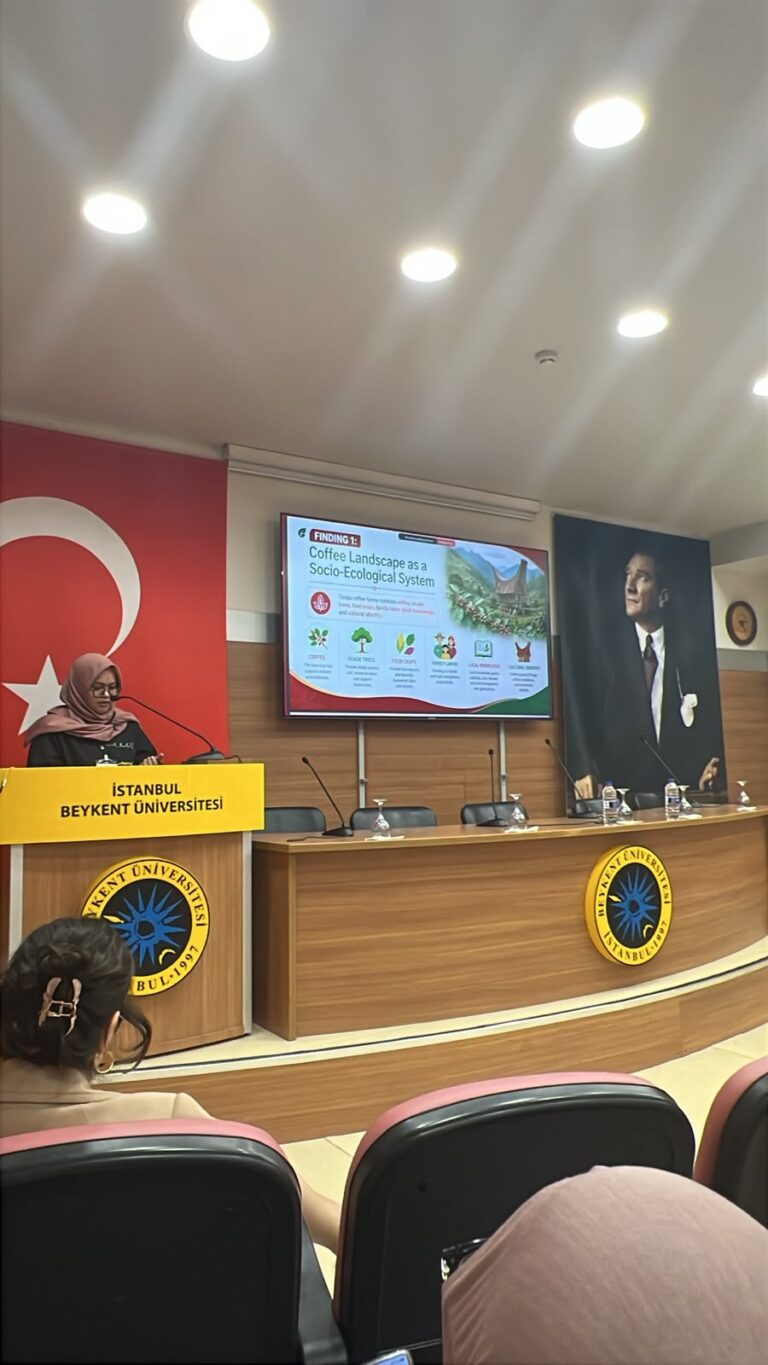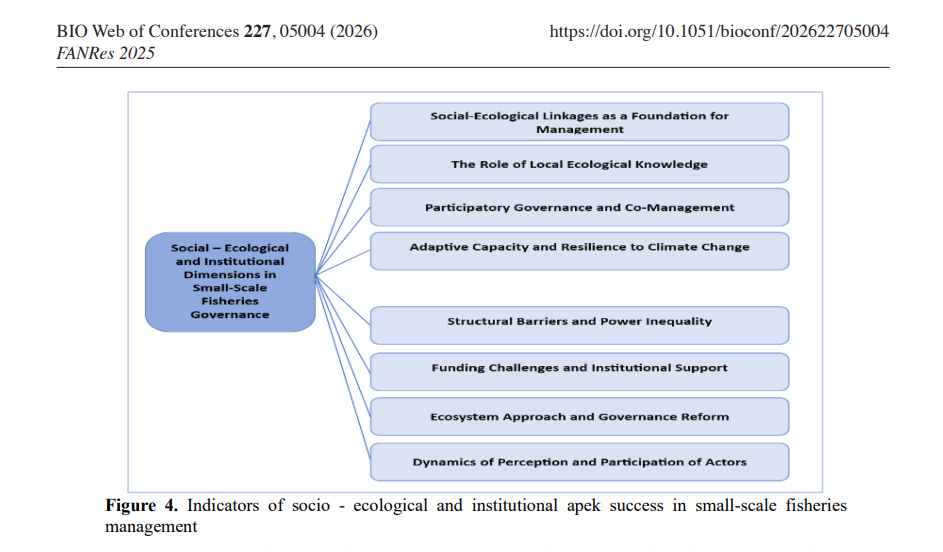

Makassar, Indonesia 18 March 2026/FCVC/-Small-scale fisheries may look simple—small boats, traditional tools, and daily catches—but they hold a powerful role in feeding the world and sustaining millions of lives. Behind this modest image lies a complex system where nature, society, and governance must work together. But when these elements fall out of balance, coastal communities pay the price. This insight comes from the article titled “Social-ecological and institutional dimensions of small-scale fisheries: A global review of governance, sustainability, adaptation,” published in BIO Web Conferences Volume 227 on 11 March 2026. The study explores how sustainability in small-scale fisheries depends not only on fish stocks, but also on social systems and institutional governance.
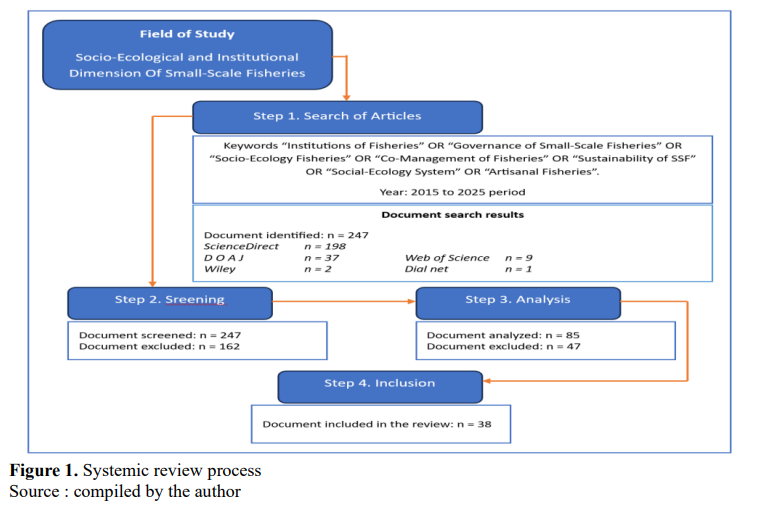
Globally, small-scale fisheries contribute more than half of the fish consumed by humans and employ around 90% of the fisheries workforce (page 2). Yet, despite their importance, these communities often face poverty, weak policy support, and limited access to markets. This directly connects to SDG 1 (No Poverty), as improving fisheries governance can significantly enhance the livelihoods of small fishermen. The research highlights that sustainability is shaped by three interconnected dimensions: ecological health, social dynamics, and institutional systems. Healthy marine ecosystems ensure fish availability, while strong community participation supports fair and effective management. However, when governance systems are weak or exclude local voices, inequalities emerge. As noted on page 9, power imbalances often allow larger actors to dominate resources, leaving small-scale fishers marginalized. This issue strongly relates to SDG 16 (Peace, Justice, and Strong Institutions). Fair governance, transparency, and inclusive decision-making are essential to ensure that all stakeholders—especially small fishermen—have equal opportunities. Without strong institutions, sustainability efforts risk failing due to conflict, injustice, and lack of accountability.
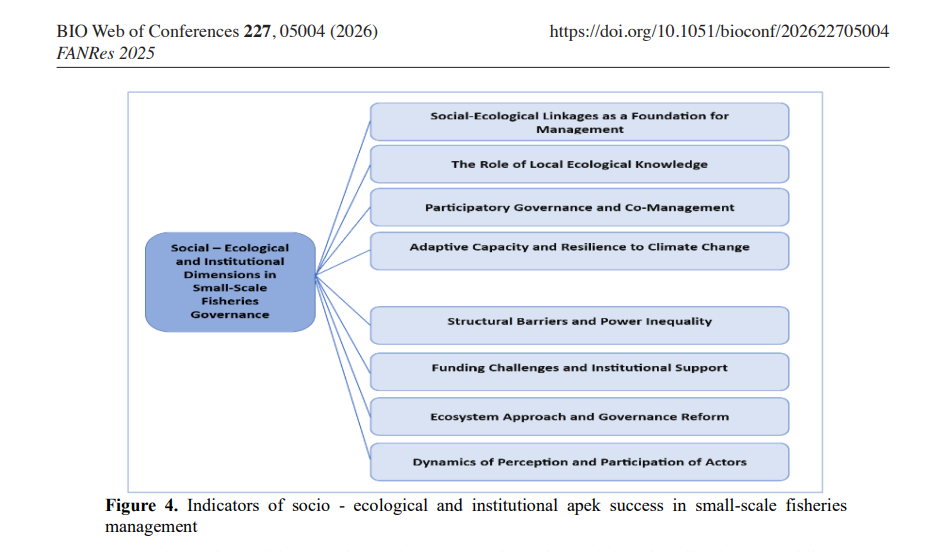
Another key finding is the importance of collaboration. The study emphasizes that successful fisheries management depends on cooperation between governments, communities, and other stakeholders. On page 11, participatory governance and co-management approaches are shown to improve adaptation and resilience in fishing communities. These partnerships align directly with SDG 17 (Partnerships for the Goals), highlighting the need for collective action to address global challenges. The article also stresses the role of local ecological knowledge (page 12). Fishermen, through years of experience, understand marine ecosystems in ways that formal science alone cannot capture. Integrating this knowledge into policies leads to more effective and culturally appropriate solutions. However, without proper support, many communities struggle to adapt to climate change, overfishing, and economic pressures.
In conclusion, small-scale fisheries are not just about catching fish—they are about people, ecosystems, and governance systems working together. Achieving sustainability requires more than environmental protection; it demands social justice, inclusive institutions, and strong partnerships. As the study suggests, the future of coastal communities depends on balancing these elements to create a fair and resilient system.
Ultimately, empowering small fishermen is not just a local issue—it is a global responsibility.
Reference:
DOI: https://doi.org/10.1051/bioconf/202622705004
Contact:
Prof. Rahim Darma
+62 852-5564-6556
rdarma@unhas.ac.id