
Makassar, Indonesia 18 March 2026/FCVC/-Coffee is more than just a daily drink—it is a livelihood for millions. In places like North Toraja, Indonesia, Arabica coffee is not only famous worldwide but also deeply connected to local culture and rural economies. However, behind every cup lies a complex story of inequality, power, and the urgent need for sustainable change. This insight is based on the article titled “Institutional dynamics, stakeholder interactions, and sustainability pathways in North Toraja’s Arabica coffee sector: a systems approach to inclusive agribusiness transformation,” published in Frontiers in Sociology by Frontiers Media on 12 March 2026.
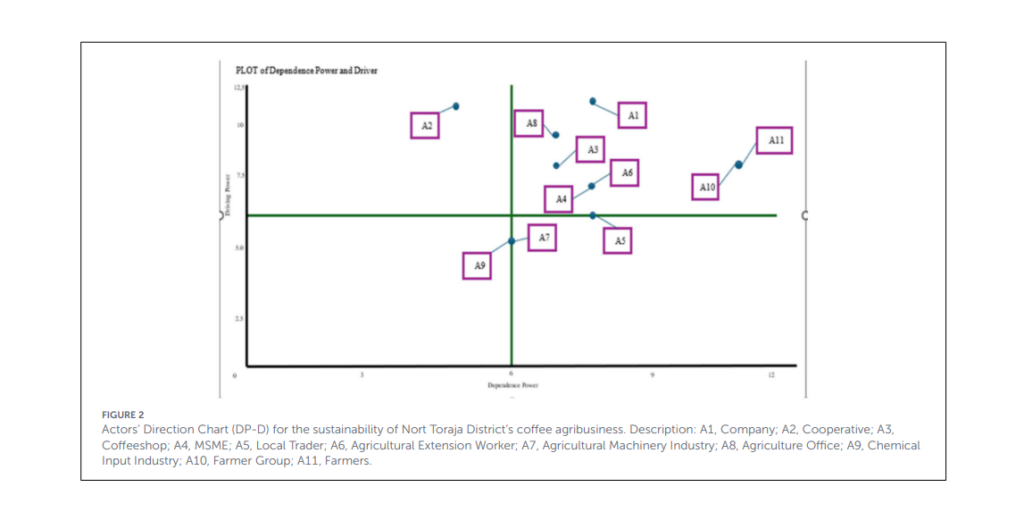
The study shows that while global demand for Toraja coffee is strong, small farmers—the backbone of production—often struggle. According to findings on page 1, they face aging plantations, climate challenges, and weak bargaining power. This situation clearly reflects SDG 1 (No Poverty), as improving farmers’ income and resilience is essential to breaking cycles of rural poverty. One major issue is inequality within the coffee value chain. As illustrated in the stakeholder analysis (pages 7–8), large actors such as companies and cooperatives hold significant influence, while farmers remain highly dependent despite their critical role. This imbalance connects directly to SDG 10 (Reduced Inequalities), emphasizing the need to create fairer systems where small farmers have a stronger voice and share of benefits.
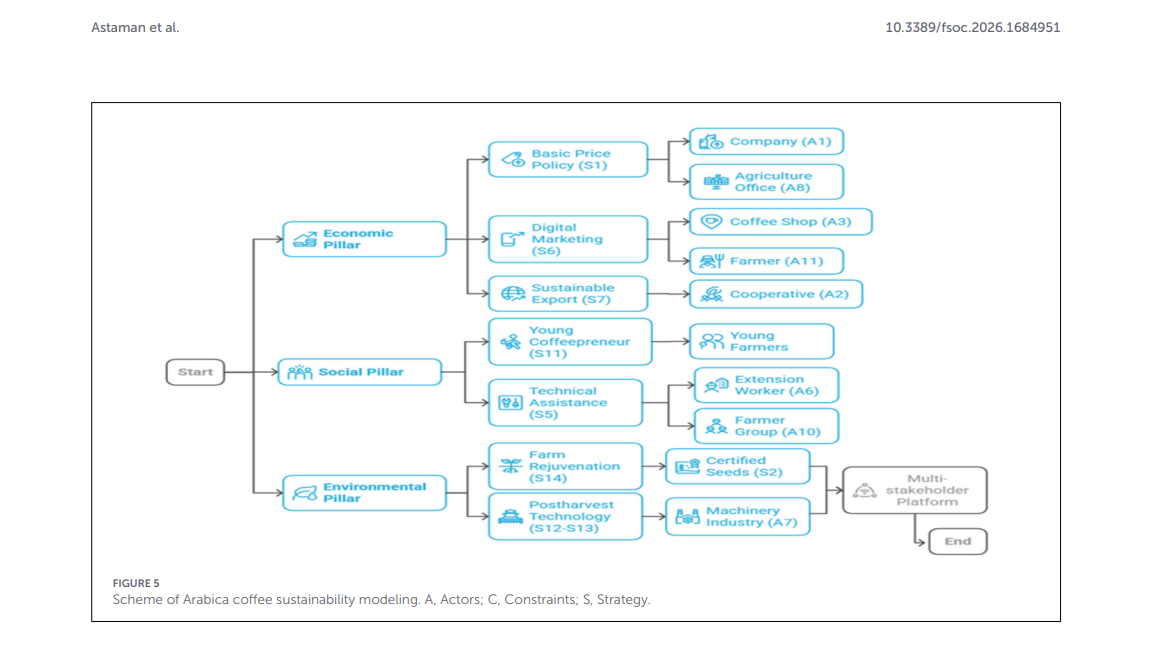
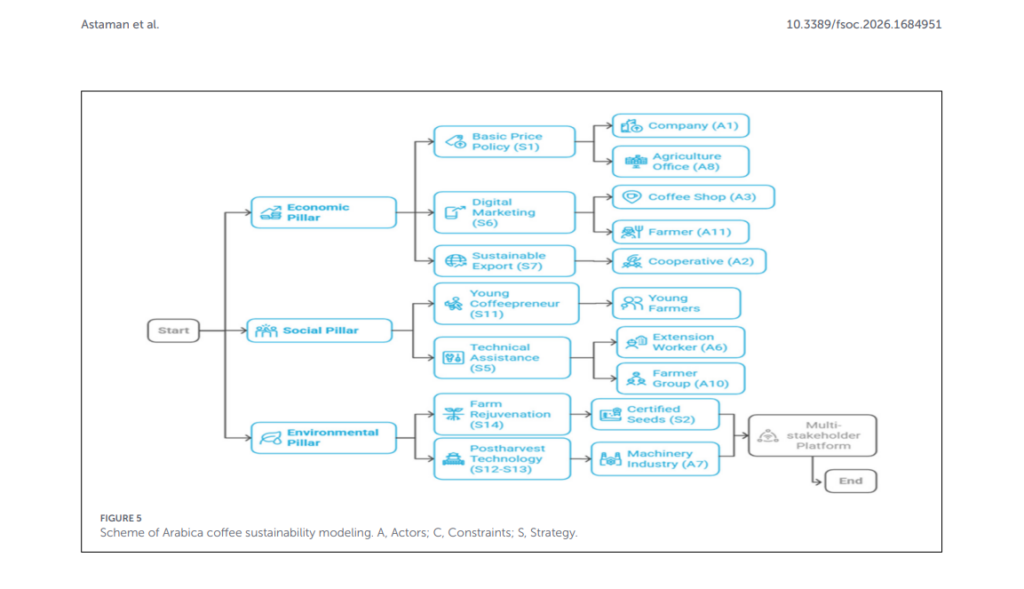
The research also highlights the importance of institutions. Weak coordination, limited government support, and fragmented policies make it difficult to achieve sustainable development. The diagram on page 13 shows how actors, constraints, and strategies interact, revealing that governance plays a central role in shaping outcomes. Strengthening transparency, participation, and accountability aligns with SDG 16 (Peace, Justice, and Strong Institutions), ensuring that decisions are inclusive and fair. Another key takeaway is the importance of collaboration. The study emphasizes multi-stakeholder partnerships involving farmers, cooperatives, governments, and private sectors. On page 12, the integrated sustainability model demonstrates that collaboration is the foundation for solving challenges—from improving productivity to enhancing market access. This reflects SDG 17 (Partnerships for the Goals), highlighting that no single actor can solve complex problems alone.
Interestingly, the research also identifies practical solutions. Policies such as minimum price guarantees and certified seed systems are powerful starting points for change (page 11). At the same time, programs like youth engagement, digital marketing, and post-harvest innovation depend on strong institutional support. This shows that sustainable transformation must combine top-down policies with bottom-up empowerment. In simple terms, the future of coffee is not just about better beans—it is about better systems. Farmers need fair prices, access to resources, and a seat at the decision-making table. Without this, sustainability will remain an empty promise.
In conclusion, North Toraja’s coffee sector teaches us an important lesson: real sustainability happens when economic growth, social justice, and strong governance work together. By addressing poverty (SDG 1), reducing inequality (SDG 10), strengthening institutions (SDG 16), and building partnerships (SDG 17), the coffee industry can become a model for inclusive and sustainable development worldwide.
Reference:
DOI: https://doi.org/10.3389/fsoc.2026.1684951
Contact:
Prof. Rahim Darma
+62 852-5564-6556
rdarma@unhas.ac.id