
Makassar/Indonesia/10-08-2026/PCD-RG —– When natural disasters strike unexpectedly, emergency relief does not always arrive instantly from distant government headquarters. In countries highly exposed to earthquakes, tsunamis, flash floods, and landslides like Indonesia, the true first line of defense is frequently found right outside our front doors. A breakthrough scientific study published on August 10, 2026, in the Prosiding Konferensi Nasional Sosiologi (PKNS), highlights this vital social reality. Titled “A Model for Strengthening Citizen Community Organizations in RT/RW-Based Disaster Response: A Systematic Literature Review (SLR),” authored by Sultan, Ria Renita Abbas, and Novia Fridayanti, the research explores how grassroot neighborhood organizations transform emergency crisis management from the ground up.
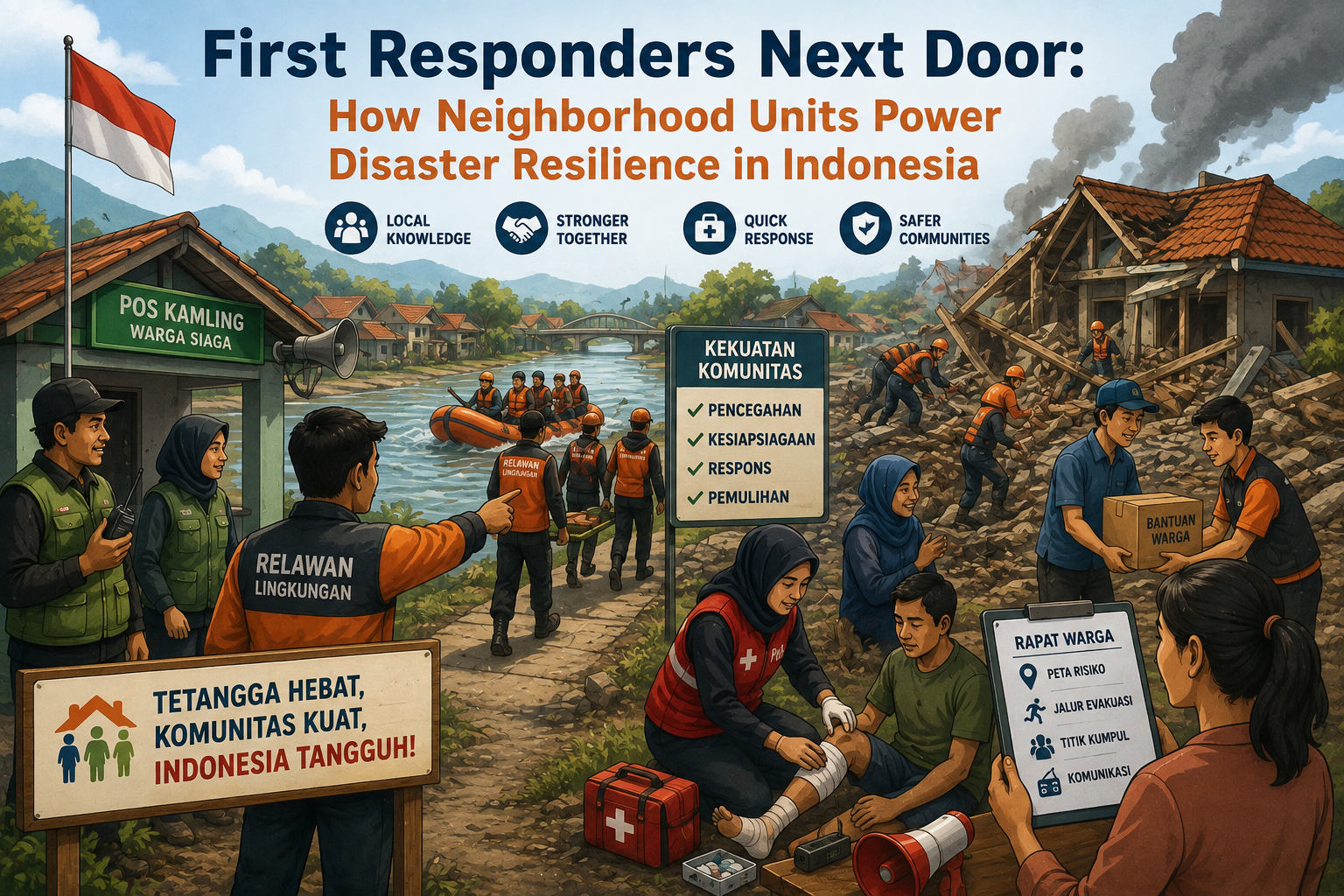
The study reveals that local neighborhood units, known as RT (Rukun Tetangga) and RW (Rukun Warga), hold immense strategic value during emergency situations due to their direct social proximity to residents. Rather than waiting passively for centralized government intervention, these local community structures function as primary centers of social coordination. They rapidly disseminate critical disaster warnings, coordinate emergency social aid distribution, organize immediate evacuation efforts, and mobilize active volunteers. Furthermore, RT/RW leaders possess unmatched ground-level insight, enabling them to quickly identify, map, and register vulnerable groups—including elderly citizens, individuals with disabilities, children, and pregnant women—who require urgent, targeted relief during crises.
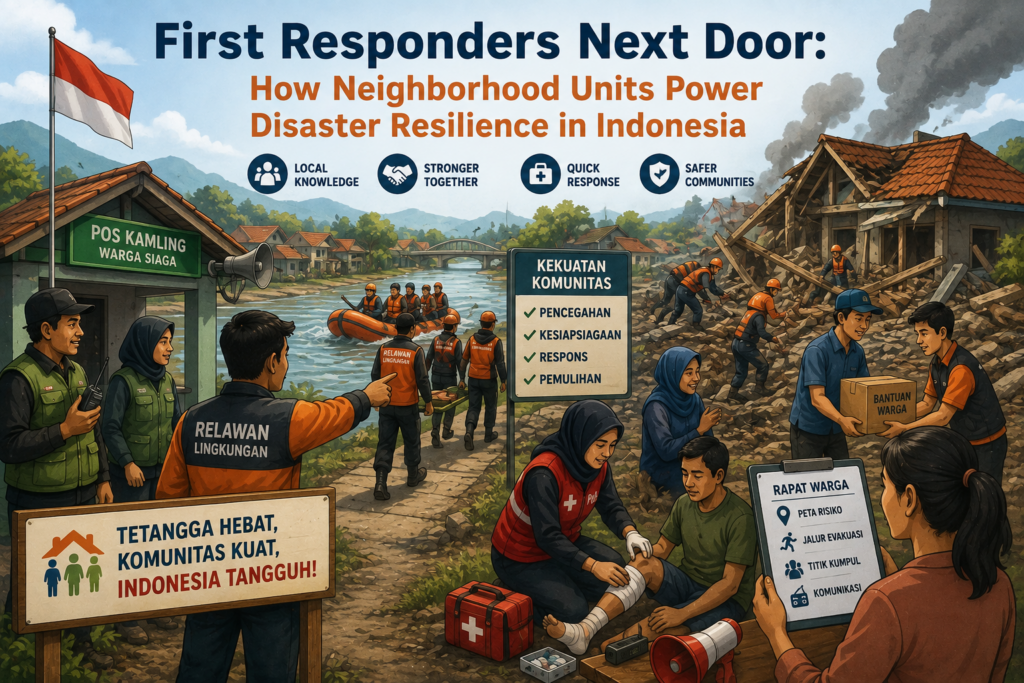
To maximize this grassroot potential, the authors synthesized existing scientific literature into a structured five-pillar model for community empowerment. First, local neighborhood organizations require continuous capacity building through practical disaster mitigation training and regular emergency response simulations. Second, community disaster education must foster participatory communication by actively involving vibrant youth organizations such as Karang Taruna. Third, community resilience depends heavily on nurturing social capital—the deep bonds of trust, mutual aid (gotong royong), and collective social solidarity that bind community members together. Fourth, modernizing neighborhood administrative systems through local data collection and data digitalization ensures aid reaches vulnerable residents accurately and without bureaucratic delays.
Finally, the model highlights collaborative governance, creating strong operational synergies between municipal authorities, civil society organizations, and local residents. This collaborative framework directly aligns with SDG 17: Partnerships for the Goals, demonstrating that multi-stakeholder cooperation between government agencies and grassroots communities is crucial for building sustainable, disaster-resilient societies. By uniting local wisdom with official public resources, communities can overcome common structural hurdles such as low disaster literacy, weak institutional communication channels, and limited inclusive access for marginalized populations like persons with disabilities.
Ultimately, building truly disaster-resilient nations requires far more than physical infrastructure and top-down management; it demands empowering ordinary citizens at the local neighborhood level. As this milestone scientific publication demonstrates, strengthening RT/RW citizen organizations guarantees that when unexpected crises hit, no neighborhood is left behind, effectively turning grassroot social solidarity into life-saving action.
Reference:
DOI: –
Contact:
Prof. Dwia Aries Tina Pulubuhu
+62 87856272912 (PCD-RG)
dwiatn@unhas.ac.id