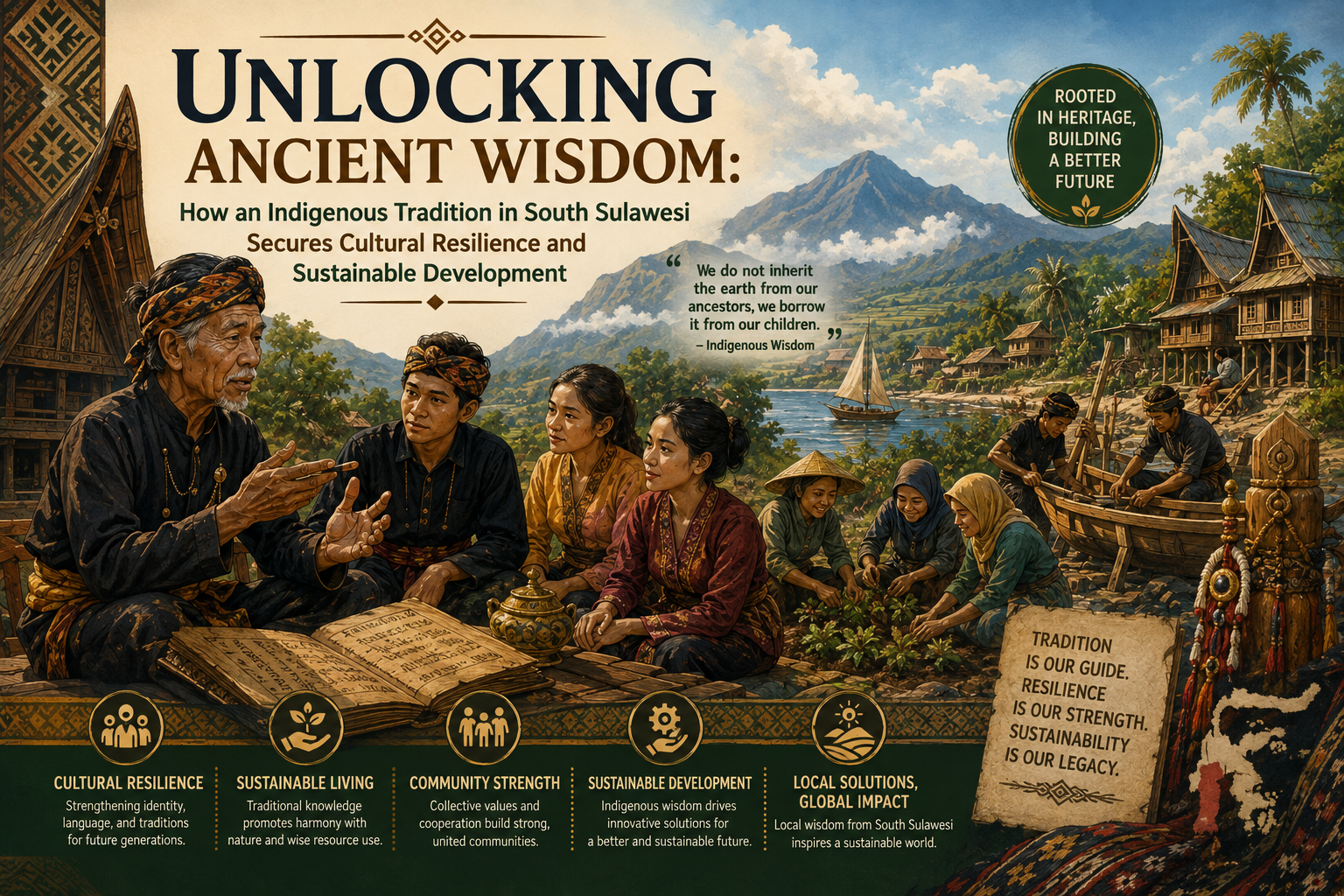

Makassar/Indonesia/25-03-2026/PCD-RG —– In an era defined by rapid globalization, rapid technology changes, and aggressive modernization, indigenous minority groups across the globe frequently encounter severe threats of cultural erosion and social marginalization. Amidst these ongoing vulnerabilities, the Towani Tolotang indigenous community centered in Sidenreng Rappang Regency, South Sulawesi, provides a remarkable example of cultural endurance through an annual communal ritual known as the Sipulung tradition. Rather than being a simple religious pilgrimage, this ancestral gathering functions as a dynamic structural ecosystem that actively secures the community’s long-term social, economic, and spiritual survival.
These compelling insights are thoroughly explored in a groundbreaking academic publication titled Beyond Ritual: Socio-Cultural and Economic Significance of the Sipulung Tradition in the Towani Tolotang Indigenous Community, published in the SIGn Journal of Social Science by CV. Social Politic Genius (SIGn) on March 25, 2026. The study highlights how indigenous practices can effectively deconstruct modern sociological challenges and offer lessons in community resilience.
One of the most remarkable features of the Sipulung tradition, centrally conducted at the sacred Perrinyameng tomb site, is its function as a vibrant cultural education arena. Young children are actively integrated from toddlerhood (mabeccu mopi), absorbing moral, social, and environmental values through direct experiential habituation rather than abstract classroom doctrine. Elegantly adorned in traditional attire such as woven silk sarongs, black caps (songkok), and traditional blouses (kebaya), young generations organically internalize bodily decorum, politeness, and ancestral identity. This grass-roots educational mechanism aligns directly with SDG 4 (Quality Education) by fostering inclusive, lifelong learning opportunities and ensuring the sustainable transmission of non-formal cultural heritage.
Furthermore, Sipulung operates as an essential catalyst for social solidarity and peaceful co-existence within a pluralistic region. Every year, thousands of community members, including out-migrants (Passompe) residing far from their homeland, return to reunite with their extended families. Managed under the structured authority of traditional leaders (Uwatta), this grand reunion overcomes geographic isolation, restores kinship ties, and fosters interfaith tolerance among diverse religious groups.
Beyond spiritual reflection, the tradition demonstrates an impressive economic rationality anchored in the hard-work philosophy of Resopa na temmangingngi, which dictates that divine favor is achieved through persistent dedication. Families work industriously throughout the year, converting their earned wealth into fine garments and gold jewelry as symbolic expressions of respect for their sacred heritage. To balance these solemn activities, the celebration incorporates Massempe’, a traditional male kick-combat agility sport that functions as an emotional catharsis, reinforcing chivalry and resolving social friction.
Ultimately, the Sipulung tradition proves that ancestral indigenous wisdom holds vital keys to sustainable development, community education, and social harmony. Safeguarding these sacred practices ensures a far more inclusive, peaceful, and culturally resilient future for everyone.
Reference:
DOI: https://doi.org/10.37276/sjss.v6i2.636
Contact:
Prof. Dwia Aries Tina Pulubuhu
+62 87856272912 (PCD-RG)
dwiatn@unhas.ac.id