
Leader of PCD-RG Prof. Dwia Aries Tina Pulubuhu Becomes a Recipient of the “Riset Kolaborasi Indonesia 2026” Program
Sustainable democratic resilience and national stability rely heavily on the continuous production of rigorous, collaborative scientific research. Emphasizing this critical academic mission, Prof. Dwia Aries Tina Pulubuhu, M.A., the distinguished Leader of the Peace, Conflict, and Democracy Research Group (PCD-RG), has been officially selected as a recipient of the prestigious “Riset Kolaborasi Indonesia 2026” (Indonesian Collaborative Research) program. This remarkable academic achievement highlights her unwavering dedication to advancing empirical studies that directly address complex socio-political dynamics within Indonesian society, cementing her reputation as a leading figure in the field of conflict resolution.
Under this highly competitive national grant, Prof. Dwia assumes the crucial role of the Host researcher for a groundbreaking study titled “Community Based Peacebuilding: Peran Organisasi Berbasis Komunitas dalam Pencegahan dan Resolusi Konflik di Indonesia” (Community Based Peacebuilding: The Role of Community-Based Organizations in Conflict Prevention and Resolution in Indonesia). This applied research is strategically designed to investigate and scientifically validate the indispensable role of grassroots initiatives and local community frameworks in mitigating tensions. By focusing on community-driven mechanisms, the study aims to uncover sustainable, culturally resonant approaches to conflict prevention that top-down diplomatic strategies often overlook.
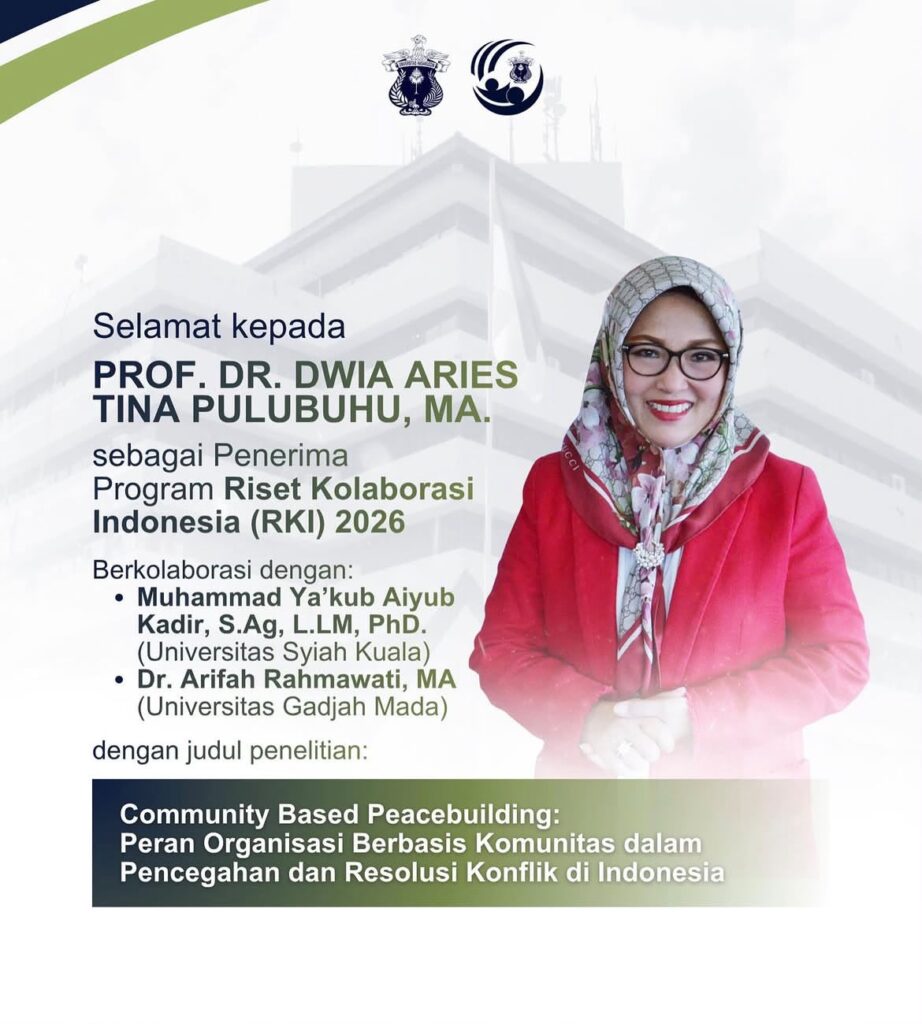
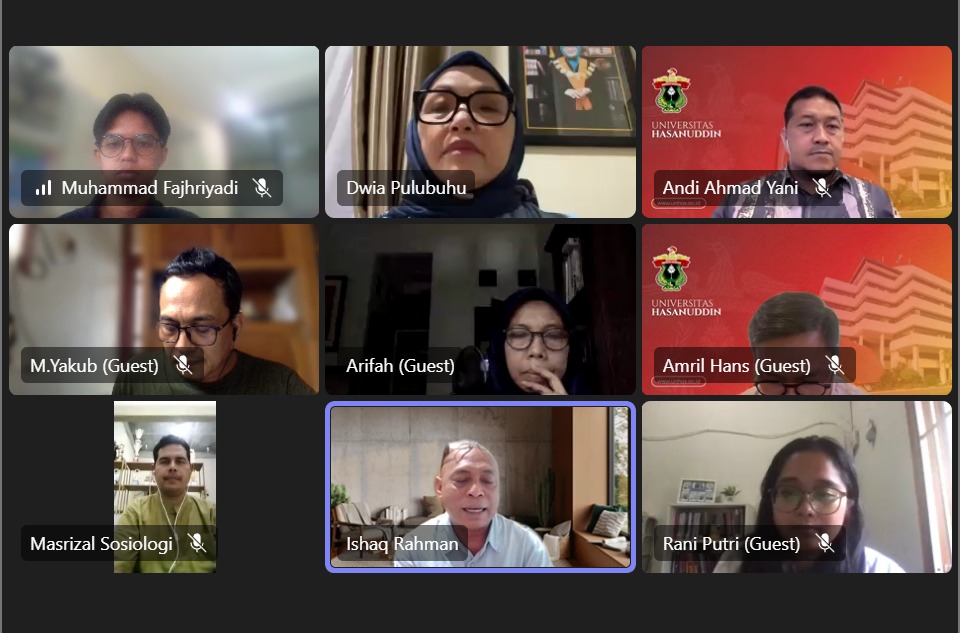
To ensure a comprehensive and multidimensional analysis, the research integrates profound expertise from top-tier national institutions. Prof. Dwia is synergistically partnering with esteemed academic counterparts: Muhammad Ya’kub Aiyub Kadir, S. Ag., LLM, PhD from Universitas Syiah Kuala, and Dr. Arifah Rahmawati, MA from Universitas Gadjah Mada. This powerhouse academic consortium will conduct extensive field research across three meticulously selected locations: Central Sulawesi, Aceh, and D.I. Yogyakarta. These regions offer rich, diverse sociological contexts and historical backgrounds concerning conflict and peacebuilding, providing invaluable data to formulate robust, nationwide theoretical frameworks and practical conflict resolution models.
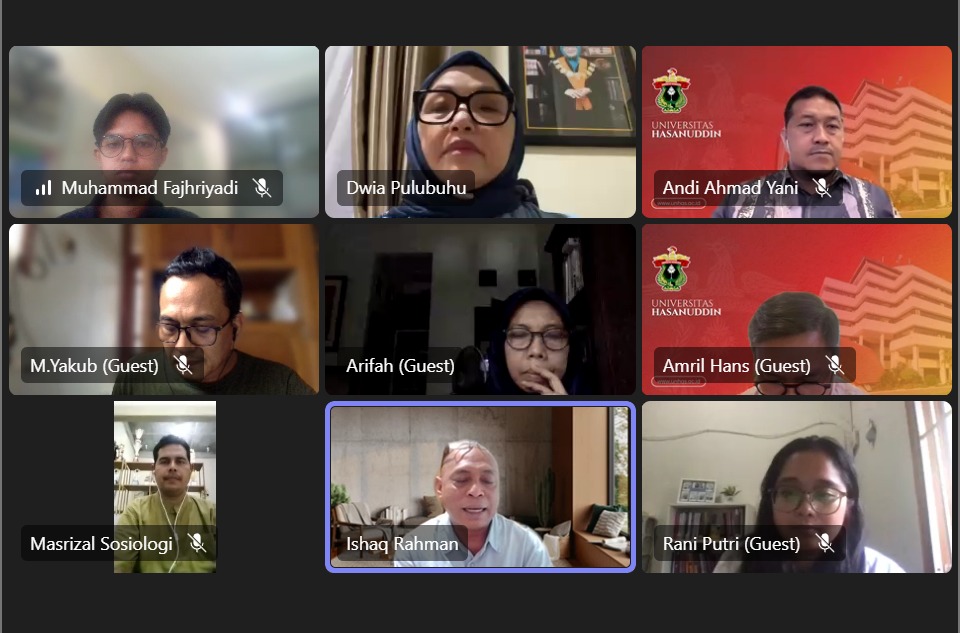
This monumental collaborative endeavor is intrinsically linked to the United Nations Sustainable Development Goals (SDGs). By uniting three major state universities to tackle complex national challenges, the project explicitly champions SDG 17: Partnerships for the Goals, demonstrating that inter-institutional and multi-stakeholder collaboration is vital for sustainable development. Furthermore, the generation of accessible, high-quality empirical knowledge directly supports SDG 4: Quality Education, enriching the academic curriculum with locally sourced peacebuilding literature and empowering future generations with the analytical tools needed to foster democratic engagement.
Ultimately, this 2026 collaborative research program represents a significant milestone for PCD-RG and the broader Indonesian academic community. By scientifically mapping the capabilities of community-based organizations, the findings will provide vital, evidence-based recommendations for policymakers, security sectors, and civil society actors. This strategic knowledge production ensures that Indonesia remains at the forefront of implementing effective, culturally sensitive peacebuilding mechanisms. It ultimately contributes to shaping a more harmonious, inclusive, and socially resilient nation, solidifying the vital impact of academic inquiry on real-world stability.