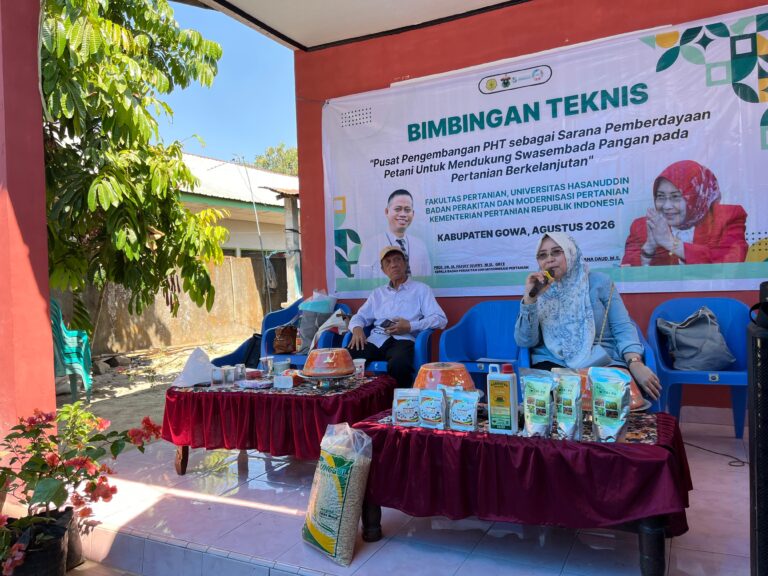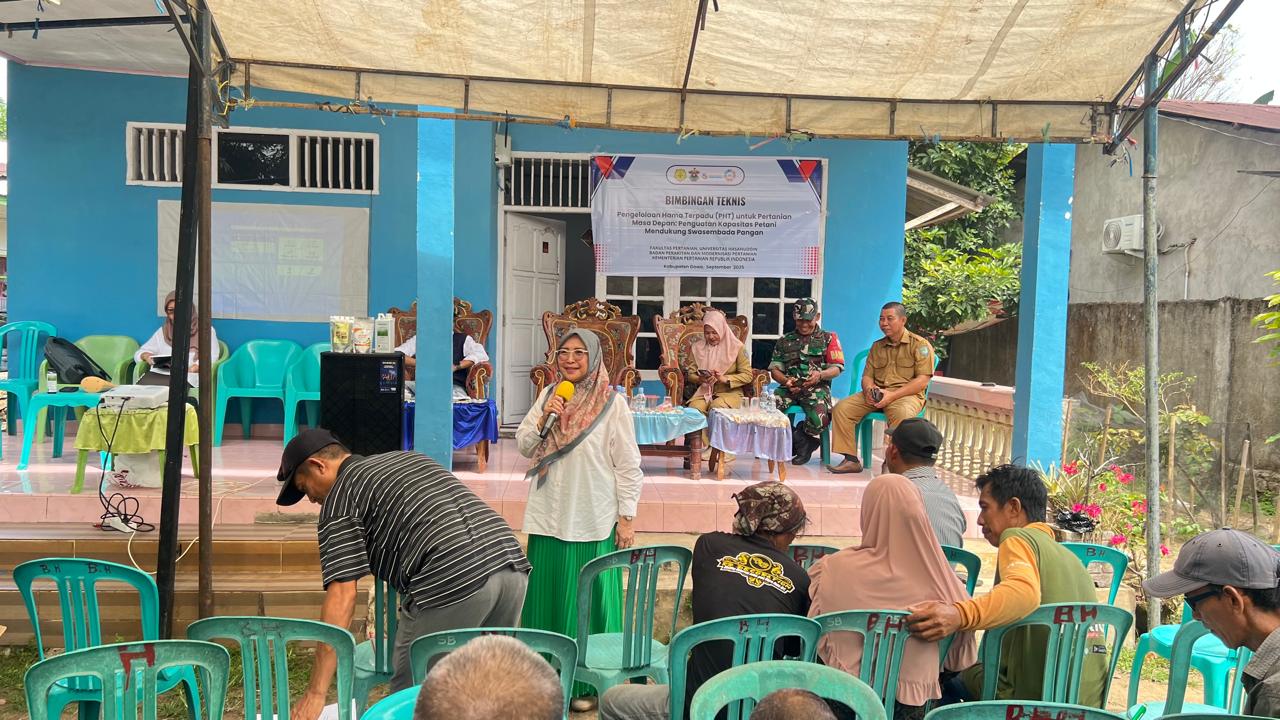

Gowa Regency, Indonesia, September 15, 2025/BIONE/–A community service activity focusing on the dissemination of Integrated Pest and Disease Management practices was conducted to support sustainable agriculture. The program was designed to enhance farmers’ knowledge and capacity in managing agricultural pests and diseases through environmentally friendly and scientifically grounded approaches.
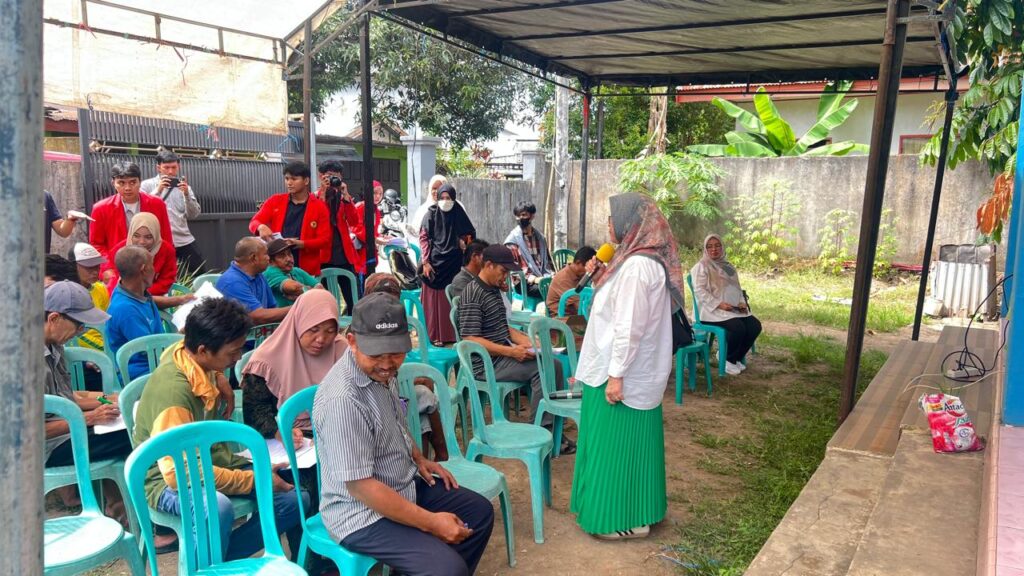
The activity involved a total of 34 participants, consisting of four lecturers, including Prof. Dr. Ir. Itji Diana Daud, M.S., two researchers, seven students, nineteen members of local farmer groups, and two village office staff members. The diverse composition of participants created a collaborative learning environment that encouraged the exchange of knowledge, experiences, and practical perspectives on pest and disease management in local agricultural systems.
The session featured Prof. Dr. Ir. Itji Diana Daud, M.S. and Prof. Dr. Ir. Baharuddin as key resource persons, who delivered comprehensive insights into the principles and application of Integrated Pest and Disease Management in crop production systems. Their presentations emphasized the importance of integrating multiple pest and disease control strategies, including cultural practices, biological control, habitat management, and the responsible use of chemical pesticides. The discussion highlighted how these approaches can effectively reduce pest populations while minimizing negative impacts on the environment and human health.
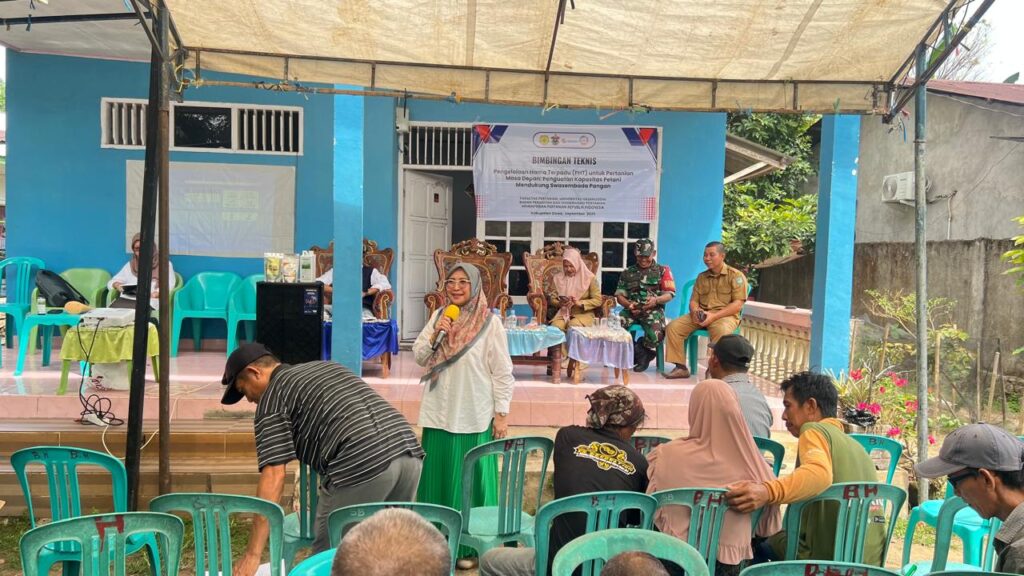
The activity was conducted in an interactive manner, allowing participants to share their experiences, challenges, and existing pest management practices. This exchange of knowledge enabled a more contextual understanding of local pest and disease issues and facilitated the development of practical, site-specific solutions. Farmers were also introduced to the importance of pest monitoring, economic threshold concepts, and the role of natural enemies in maintaining ecological balance within agricultural ecosystems.
The involvement of students provided valuable experiential learning opportunities, strengthening their understanding of agricultural extension, integrated pest management, and community engagement. At the same time, the participation of researchers, lecturers, village officials, and farmer groups fostered stronger collaboration among stakeholders working toward sustainable agricultural development.
This outreach initiative represents a meaningful effort to bridge scientific knowledge and practical application in the field. By promoting Integrated Pest and Disease Management strategies, the activity contributes to improving crop productivity, reducing dependence on chemical pesticides, and supporting environmentally sustainable farming practices. Furthermore, the collaboration among academics, researchers, village authorities, and farming communities highlights the importance of collective action in strengthening agricultural resilience in Gowa Regency.
These efforts are aligned with the Sustainable Development Goals (SDGs), particularly Goal 1 (No Poverty) by improving farmers’ livelihoods, Goal 4 (Quality Education) through knowledge transfer and experiential learning, and Goal 17 (Partnerships for the Goals) by strengthening collaboration among stakeholders. In addition, this initiative supports Goal 2 (Zero Hunger) by enhancing sustainable crop production, Goal 12 (Responsible Consumption and Production) through the reduction of chemical pesticide use, and Goal 15 (Life on Land) by promoting biodiversity conservation and ecosystem based pest management.