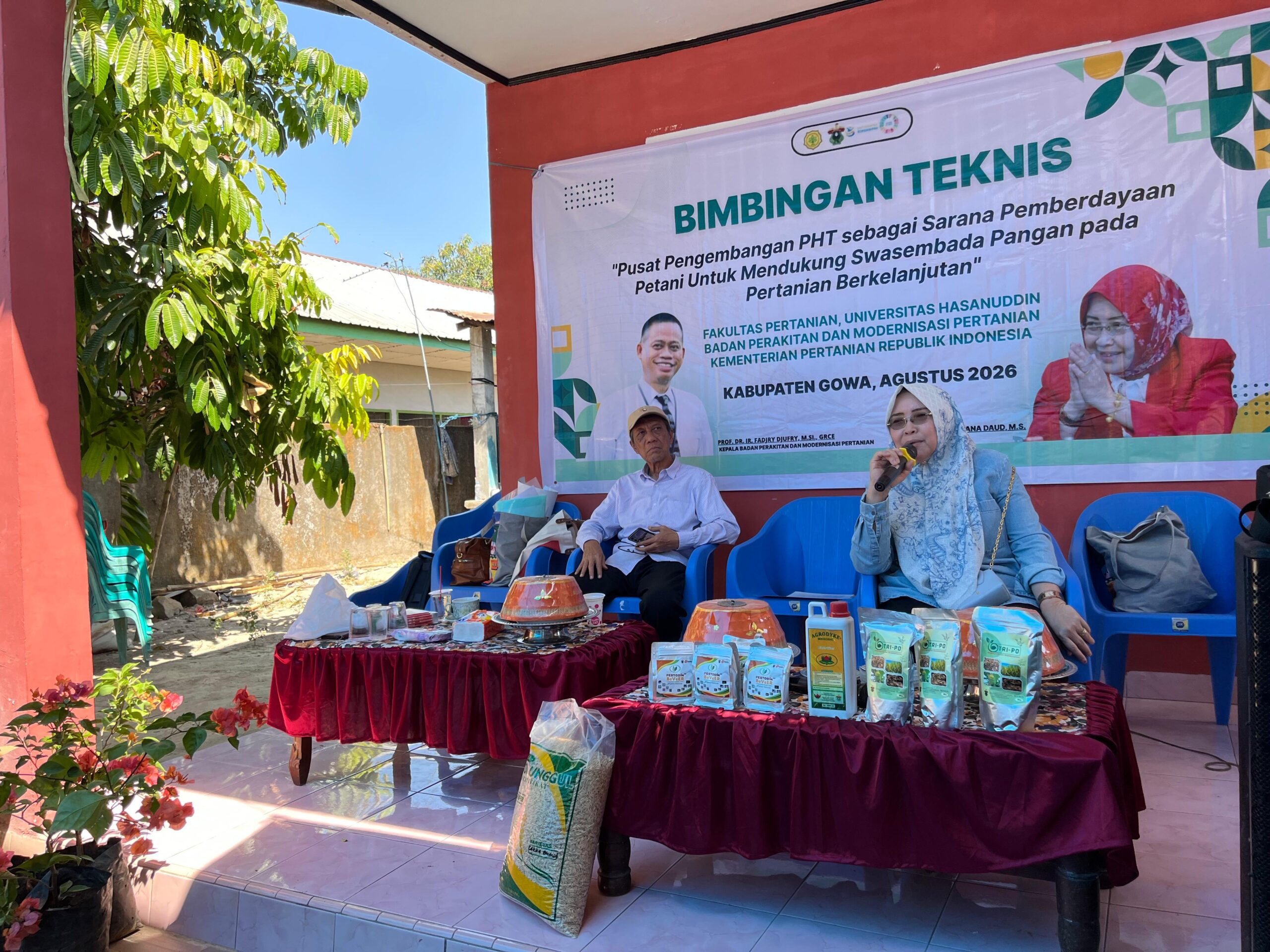

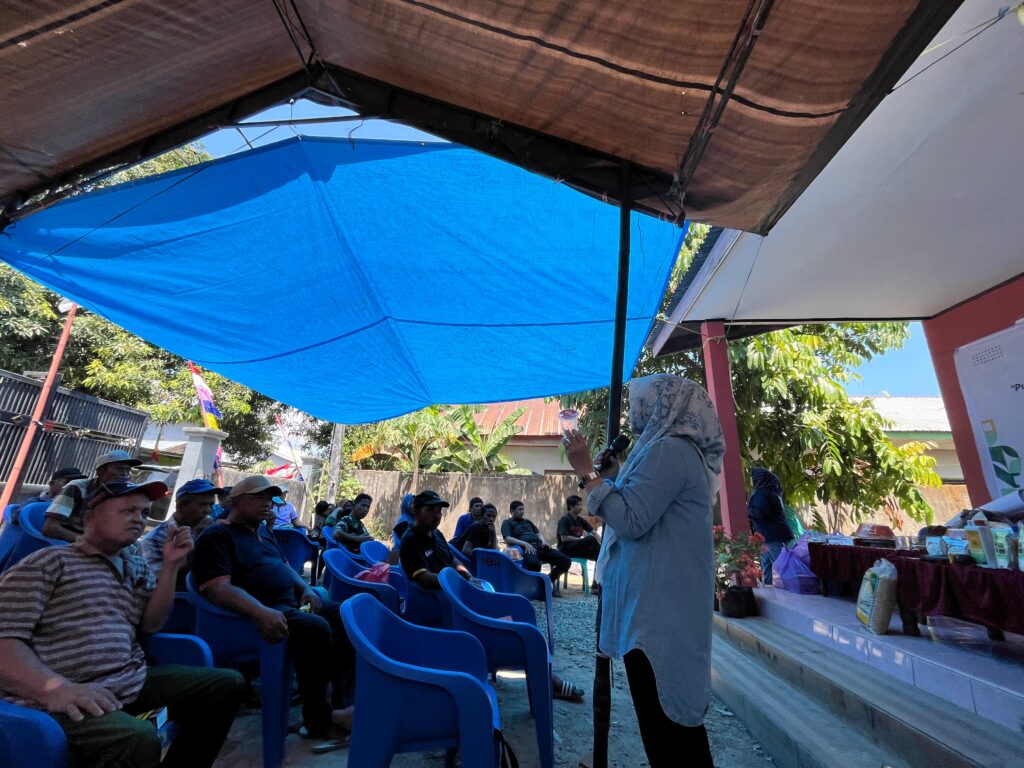
Gowa, Indonesia, August 20, 2026/BIONE/—The Biopesticides and Natural Enemies (BIONE) Research Group conducted a community engagement activity entitled “Socialization of the Integrated Pest Management (IPM) Development Center as a Means of Farmer Empowerment to Support Food Self-Sufficiency through Sustainable Agriculture” in Gowa, South Sulawesi, Indonesia. The activity was attended by Prof. Itji Diana Daud, Ahwiyah Ekawaty Said, S.P., M.Si, and Mita Yusri, S.P., M.Si. from the BIONE Research Group, a village head, a representative of the Agency for Agricultural Instrument Standardization and Modernization (BRMP), Prof. Dr. Ir. Fadjry M.Si., and 18 members of the local farmer group. This initiative aimed to strengthen farmers’ capacity to assess rice field conditions through an agroecosystem-based approach and facilitate the establishment of an IPM Development Center at the farmer group level.
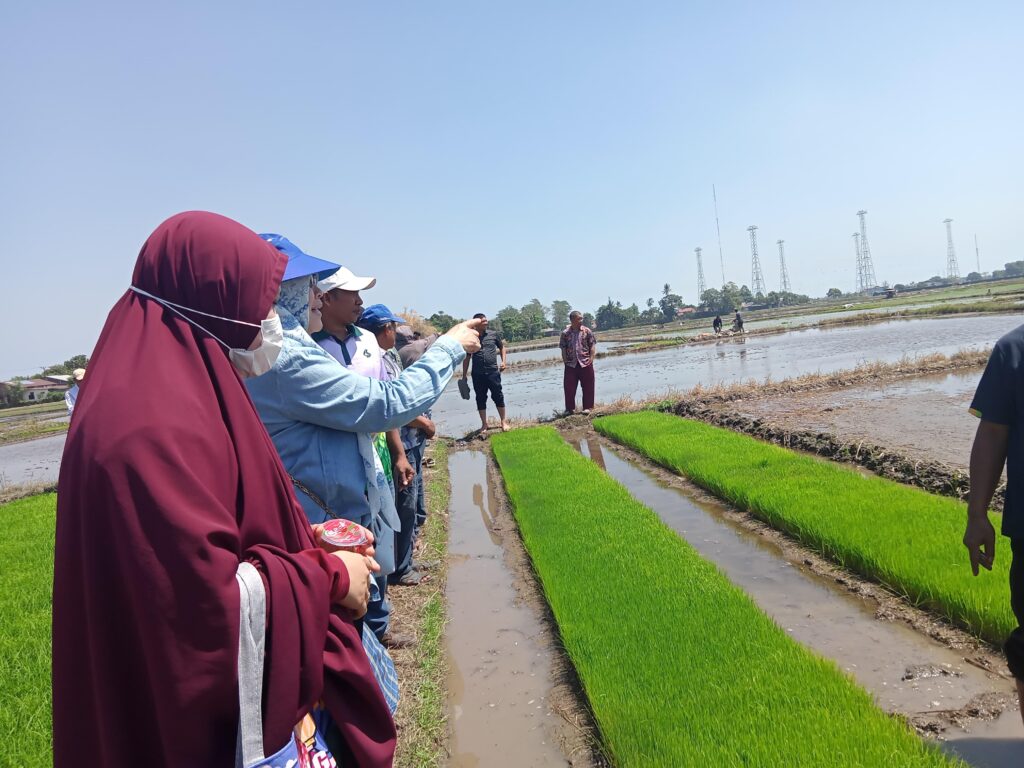
The activity featured several educational and practical sessions designed to introduce farmers to sustainable agricultural practices. The first session focused on rice field agroecosystems, emphasizing the importance of understanding interactions among crops, insect pests, natural enemies, and other environmental components. Through this session, farmers were encouraged to observe and analyze field conditions to identify pest problems and determine appropriate management strategies based on agroecosystem conditions.
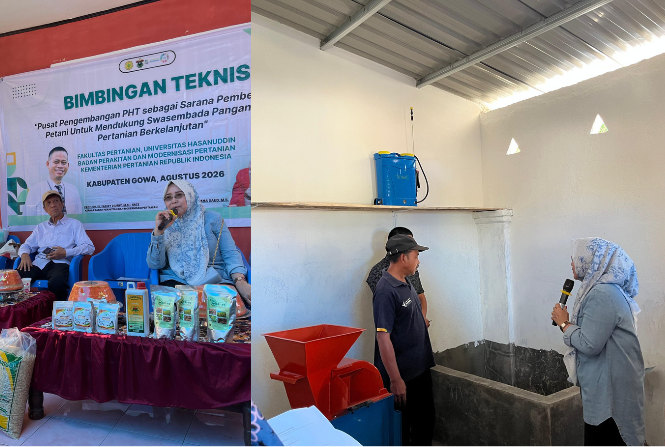
Furthermore, Prof. Itji Diana Daud introduced TRIPO and other organic fertilizers to the farmers, highlighting their potential to improve soil health and support sustainable crop production. The participants were also introduced to the use of a chopping machine for processing agricultural materials, particularly plant residues, to facilitate organic fertilizer production and promote the utilization of agricultural waste. In addition, refugia seedlings were distributed to farmers to provide habitats and food resources for natural enemies, thereby supporting natural pest control and biodiversity conservation in agricultural ecosystems.
Through these activities, farmers were encouraged to adopt a more integrated approach to crop protection by combining agroecosystem analysis, organic fertilizer utilization, agricultural waste processing, and conservation of natural enemies. The establishment of an IPM Development Center at the farmer group level is expected to provide a platform for continuous learning, practical implementation, and knowledge exchange among farmers. This initiative also seeks to strengthen farmer participation in making informed pest management decisions and reducing dependence on conventional chemical pesticides.
This community engagement activity reflects BIONE’s commitment to empowering farming communities and promoting sustainable agricultural development. The initiative contributes to SDG 1 (No Poverty) by strengthening farmers’ capacities and supporting sustainable agricultural livelihoods. It also contributes to SDG 2 (Zero Hunger) by supporting sustainable food production and strengthening food security through improved pest management practices. Furthermore, the activity supports SDG 4 (Quality Education) by enhancing farmers’ knowledge and practical skills in agroecosystem analysis and Integrated Pest Management. The introduction of organic fertilizers and agricultural waste processing technologies aligns with SDG 12 (Responsible Consumption and Production), while the distribution of refugia seedlings contributes to SDG 15 (Life on Land) by promoting biodiversity conservation and the protection of beneficial organisms. Finally, collaboration among researchers, government representatives, village authorities, and farmer groups reinforces SDG 17 (Partnerships for the Goals) through knowledge exchange and community-based agricultural development.
The activity represents an important step toward strengthening the role of farmer groups in implementing Integrated Pest Management at the local level. By combining scientific knowledge, practical technologies, and community participation, BIONE aims to encourage farmers to become more knowledgeable and actively involved in managing their agricultural ecosystems. These collaborative efforts are expected to support resilient farming communities, environmentally responsible agricultural practices, and sustainable food production systems.