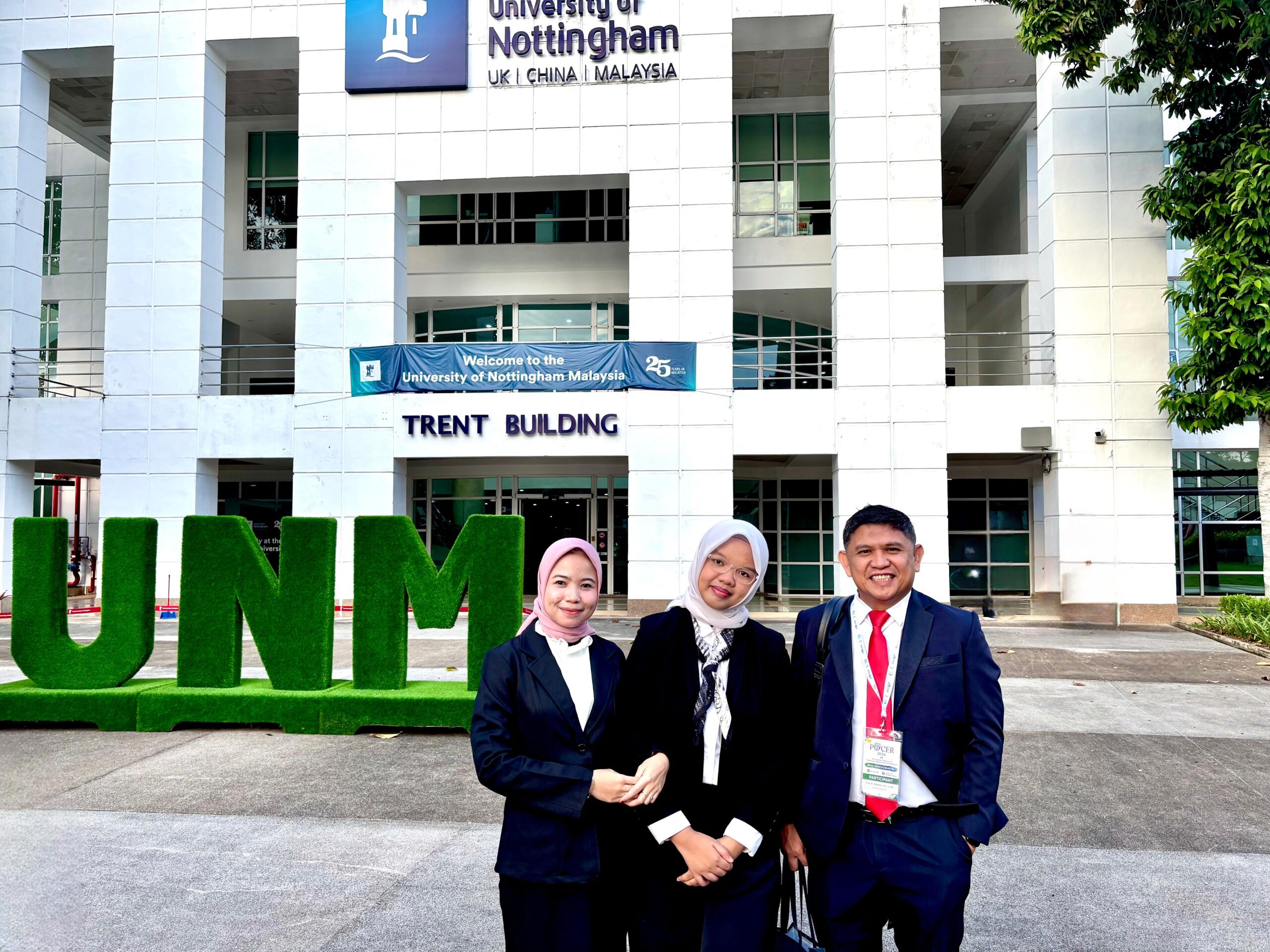

The TRG Waste Management Law Team participated in the 8th International Conference and Postgraduate Colloquium of Environmental Research (POCER 2026), held at the University of Nottingham Malaysia, with approximately 100 participants, including academics, researchers, legal scholars, policymakers, postgraduate students, and environmental practitioners from various countries. The conference served as an international platform for disseminating research, exchanging scientific knowledge, and fostering interdisciplinary collaboration to address contemporary environmental governance challenges and promote sustainable development.
The primary objective of the conference was to strengthen international academic collaboration, disseminate high-quality research, and promote evidence-based policy discussions on environmental governance, sustainability, and legal reform through interdisciplinary approaches. Through keynote lectures, parallel presentation sessions, and academic discussions, participants explored innovative solutions to environmental challenges while strengthening research partnerships among universities, research institutions, and policymakers.
Representing the TRG Waste Management Law Team, a research paper entitled “Institutional Design and Fragmentation of Authority in the Implementation of Environmental Justice in Indonesia” was presented during the conference. The paper examined the structural challenges of environmental governance in Indonesia arising from fragmented institutional arrangements and overlapping regulatory authorities within the extractive industry sector. The study argued that environmental governance should not be viewed solely through the lens of regulatory compliance but must also incorporate institutional coordination, regulatory harmonization, and environmental justice as fundamental elements of sustainable governance.
Using normative legal research supported by conceptual, statutory, and comparative approaches, the study applied Institutional Governance Theory and Ecological Constitutionalism to analyze the relationship between institutional design, environmental governance, and ecological protection within the extractive industry. The findings revealed that sectoral governance, fragmented institutional authority, and weak inter-agency coordination continue to hinder the effective implementation of environmental justice and integrated environmental governance. To address these challenges, the research proposed an integrated environmental governance model that emphasizes regulatory harmonization, stronger inter-institutional coordination, and ecological accountability. The proposed framework is expected not only to strengthen Indonesia’s environmental governance system but also to serve as a valuable reference for other developing countries seeking to reform governance in the extractive industry while advancing sustainable development.
The participation of the TRG Waste Management Law Team in this international conference reflects the team’s commitment to advancing legal scholarship on environmental governance, institutional reform, and sustainable natural resource management through global academic engagement. The conference also provided valuable opportunities to exchange ideas with international experts, receive constructive scholarly feedback, and establish collaborative research networks that will support future interdisciplinary studies in environmental law and governance.
This academic activity contributed to the achievement of several Sustainable Development Goals (SDGs). It supported SDG 4 (Quality Education) by promoting scientific knowledge exchange, strengthening research capacity, and encouraging international academic collaboration. The research also aligned closely with SDG 16 (Peace, Justice and Strong Institutions) by advocating institutional reform, regulatory harmonization, and accountable environmental governance. Furthermore, the conference strengthened cooperation among universities, researchers, and policymakers from different countries, thereby contributing to SDG 17 (Partnerships for the Goals) through the development of collaborative networks dedicated to sustainable environmental governance.
Overall, the participation of the TRG Waste Management Law Team at the 8th International Conference and Postgraduate Colloquium of Environmental Research (POCER 2026) demonstrates the team’s continued contribution to international discussions on environmental governance and legal reform. By presenting an integrated institutional model that addresses fragmented authority and strengthens ecological accountability, the research reinforces the importance of legal and institutional innovation in achieving environmental justice and promoting more sustainable governance of the extractive industry in Indonesia and other developing countries.