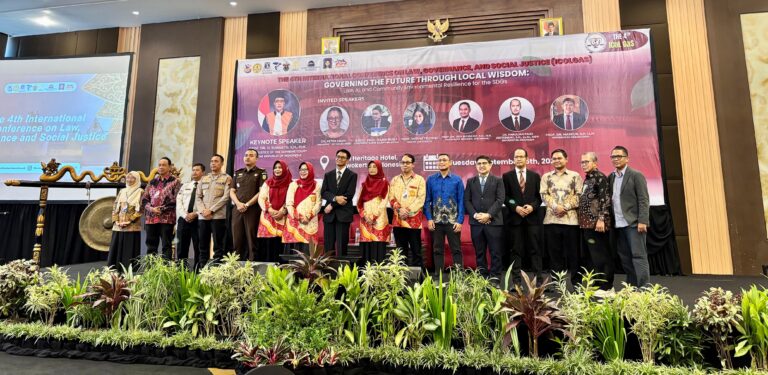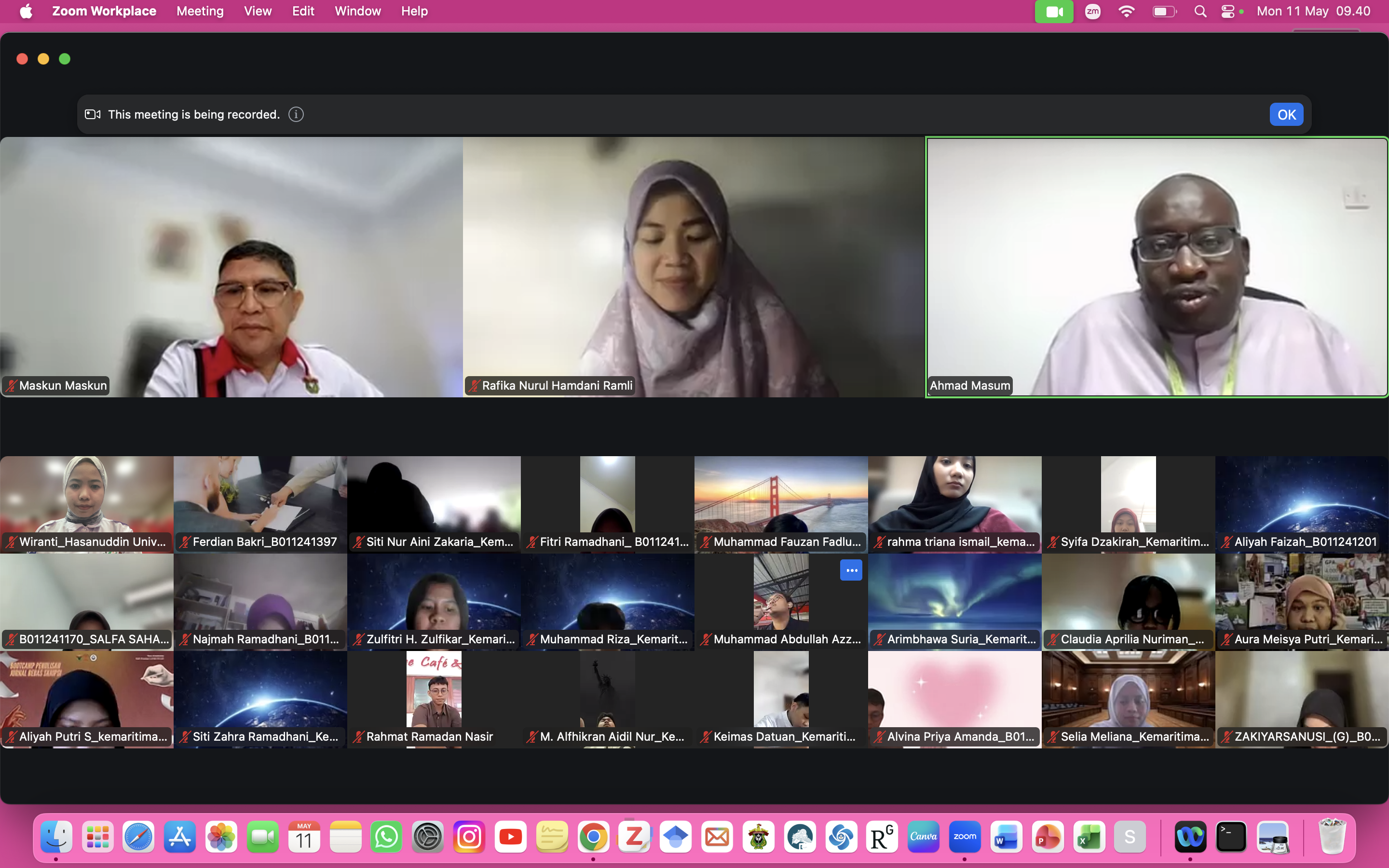

As part of the 74th Dies Natalis celebration of the Faculty of Law, Hasanuddin University, the Research and Thematic Group (TRG) Waste Management Law successfully organized an international guest lecture entitled “Ecological Justice: Human Rights and the Environment Approach” on 11 May 2026 through a Zoom Meeting platform. The activity was conducted in collaboration with external collaborators of TRG Waste Management Law and attended by 245 participants consisting of lecturers, students, researchers, legal practitioners, and members of the public who share concern for environmental sustainability and human rights protection.
The guest lecture aimed to strengthen public understanding regarding the growing relationship between environmental protection, ecological sustainability, and human rights principles in contemporary legal discourse. The discussion highlighted that environmental degradation is no longer viewed solely as a scientific or economic issue, but also as a matter of justice, equality, and human dignity. In this regard, ecological justice emerged as an important interdisciplinary approach connecting environmental governance, ethics, law, and sustainable development.
During the session, the speakers explained that ecological justice refers to the principle that humans, communities, future generations, and nature itself deserve fairness, protection, and respect. Environmental destruction, including climate change, deforestation, biodiversity loss, pollution, and unsustainable resource exploitation, directly affects the enjoyment of fundamental human rights such as the right to health, life, and a safe environment. The lecture emphasized that ecological justice goes beyond traditional environmental protection by promoting fairness in human–nature relations, equitable distribution of environmental benefits and burdens, protection of vulnerable communities, and sustainable ecosystem management for future generations.
The discussion also explored the evolving concept of the rights of nature. Participants were introduced to several international developments where nature has been recognized as a legal subject. Ecuador, for example, recognizes the rights of nature within its Constitution, while New Zealand has granted legal personality to the Whanganui River. These examples illustrate a shift from anthropocentric perspectives toward ecocentric approaches that value ecosystems independently of human interests.
Another important issue discussed during the lecture concerned corporate environmental accountability. The speakers explained how corporations significantly contribute to environmental degradation through industrial pollution, fossil fuel extraction, deforestation, and excessive exploitation of natural resources. Consequently, corporations are increasingly expected to comply with environmental standards, conduct environmental impact assessments, respect human rights obligations, and support sustainable development initiatives through Environmental, Social, and Governance (ESG) accountability frameworks.
Furthermore, the role of the judiciary in environmental protection became a major focus of discussion. Several landmark cases were presented, including Urgenda Foundation v State of the Netherlands, Oposa v Factoran, and Vellore Citizens Welfare Forum v Union of India. These cases demonstrate how courts can compel governments and corporations to strengthen environmental policies, protect indigenous and future generations’ rights, and prevent ecological destruction through judicial intervention.
This activity strongly reflected the implementation of several Sustainable Development Goals (SDGs), particularly SDG 1: No Poverty, SDG 4: Quality Education, and SDG 17: Partnerships for the Goals through international academic collaboration and the dissemination of legal knowledge. In addition, the discussion also aligned with SDG 3: Good Health and Well-Being, SDG 14: Life Below Water, and SDG 15: Life on Land, considering the importance of environmental protection in safeguarding ecosystems, biodiversity, and human welfare.
Through this guest lecture, the Faculty of Law Hasanuddin University reaffirmed its commitment to promoting global academic collaboration, environmental awareness, and progressive legal scholarship in advancing ecological justice and sustainable development for present and future generations.