


ROADMAP
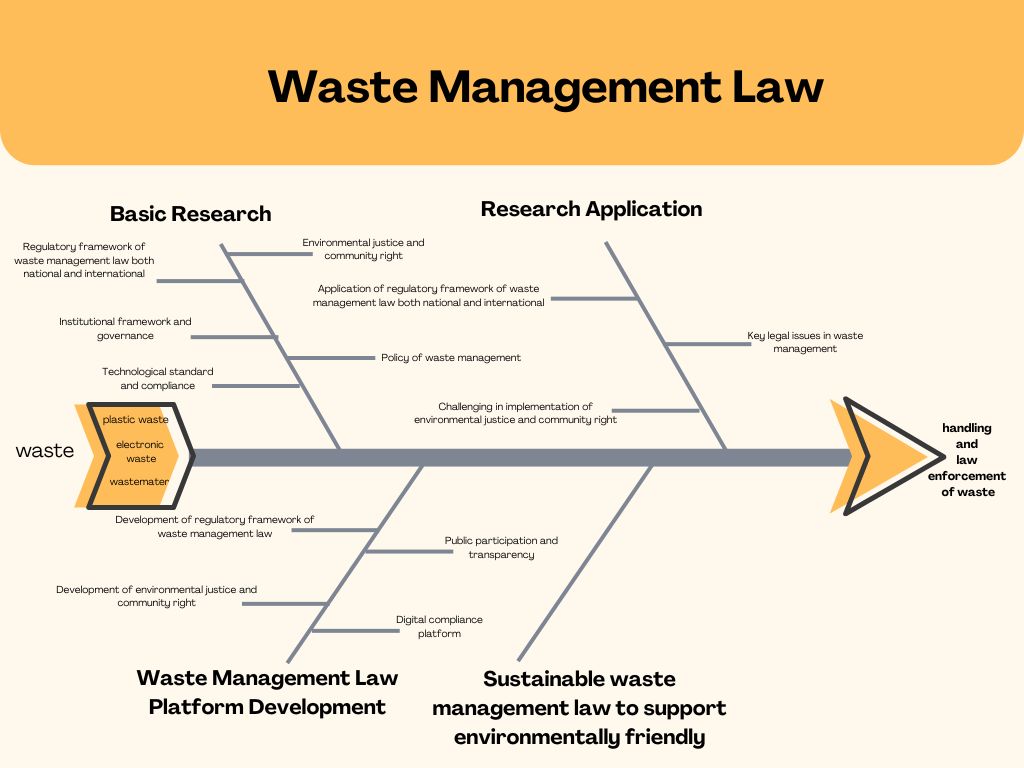
Research Sub-Theme
Legal Framework for Waste Management
The legal framework for waste management serves as a cornerstone in addressing the environmental challenges posed by urbanization and industrialization. It establishes policies and regulations that promote sustainable practices, minimize pollution, and ensure responsible waste management. This framework fosters national and international collaboration to create a cleaner, more sustainable future.
Permitting and Licensing Processes
Permitting and licensing processes are essential tools for regulating waste management activities. They ensure compliance with legal standards, promote environmental protection, and establish accountability for waste generators and handlers. These processes provide a structured approach to managing waste responsibly, fostering sustainable practices while mitigating risks to public health and the environment.
Environmental Standards and Compliance
Environmental standards and compliance ensure that waste management practices align with regulations designed to protect ecosystems and public health. By setting clear benchmarks, these standards promote sustainable waste handling, reduce pollution, and hold industries accountable. Compliance fosters environmental stewardship and supports long-term sustainability efforts on local and global scales.
Public-Private Partnerships and Stakeholder Roles.
Public-private partnerships (PPPs) and stakeholder collaboration are vital for effective waste management. PPPs leverage resources, expertise, and innovation, while stakeholders, including governments, businesses, and communities, play key roles in implementing sustainable practices. Together, they drive solutions that address waste challenges, promote environmental protection, and ensure shared responsibility.
International and Regional Comparisons
International and regional comparisons highlight diverse approaches to waste management, offering valuable insights into best practices and challenges worldwide. By examining policies, technologies, and outcomes across different contexts, these comparisons foster knowledge exchange, inspire innovation, and guide the development of more effective and sustainable waste management strategies globally.
Sustainable Development and Circular Economy.
Sustainable development and the circular economy aim to minimize waste and maximize resource efficiency. By designing systems that reuse, recycle, and regenerate materials, they reduce environmental impact while supporting economic growth. This approach aligns with global sustainability goals, fostering a balance between development, resource conservation, and environmental protection.