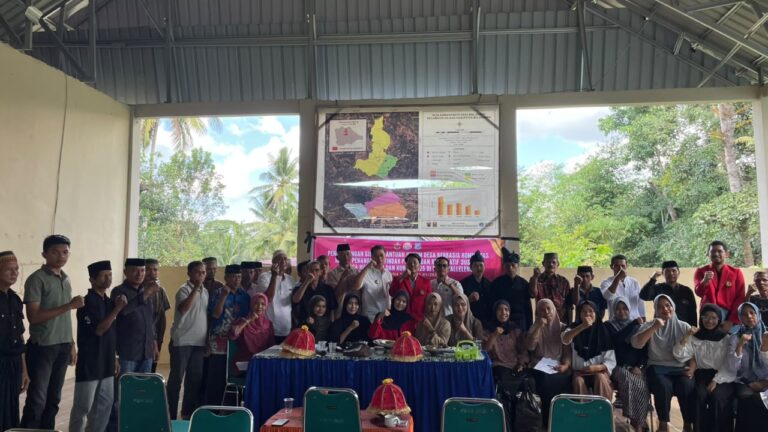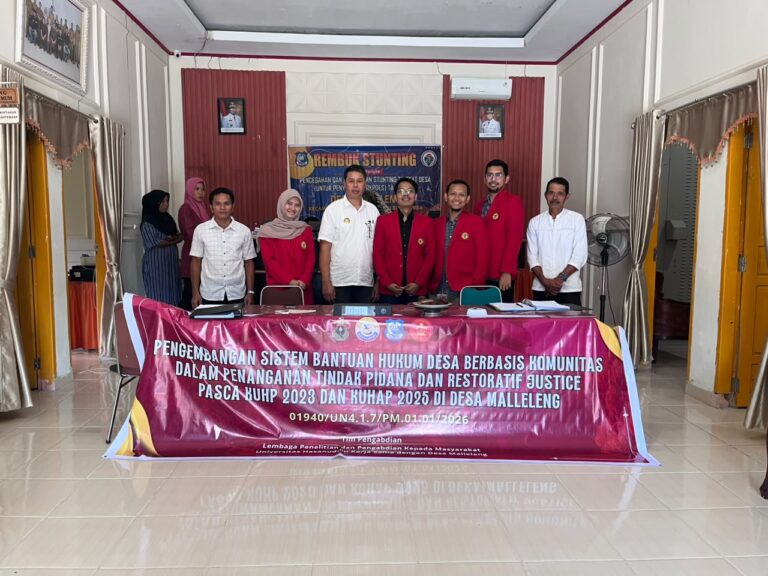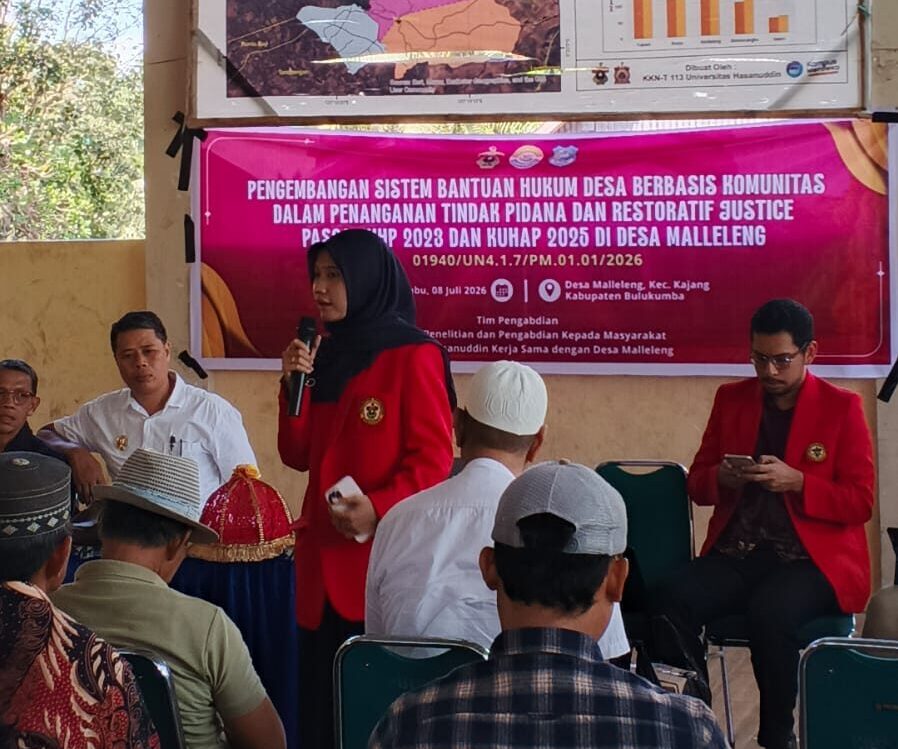

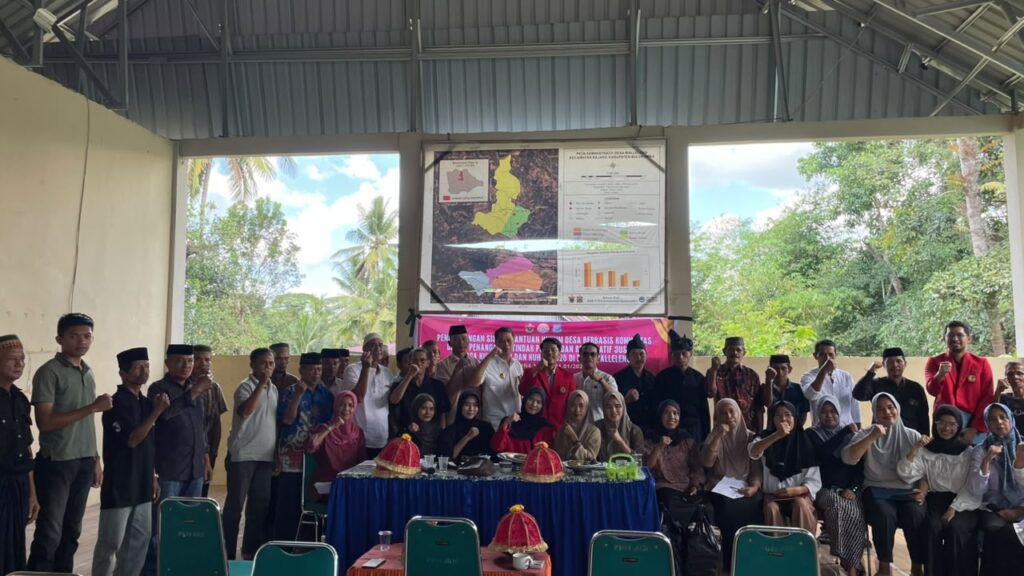
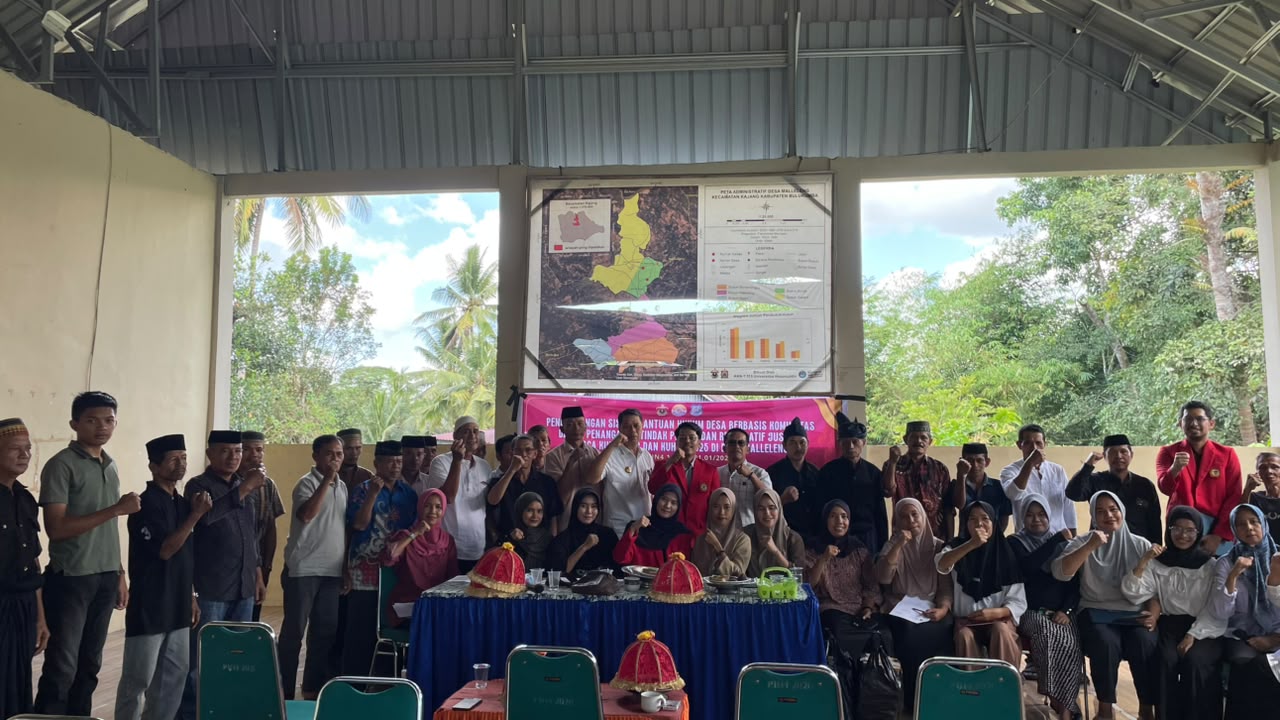
On 8 July 2026, the Faculty of Law, Universitas Hasanuddin, conducted a community service program entitled “Developing a Community-Based Village Legal Aid System for Handling Criminal Offences and Restorative Justice after the 2023 Criminal Code and the 2025 Criminal Procedure Code in Malleleng Village.” The activity was held at the Malleleng Village Hall, Kajang District, Bulukumba Regency, with support from the Institute for Research and Community Service of Universitas Hasanuddin. The program reflected the university’s commitment to implementing the tridharma of higher education through direct engagement with local communities.
The activity was attended by 32 participants representing the village government, community leaders, and residents of Malleleng Village. Through an intensive discussion method, participants received legal information, raised questions, and discussed issues encountered in their daily lives.
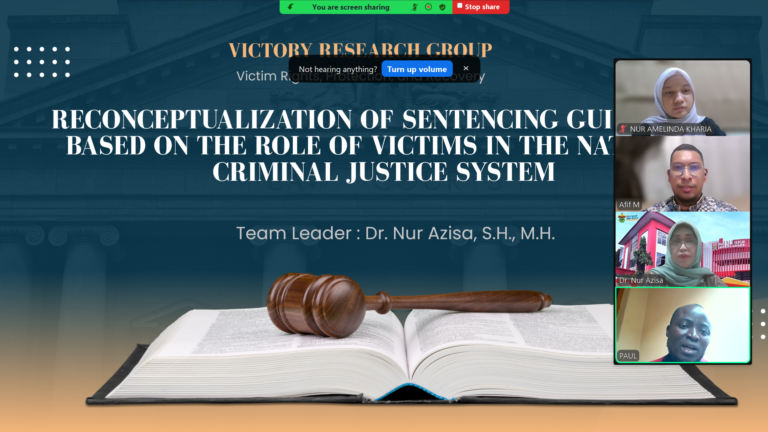
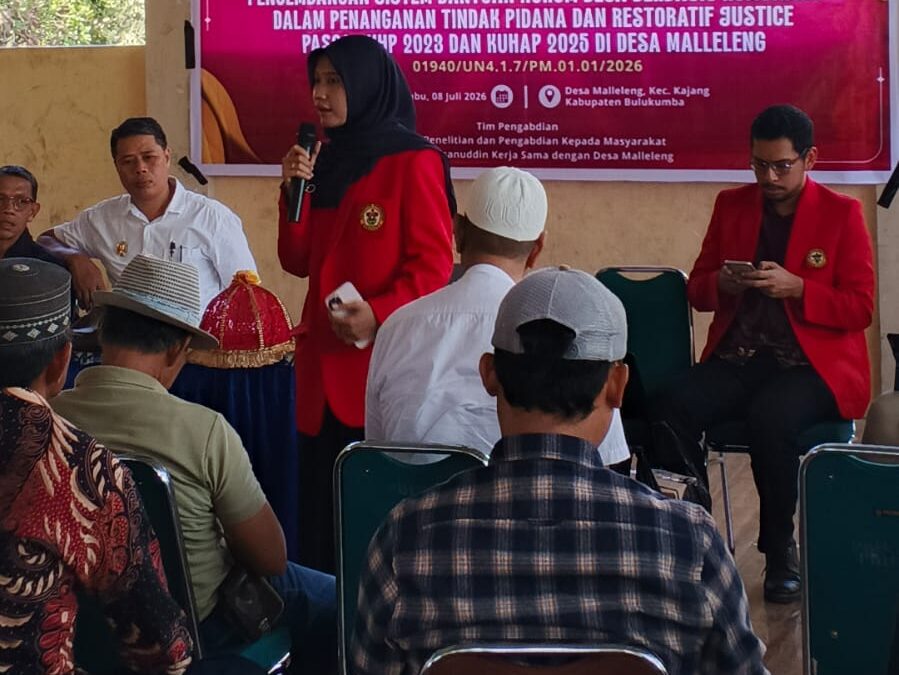
During the program, Nur Amelinda Kharia, S.H., M.H., a Master of Law student at Universitas Hasanuddin and a member of the Victims’ Rights Protection and Recovery Research Group, also known as the Victory Research Group, delivered a presentation entitled “Strengthening the Role of Villages in Preventing and Addressing Sexual Violence.” The Victory Research Group is based within the Department of Criminal Law, Faculty of Law, Universitas Hasanuddin, and focuses on victimology, victims’ rights, and victim recovery within the criminal justice system.
In her presentation, Nur Amelinda Kharia explained that sexual violence is not limited to rape. It also includes non-physical and physical sexual harassment, forced contraception, forced sterilization, forced marriage, sexual torture, sexual exploitation, sexual slavery, electronic-based sexual violence, and other prohibited sexual acts. Participants were informed that sexual violence may occur in homes, schools, workplaces, plantations, public spaces, village activities, and digital platforms.
The presentation also addressed the serious effects of sexual violence, including emotional and behavioural changes, prolonged trauma, psychological distress, physical and reproductive health problems, stigma, discrimination, and difficulties in accessing legal or social assistance. Nur Amelinda Kharia emphasized the importance of building a community culture that does not normalize degrading jokes, comments, or sexually suggestive behaviour. Effective prevention requires the involvement of village officials, religious and community leaders, women’s groups, young people, teachers, families, and other community members.
She also encouraged the establishment of a Village Legal Aid Post as a safe and accessible place where victims can report their experiences, obtain preliminary legal information, and receive referrals to appropriate services. Communities were encouraged to apply three essential steps when assisting victims: listen, protect, and accompany. Victims should be heard without judgment, protected from threats and identity disclosure, assisted in preserving evidence, and connected with support services.
The activity supported SDG 1: No Poverty by expanding access to legal information and assistance for vulnerable communities, thereby helping to reduce the social and financial burdens that may arise from unresolved legal problems. It advanced SDG 4: Quality Education through community legal literacy, experiential learning, and the active involvement of students in public legal education. The program also contributed to SDG 16: Peace, Justice and Strong Institutions by strengthening community awareness of victims’ rights, encouraging access to justice, and promoting a more responsive and inclusive village-level legal assistance system. In addition, it reinforced SDG 17: Partnerships for the Goals through collaboration between Universitas Hasanuddin and the Malleleng Village Government in developing sustainable legal education and community protection initiatives.
1. No Poverty 1. no property 3. Good Health & Well‑being 4. Quality Education 16. Peace 16. Peace, Justice, Strong Institutions 17. Partnerships for the Goals 17. Partnerships for the Goals. Justice Strong Institutions
Strengthening the Role of Villages in Preventing and Addressing Sexual Violence