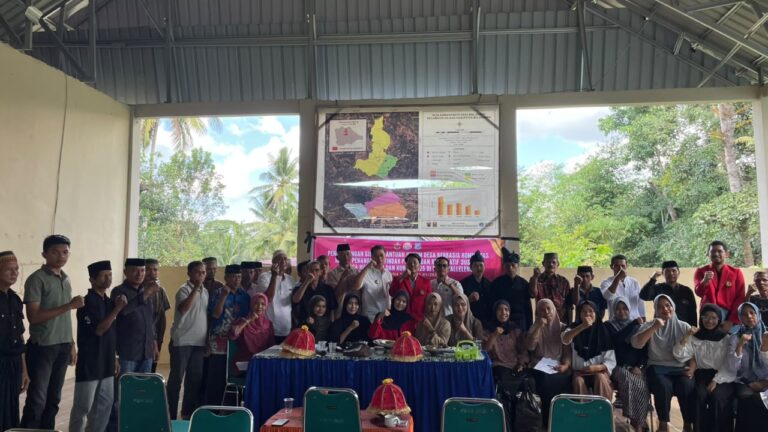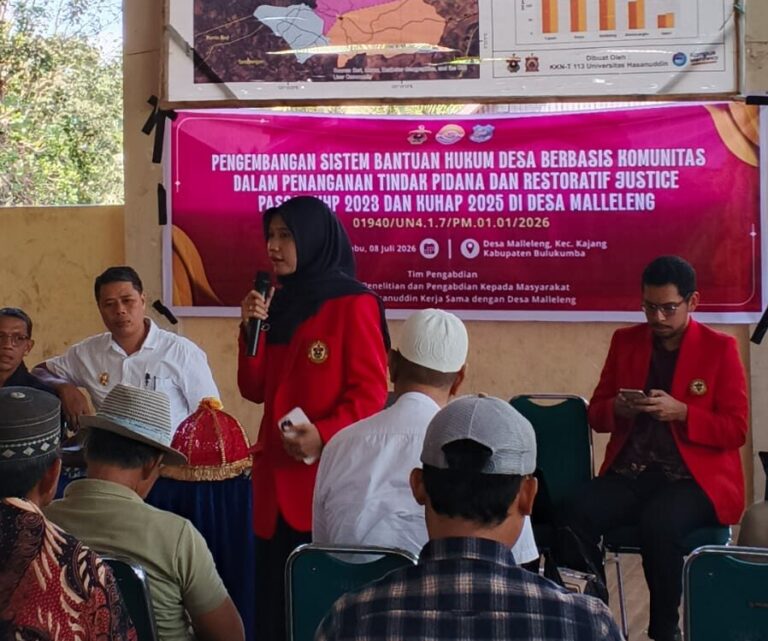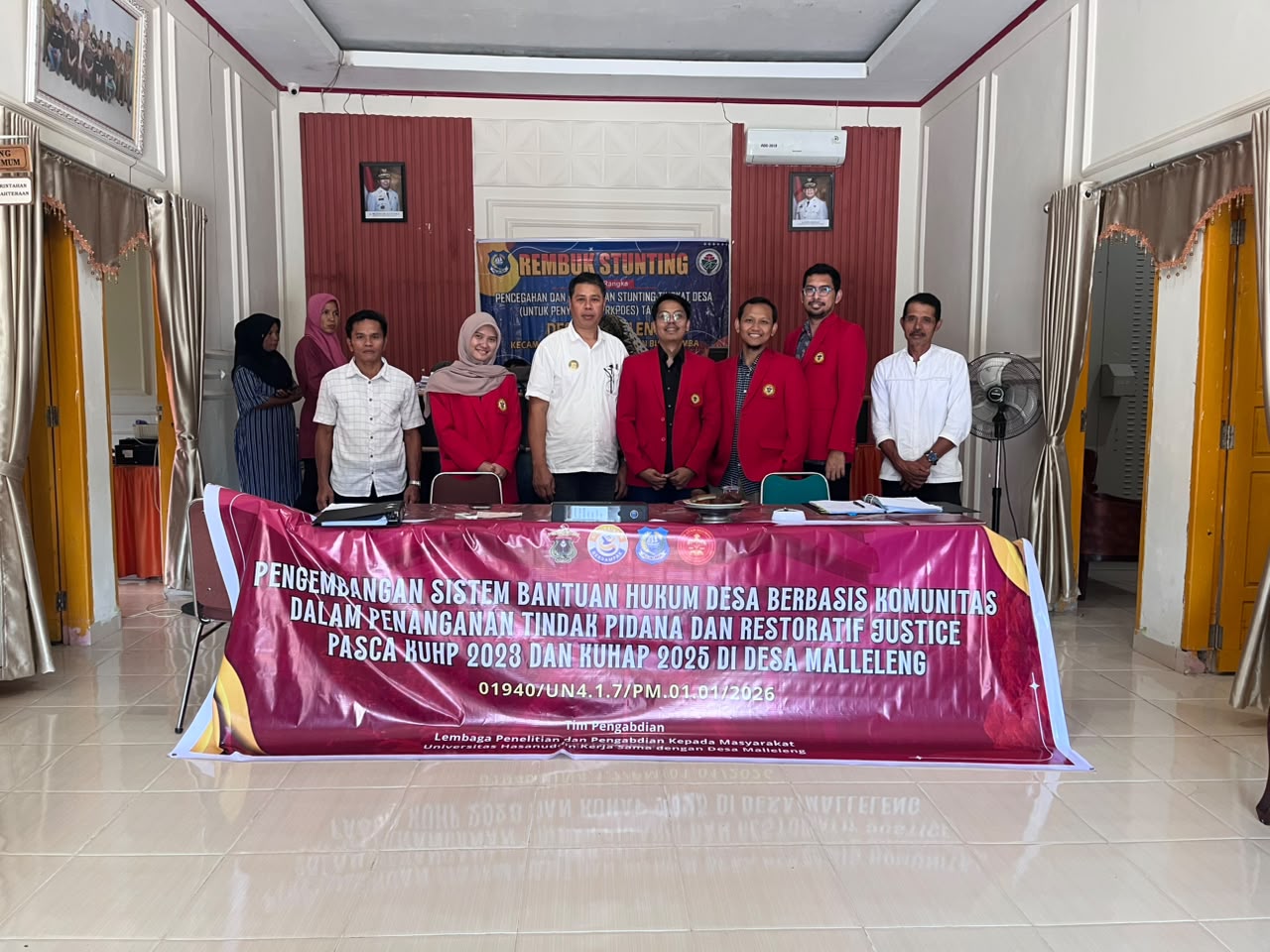

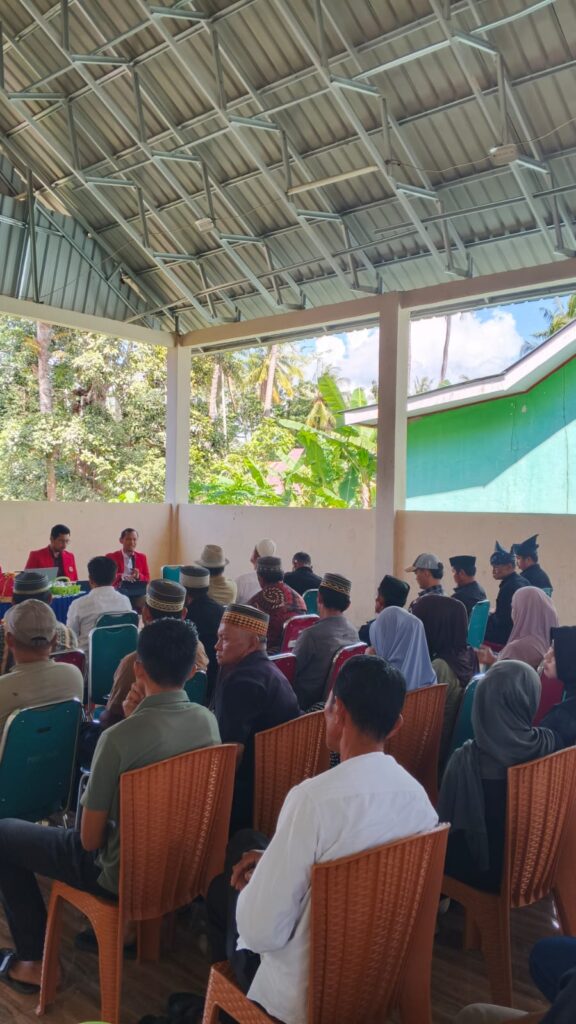
On 8 July 2026, the Faculty of Law, Universitas Hasanuddin, organized a community service program entitled “Developing a Community-Based Village Legal Aid System for Handling Criminal Offences and Restorative Justice after the 2023 Criminal Code and the 2025 Criminal Procedure Code in Malleleng Village.” The activity took place at the Malleleng Village Hall, Kajang District, Bulukumba Regency, with support from the Institute for Research and Community Service of Universitas Hasanuddin. The program represented the university’s commitment to implementing the tridharma of higher education through direct engagement with local communities.
The activity was opened by Baso, S.T., Head of Malleleng Village, who welcomed the Universitas Hasanuddin community service team. He stated that the program could strengthen public awareness and improve the village’s capacity to respond to legal and social problems affecting its residents.
A total of 32 participants attended the program, including representatives of the village government, community leaders, and residents of Malleleng Village. Through an intensive discussion method, participants received legal information, raised questions, and exchanged views on problems that increasingly affect families and communities.
During the presentation session, Ismail Iskandar, S.H., M.H., a lecturer at the Faculty of Law, Universitas Hasanuddin, delivered material on the dangers of gambling and illegal online lending. He explained that these practices should not be viewed merely as individual financial choices because they can create wider legal, economic, and social consequences. Gambling may encourage repeated financial losses, debt, family conflict, and other harmful conduct, while illegal online lending can expose users to excessive charges, intimidation, misuse of personal data, and aggressive collection practices.
Ismail Iskandar encouraged participants to exercise greater caution when using digital financial services. Before accepting an online loan, community members should carefully examine the identity and legality of the service provider, understand the terms and costs of the loan, and avoid sharing personal information with unknown parties. He also emphasized the importance of recognising misleading advertisements and offers that promise immediate funds without transparent conditions.
The discussion highlighted the role of families, village officials, community leaders, and young people in preventing gambling and illegal lending. Public education, early identification of financial difficulties, responsible digital behaviour, and access to trustworthy legal information can reduce the risk of exploitation. Participants were encouraged to seek assistance rather than remain silent when facing threats, harassment, or unlawful debt-collection practices.
The activity supported SDG 1: No Poverty by helping communities avoid financial exploitation and debt-related hardship. It advanced SDG 4: Quality Education through legal and digital financial literacy. It contributed to SDG 16: Peace, Justice and Strong Institutions by promoting legal awareness, protection from unlawful practices, and access to appropriate assistance. It also strengthened SDG 17: Partnerships for the Goals through collaboration between Universitas Hasanuddin and the Malleleng Village Government.
Through this program, the university and village government sought to strengthen community resilience, responsible financial decision-making, and awareness of legal protection in the digital environment.
1. No Poverty 1. no property 3. Good Health & Well‑being 4. Quality Education 16. Peace 16. Peace, Justice, Strong Institutions 17. Partnerships for the Goals 17. Partnerships for the Goals. Justice Strong Institutions