


Shallots are more than just a kitchen ingredient. In Indonesia, they are an important horticultural crop that supports household cooking, food businesses, and farmer income. However, shallot production often faces one basic problem: not all seeds germinate well. When seeds germinate slowly or unevenly, farmers may get weak seedlings, delayed planting, and lower crop performance in the field.
A study published in Advances in Horticultural Science explored a simple way to improve shallot seed germination: seed priming with boron. Seed priming means soaking seeds in a solution before planting, then drying them again. This process helps seeds “prepare” for germination before they meet the soil. In this study, shallot seeds of the ‘Maserati’ variety were soaked for 20 hours in boron solutions with different concentrations, ranging from 0 to 100 mg L⁻¹. After priming, the seeds were air-dried for 48 hours and then planted in a soil-compost medium.
Shallots are more than just a kitchen ingredient. In Indonesia, they are an important horticultural crop that supports household cooking, food businesses, and farmer income. However, shallot production often faces one basic problem: not all seeds germinate well. When seeds germinate slowly or unevenly, farmers may get weak seedlings, delayed planting, and lower crop performance in the field.
A study published in Advances in Horticultural Science explored a simple way to improve shallot seed germination: seed priming with boron. Seed priming means soaking seeds in a solution before planting, then drying them again. This process helps seeds “prepare” for germination before they meet the soil. In this study, shallot seeds of the ‘Maserati’ variety were soaked for 20 hours in boron solutions with different concentrations, ranging from 0 to 100 mg L⁻¹. After priming, the seeds were air-dried for 48 hours and then planted in a soil-compost medium.
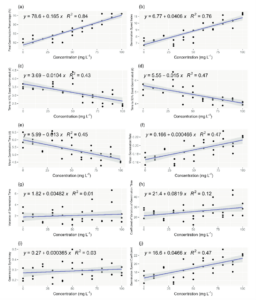
The results were clear. Boron priming improved both the number of seeds that germinated and the speed of germination. Without boron, the final germination percentage was 80.67%. With 100 mg L⁻¹ boron, it increased to 96.00%. This means more seeds successfully became seedlings. The germination speed index also improved, showing that seeds treated with boron germinated faster than untreated seeds.
Speed matters in farming. Seeds that germinate quickly and strongly can help produce more uniform seedlings. The study found that 100 mg L⁻¹ boron reduced the time needed for early germination. The time required for 10% of seeds to germinate decreased from 4.03 days to 2.40 days, while the time required for 50% germination decreased from 6.08 days to 4.05 days. Mean germination time also became shorter. In simple terms, boron helped shallot seeds wake up faster.
Why does boron help? Boron is a micronutrient, meaning plants need it in small amounts. It supports cell wall formation, membrane function, and early metabolic activity. During germination, these processes are important because the seed must absorb water, activate enzymes, and begin growing into a seedling. The study also showed strong relationships between boron concentration and germination percentage, indicating that boron played an important role in improving seed performance.
This research supports Sustainable Development Goal 1: No Poverty. Better seed germination can reduce seed waste, improve nursery success, and help farmers produce stronger planting materials. For smallholder farmers, even a small improvement at the seed stage can reduce production risk and support more stable income.
The main message is simple: better harvests can begin with better seed preparation. Boron priming, especially at 100 mg L⁻¹, offers a practical and promising method to help shallot seeds germinate faster, grow more uniformly, and support stronger farming systems.


