


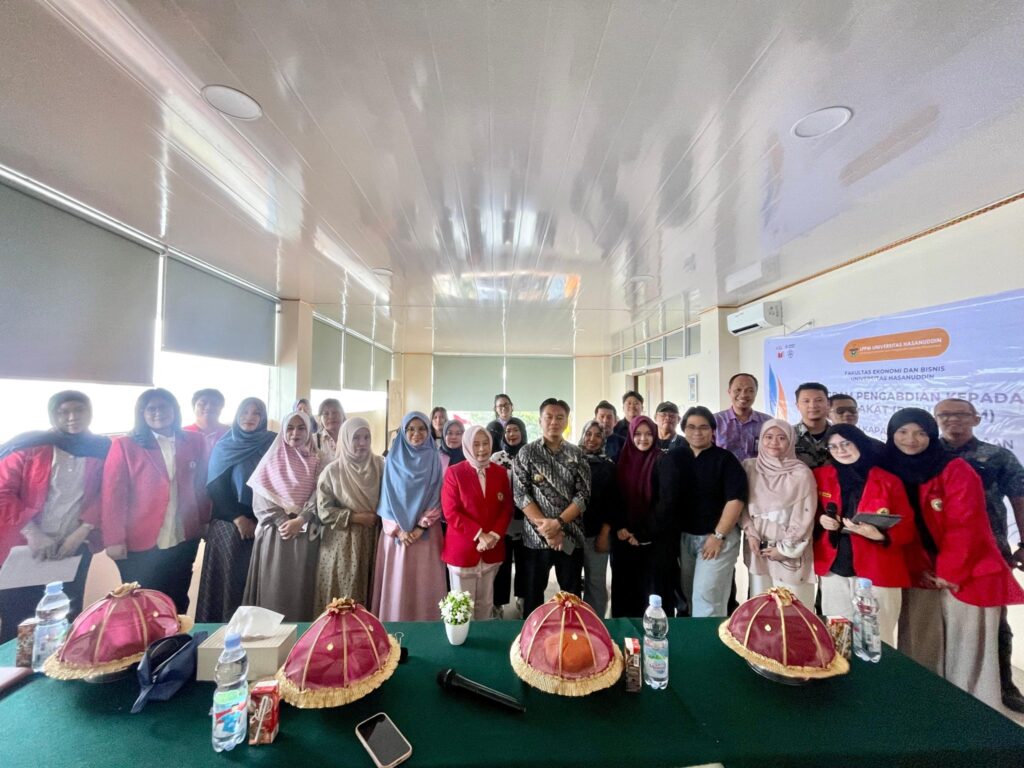
Tamalanrea Jaya, Makassar — In an era defined by rapid technological transformation, digital inclusion has become a vital catalyst for local economic resilience. To address the gap between technological advancement and household financial practices, a community service team from the Faculty of Economics and Business at Hasanuddin University conducted a targeted financial literacy program in South Sulawesi. The initiative, titled Peningkatan Kapasitas Pengelolaan Keuangan Keluarga Berbasis Digital di Tamalanrea Jaya, took place on August 28, 2025, in Tamalanrea Jaya, Makassar. The core objective of this program was to improve the capacity of digital-based family financial management in the community, equipping local households with the knowledge and digital tools needed to navigate modern financial ecosystems efficiently.
Bringing together 20 participants from the local community, the interactive workshop addressed key operational challenges that traditional households frequently encounter. Many families in the sub-district have long relied on conventional, manual record-keeping practices, which often blur the boundaries between personal and household expenditures and limit long-term financial planning. Through structured seminars, hands-on software training, and personalized technical assistance, the academic team introduced intuitive mobile financial applications, basic digital budgeting techniques, and fundamental cash flow management principles. Participants directly engaged with digital tools designed to streamline daily expense tracking, improve financial transparency, and support informed decision-making at the household level.
By fostering practical digital literacy and financial structured planning, this community development initiative explicitly aligns with several United Nations Sustainable Development Goals, most notably SDG 1: No Poverty, SDG 4: Quality Education, and SDG 17: Partnerships for the Goals. The program advances SDG 1: No Poverty by equipping families with systematic budgeting and cash-flow management skills, thereby reducing economic vulnerability, preventing mismanagement, and strengthening overall household financial resilience. Furthermore, the initiative directly contributes to SDG 4: Quality Education by offering inclusive, practical adult education and digital literacy training that bridges the technological skill gap in underserved suburban communities. Finally, the activity exemplifies SDG 17: Partnerships for the Goals by establishing a strong collaborative framework between academic institutions, local government bodies, and neighborhood residents to drive sustainable, evidence-based community development.
The active engagement of the participants demonstrated a significant shift toward digital adoption, with attendees learning how to separate personal funds from small family business accounts and monitor cash flows in real time. The continuous assistance model ensured that participants gained the confidence required to transition away from manual logbooks to secure digital financial management systems independently. Moving forward, the outcomes of this activity serve as an empirical benchmark for future public outreach programs, reinforcing Hasanuddin University’s commitment to translating academic expertise into measurable societal impact and sustainable economic empowerment across Makassar City.