
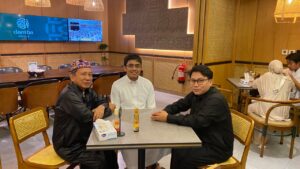

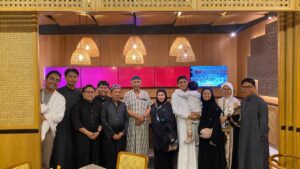
Mecca — Small and Medium Enterprise Research Group (SMEs-RG) held an international strategic research discussion focused on mapping potential and formulating sustainable development pathways for Micro, Small, and Medium Enterprises (MSMEs) in Makassar City on Saturday, August 1, 2026, in Mecca, Saudi Arabia. Bringing together 12 participants, this cross-border academic initiative was organized to address the fundamental operational and economic challenges facing local businesses in South Sulawesi, bridging empirical field data with actionable strategic frameworks to propel local enterprises onto the national stage.
The primary objective of this session was to establish an applied research roadmap deeply rooted in the authentic needs of local entrepreneurs, ensuring that future academic interventions yield direct and measurable economic impacts. The discussion was led by Prof. Dr. Syamsu Alam, SE., M.Si., Leader of SMEs-RG, alongside Research Lecturer Ade Ikhlas Amal Alam, SE., MSA. The dialogue gained significant global depth through the participation of international partner Mansur Maturidi Arief from King Fahd University of Petroleum and Minerals (KFUPM), who provided critical industry-level insights into global value chain integration, supply chain optimization, and market positioning. Active contributions were also made by master’s student Djeza Abrial Iswanto, who presented preliminary field data on small-scale enterprise operations and outlined targeted research objectives for upcoming thesis projects.
By focusing on evidence-based economic empowerment, this initiative directly aligns with the United Nations Sustainable Development Goals, most notably SDG 1: No Poverty, SDG 4: Quality Education, and SDG 17: Partnerships for the Goals. The strategic framework addresses SDG 1: No Poverty by enhancing the productivity, financial literacy, and structural resilience of local business owners, thereby creating sustainable income opportunities and strengthening economic stability in Makassar. Furthermore, the collaboration advances SDG 4: Quality Education through its commitment to experiential learning, capacity building, and advanced research mentorship, ensuring that graduate scholars gain rigorous training in solving real-world economic problems. Finally, the initiative exemplifies SDG 17: Partnerships for the Goals by uniting academic institutions, international researchers, and graduate students in a joint effort to drive sustainable local development through shared expertise.
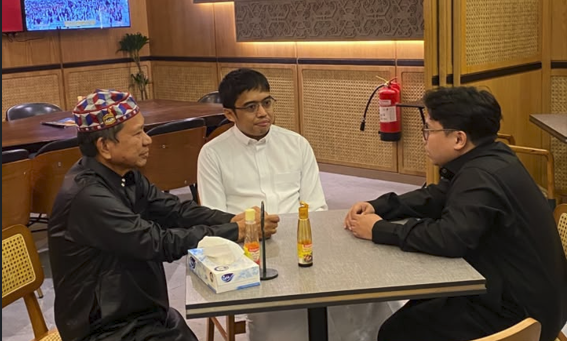
During the interactive session, participants examined key scalability barriers, including financial transparency, managerial standardization, and technology adoption. Prof. Dr. Syamsu Alam, SE., M.Si. emphasized that effective academic support must move beyond abstract theories toward tailored, practical solutions that address real-world business constraints. Concurrently, Ade Ikhlas Amal Alam, SE., MSA. stressed that internal governance and sound financial reporting form the bedrock of sustainable business expansion.
Through this international research initiative, SMEs-RG reinforces its commitment to translating rigorous academic inquiry into practical business models and policy insights. Moving forward, the outcomes of this discussion will serve as a foundational benchmark for future joint publications, industry mentorship programs, and data-driven policies designed to elevate Makassar’s local enterprises into competitive national market leaders