

Creating Healthier Food Environments for Adolescent Girls
MAKASSAR, Indonesia Mar 27 2026/OCNRG/ – Adolescence is a crucial stage of life when lifelong eating habits begin to take shape. As teenagers gain more independence, they start making their own food choices—often influenced by friends, school environments, and the foods that are easily available around them. These choices can have lasting consequences for their health. In many countries, including Indonesia, adolescent girls now face a complex nutritional challenge known as the double or even triple burden of malnutrition, where undernutrition, overweight, and micronutrient deficiencies can occur simultaneously within the same population.
Addressing this challenge requires more than simply telling young people what foods are healthy. The environments where adolescents live, learn, and socialize play a major role in shaping their dietary habits. Food availability at school, family eating practices at home, and the influence of teachers, parents, and food vendors all interact to shape everyday food choices.
These issues were explored in the scientific article “An Exploration of Psychosocial Aspects of the School–Home Food Environment in Addressing the Double and Triple Burden of Malnutrition among Adolescent Girls,” recently published in the International Journal of Adolescent Medicine and Health in 2026. The study was led by Sitti Patimah from Universitas Muslim Indonesia (UMI) as part of a collaborative research effort examining how different actors within the adolescent food environment influence nutrition outcomes.
The research involved 28 participants from four secondary schools in Majene District, West Sulawesi, including school principals, teachers, food vendors, and parents of adolescent girls. Through focus group discussions and interviews, the researchers explored how attitudes, awareness, motivation, and confidence among these actors affect the food environment surrounding adolescents.
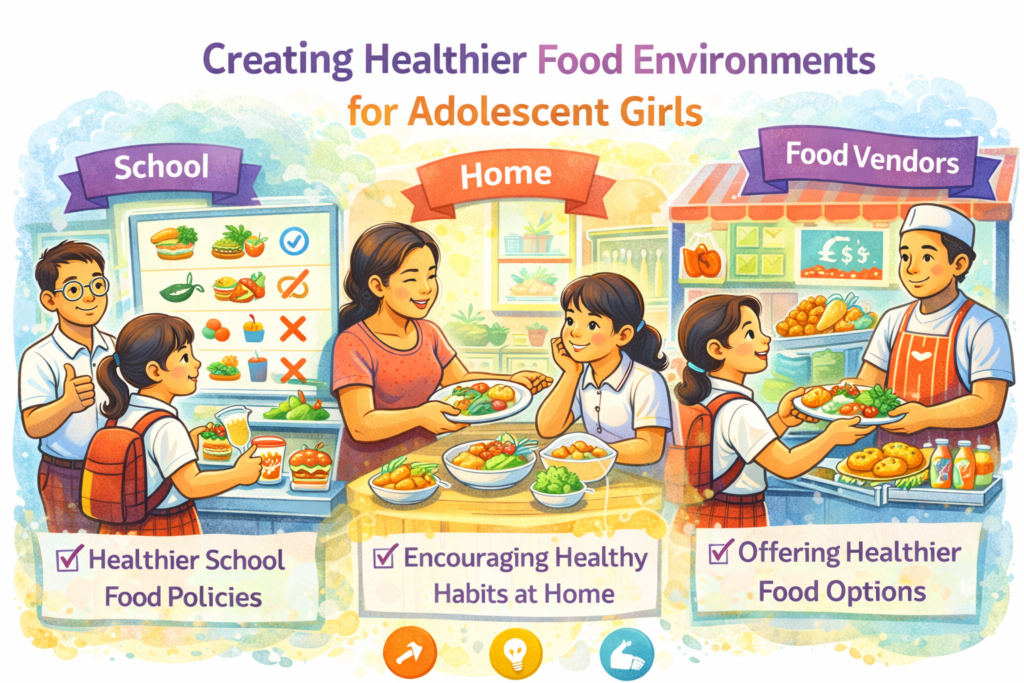
One of the key insights from the study is that adolescent eating habits are shaped by a network of influences, not by individual choices alone. Schools, for example, play a critical role in determining what foods are available to students during the day. Teachers and school leaders often supervise canteen operations and promote nutrition education, helping guide students toward healthier habits.
Some schools have introduced policies to limit unhealthy snacks or sugary drinks sold in canteens. These efforts can create a more supportive environment for healthy eating. However, challenges remain. Many adolescents prefer trendy, affordable snacks that are high in sugar, salt, or fat, making it difficult for schools to enforce healthier food standards consistently.
Food vendors also have an important influence on students’ diets. Many vendors involved in the study expressed awareness that the foods they sell can affect students’ health. Some attempted to offer meals prepared from natural ingredients rather than highly processed foods. Still, they must balance nutritional considerations with students’ tastes and the need to maintain their livelihoods.
At home, parents play another essential role. They influence children’s eating habits through meal preparation, encouraging breakfast, and guiding adolescents to avoid excessive consumption of unhealthy snacks. However, many parents acknowledged that busy schedules and limited nutrition knowledge can make it difficult to maintain healthy eating practices consistently.
The study highlights that improving adolescent nutrition requires collective efforts across multiple environments. Schools can implement healthier food policies and strengthen nutrition education. Parents can reinforce healthy habits at home. Food vendors can contribute by offering safer and more nutritious options for students.
Equally important are psychosocial factors such as motivation, awareness, and self-confidence among the people who influence adolescents’ diets. Teachers who believe they can guide students toward healthier choices, parents who feel responsible for their children’s nutrition, and vendors who are motivated to provide better food options all help create a more supportive food environment.
By strengthening both school and home food environments, communities can support healthier dietary habits among adolescent girls and contribute to reducing the growing burden of malnutrition in the next generation.
Reference:
DOI: https://doi.org/10.1515/ijamh-2025-0243
Contact:
Andi Imam Arundhana Thahir
+62 852-7009-4092
andi.imam@unhas.ac.id