

Obesity Is Rising in Indonesia—but Not Everywhere for the Same Reasons
MAKASSAR, Indonesia Mar 28 2026/OCNRG/ – In many parts of Indonesia today, daily life looks very different from just a generation ago. Cities are growing rapidly, transportation is easier, and food—from street stalls to fast-food chains—is more accessible than ever.
These changes are signs of development. But they also bring unexpected health consequences. One of them is a steady rise in obesity.
Across the country, more Indonesians are gaining excess body weight than before. National health surveys reveal that adult obesity increased from about 10% in 2007 to more than 14% in 2013, a shift that happened within only a few years.
Yet the story behind these numbers is not uniform. Indonesia is geographically vast and socially diverse, and the drivers of obesity do not look exactly the same in every region.
Some areas experience rapid urbanisation and lifestyle changes, while others remain more rural with different dietary traditions and patterns of physical activity. These contrasts shape how people eat, move, and live—and ultimately influence their health risks.
To better understand this variation, researchers analysed data from the Indonesia Basic Health Research survey, one of the largest population health datasets in the country. The study examined information from hundreds of thousands of adults across hundreds of districts, offering a rare national picture of obesity and its associated factors.
What emerged from the analysis was a complex map of lifestyle and health.
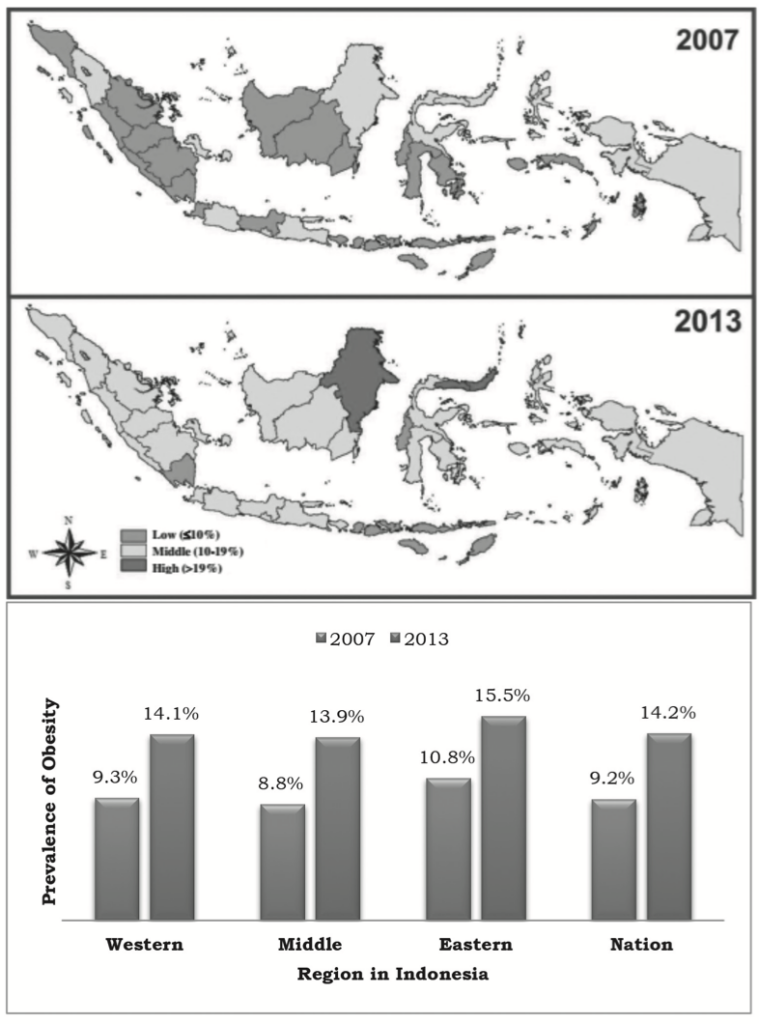
In western and central Indonesia—regions that include some of the country’s most developed urban areas—frequent consumption of fatty foods appeared to be one of the strongest factors associated with obesity. In contrast, low physical activity stood out as an important contributor in eastern Indonesia.
These patterns highlight how environment influences behaviour. Urban lifestyles often involve less physical movement and greater access to energy-dense foods. Meanwhile, economic and infrastructure differences across regions can shape daily routines in very different ways.
Another notable finding involved employment status. Adults who were unemployed were more likely to experience obesity than those who were working.
This relationship may reflect broader social realities. Limited economic resources can restrict access to healthier foods, while cheaper high-calorie options remain widely available. At the same time, reduced daily activity can make weight gain more likely.
Taken together, these findings reflect a larger phenomenon known as the nutrition transition, a global shift occurring in many developing countries where diets and lifestyles change rapidly alongside economic development.
Indonesia is now clearly part of this transition. But the story does not stop with adults.
More recent national health data suggest that the same trends are beginning to affect children as well. Results from the Survei Kesehatan Indonesia (SKI) 2023 show a concerning rise in overweight and obesity among Indonesian children and adolescents. While adult obesity has long been recognized as a public health challenge, the growing prevalence among younger age groups signals that unhealthy dietary patterns and sedentary lifestyles may already be shaping health risks early in life.
This shift is important. When obesity develops during childhood, it often continues into adulthood and increases the risk of chronic diseases later in life.
For policymakers and public health professionals, the implication is clear: the patterns observed among adults today may represent early warning signals for the next generation. Ensuring healthier lifestyles across the population is also part of the global commitment to SDGs 3: Good Health and Well-being, which emphasizes prevention of non-communicable diseases and the promotion of healthy lives at all ages.
Preventing obesity therefore requires attention not only to adult lifestyles, but also to the environments where children grow—schools, neighborhoods, food systems, and family habits.
Understanding how social change reshapes health risks is essential for countries undergoing rapid development. Indonesia’s experience shows that as societies modernize, protecting population health becomes an equally important part of progress.
In the end, the challenge is not only about reducing obesity numbers—but about ensuring that development leads to healthier, not just wealthier, communities.
Contact:
Andi Imam Arundhana Thahir
+62 852-7009-4092
andi.imam@unhas.ac.id