

The Sweet Trap at School: How Sugary Drinks May Be Driving Childhood Obesity
MAKASSAR, Indonesia Mar 21 2026/OCNRG/ – For many schoolchildren, buying a sweet drink during break time is a small daily pleasure. A cup of iced tea, fruit drink, or flavored milk can feel refreshing after hours in the classroom. The price is usually affordable, the taste is appealing, and the drinks are easy to find around school environments.
But this everyday habit may quietly contribute to a growing health concern, especially childhood obesity.
Over the past few decades, the number of children who are overweight or obese has increased in many countries, including Indonesia. While several factors contribute to this trend, one behavior has attracted increasing attention from researchers—the consumption of sugar-sweetened beverages, often referred to as sugary drinks.
This issue was examined in the scientific article “Why Consumption Pattern of Sugar-Sweetened Beverage is Potential to Increase the Risk of Overweight in School Age Children?”, published in the journal Biomedicine in 2018. The study investigated how frequently elementary school children consume sugary drinks and whether this habit is associated with obesity risk.
The research was conducted among 168 students from an elementary school in Makassar, Indonesia. Researchers looked not only at children’s drinking habits but also at the types of sugary beverages available around the school, including both homemade drinks sold by vendors and commercially packaged drinks sold in nearby stores.
The results revealed that sugary drinks were a common part of students’ daily routines. Nearly half of the students reported regularly consuming sugar-sweetened beverages at school. For many children, these drinks are an easy and affordable option to spend their daily allowance.
More importantly, the study found a clear association between frequent consumption and obesity risk. Students who consumed sugary drinks more than once per day were about twice as likely to be obese compared with those who consumed them less frequently.
The sugar content in these beverages also raised concern. Nutrient content observation showed that homemade sugary drinks sold around the school contained an average of nearly 69 grams of sugar per 100 milliliters—a level that can quickly exceed the recommended daily sugar intake for children.
Commercial beverages also contained significant amounts of added sugars. Although the nutritional content varied between products, many drinks were high in carbohydrates derived from sugar. Interestingly, the study found that beverages with higher sugar content often tended to be cheaper, making them even more attractive to children with limited pocket money. When high-sugar drinks are both affordable and widely available, frequent consumption becomes more likely.
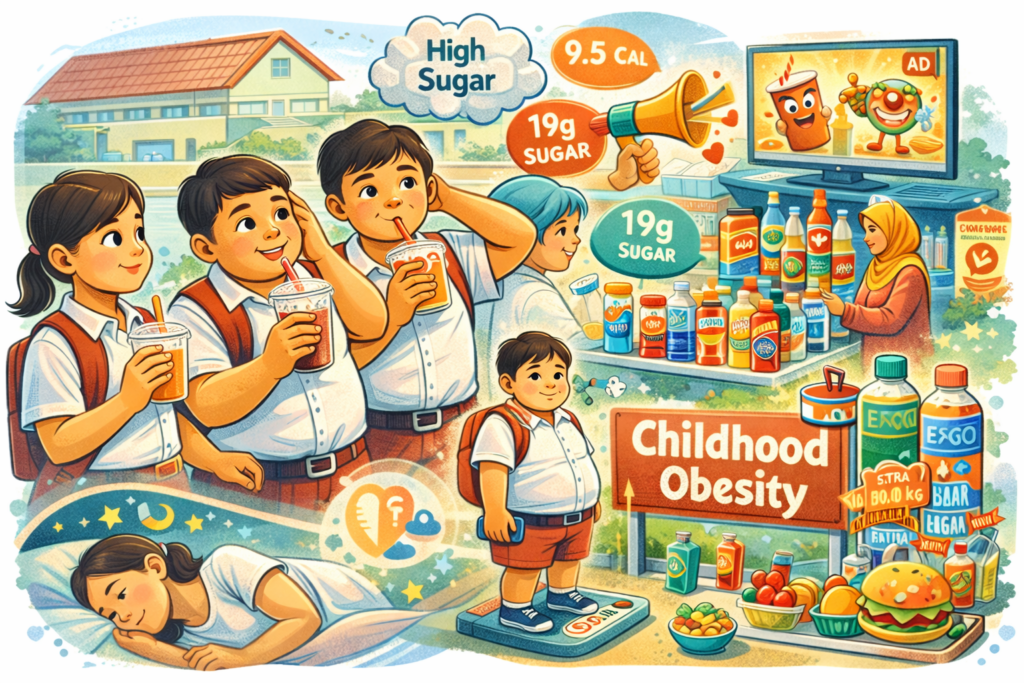
Beyond price and availability, the broader environment also plays a role. Many children are exposed to advertisements promoting sweet drinks and snacks, often through television or digital media. These messages can shape children’s preferences and encourage them to choose sugary drinks more frequently.
Taken together, the findings highlight how everyday environments—schools, food vendors, marketing, and pricing—can create what researchers call an “obesogenic environment,” where unhealthy choices become the easiest options.
Because childhood obesity can increase the risk of chronic diseases later in life, improving children’s food environments has become an urgent public health priority. Encouraging healthier beverage options at schools and raising awareness about sugar consumption are important steps toward protecting children’s health.
In the end, the drinks children choose during school breaks may seem like small decisions—but when repeated every day, they can shape health outcomes that last far beyond the classroom. These efforts are closely aligned with Sustainable Development Goal (SDG) 3: Good Health and Well-being, which emphasizes the importance of promoting healthier lifestyles from early childhood.
Reference:
DOI: https://doi.org/10.51248/v38i1.7
Contact:
Andi Imam Arundhana Thahir
+62 852-7009-4092
andi.imam@unhas.ac.id