

Better Nutrition for Young Children Starts with Local Foods
MAKASSAR, Indonesia Mar 19 2026/OCNRG/ – Good nutrition during the early years of life plays a crucial role in a child’s growth and development. When young children do not receive adequate nutrients, their growth can slow down and their ability to learn and develop may also be affected. One of the most serious consequences of long-term nutritional deficiencies is stunting, a condition in which children are shorter than expected for their age. Stunting remains a major nutritional challenge in many countries, including Indonesia, and addressing it requires practical solutions that are accessible to communities.
One promising strategy is to make better use of local foods that are already available and familiar to families. Rather than relying solely on expensive supplements or imported products, local ingredients can be developed into nutritious foods that support children’s growth.
This idea is explored in the scientific article “Local Functional Food: Stunting Prevention in Toddlers,” published in Canrea Journal: Food Technology, Nutritions, and Culinary in 2024. The study investigated how combining two locally available foods (tempeh and river clams) could help improve the nutritional quality of foods for toddlers. The study was led by Yarmaliza, a colleague from Universitas Teuku Umar, highlighting the potential of locally available foods to address nutritional challenges in young children.
Tempeh is a traditional Indonesian food made from fermented soybeans. It is widely consumed and valued for its high protein content and digestibility. The fermentation process improves the availability of nutrients, making tempeh rich in protein, vitamins, and beneficial compounds that support health and development.
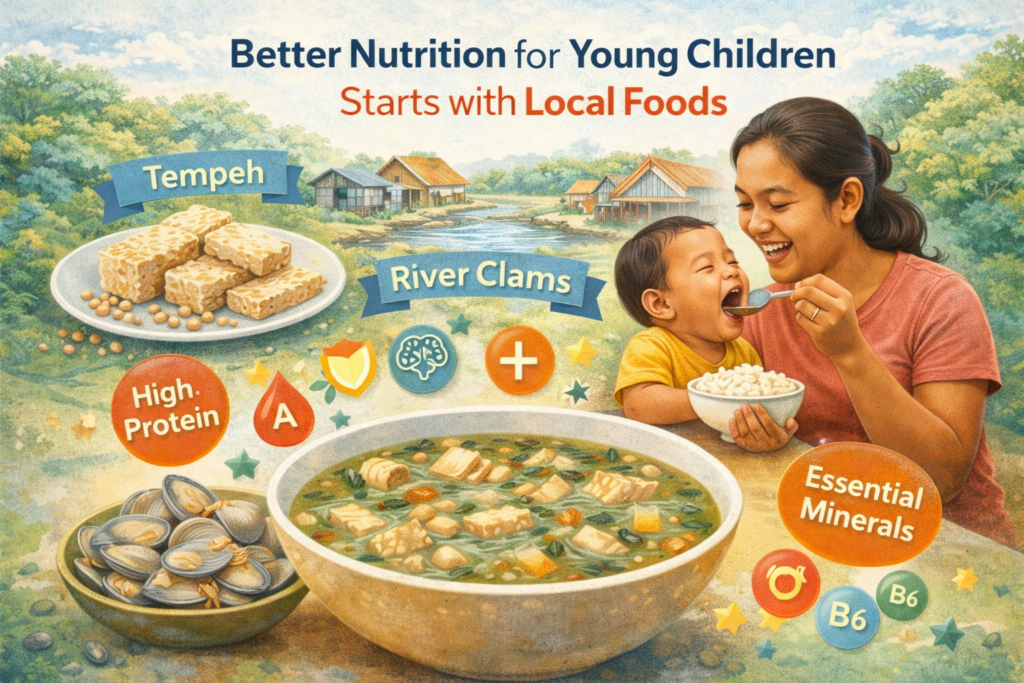
River clams are another nutritious local food source. They provide high-quality protein as well as important minerals such as iron, calcium, and phosphorus. These nutrients are essential for young children because they support blood formation, brain development, and healthy physical growth.
In the study, researchers developed a tempeh-based broth fortified with clam flour as a potential functional food for toddlers. Several formulations were tested by adding different amounts of clam flour to the tempeh broth.
To assess whether the product would be acceptable to consumers, 37 panelists evaluated the broth based on its color, aroma, and taste. The results showed that the formulation containing 30 grams of clam flour was the most preferred by participants.
Beyond taste, the nutritional analysis revealed that the addition of clam flour significantly increased the food’s nutritional value. The fortified broth contained higher levels of protein, polyunsaturated fatty acids (PUFA), vitamin A, vitamin E, vitamin B6, folic acid, potassium, magnesium, iron, and zinc, nutrients that are essential for children’s growth, immunity, and overall health.
These findings highlight an important lesson: improving children’s nutrition does not always require complex or costly interventions. Local foods that are already part of community diets can be transformed into nutritious options that support healthy growth.
Encouraging families to make better use of locally available foods can therefore become an important strategy in improving child nutrition. By combining scientific knowledge with traditional food practices, communities can develop sustainable approaches to support healthier diets for young children.
Efforts like these contribute to global development priorities, particularly SDGs 2 (Zero Hunger), which aims to end all forms of malnutrition, and SDG 3 (Good Health and Well-being), which promotes healthier lives for all—especially during the critical early years of childhood development.
Reference:
DOI: https://doi.org/10.20956/canrea.v7i1.1016
Contact:
Andi Imam Arundhana Thahir
+62 852-7009-4092
andi.imam@unhas.ac.id