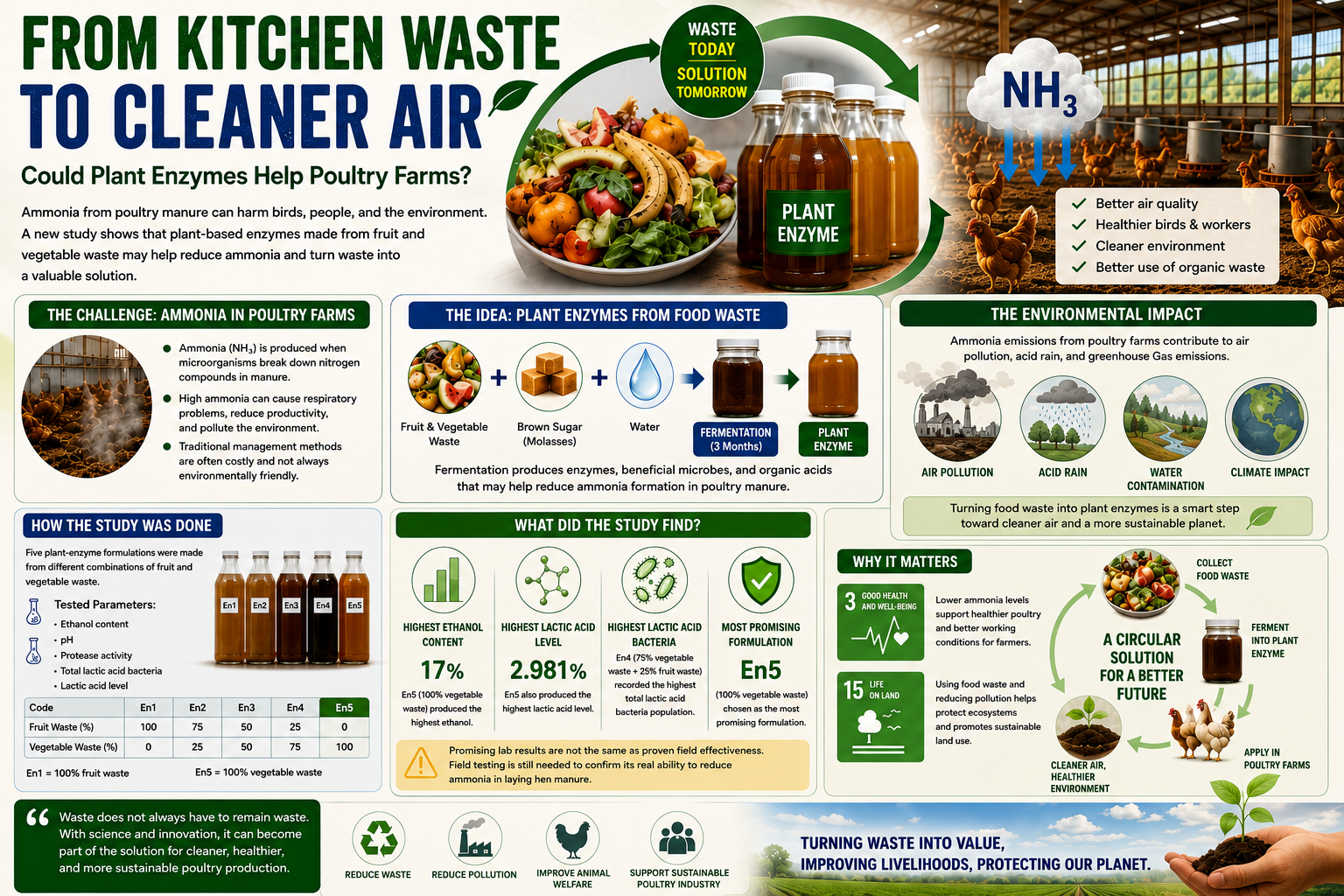

Makassar, Indonesia August 22, 2026/NUTRIFEED/– For laying hen farmers, keeping birds healthy is not only about feed, housing, and productivity. The air inside and around poultry houses also matters. One important concern is ammonia (NH₃), a gas produced when nitrogen compounds in chicken manure are broken down by microorganisms. At high concentrations, ammonia can affect poultry and workers, contribute to air pollution, and reduce the value of nutrients in livestock waste.
What if some of the waste we usually throw away could become part of the solution?
Fruit and vegetable peels contain organic compounds that can be transformed through fermentation into plant-based enzymes, often called eco-enzymes. These fermented liquids contain enzymes, microorganisms, and organic acids that may help accelerate the breakdown of organic matter and influence the chemical conditions that control ammonia formation. More importantly, turning food waste into a useful product offers a practical example of a circular approach to agricultural waste.
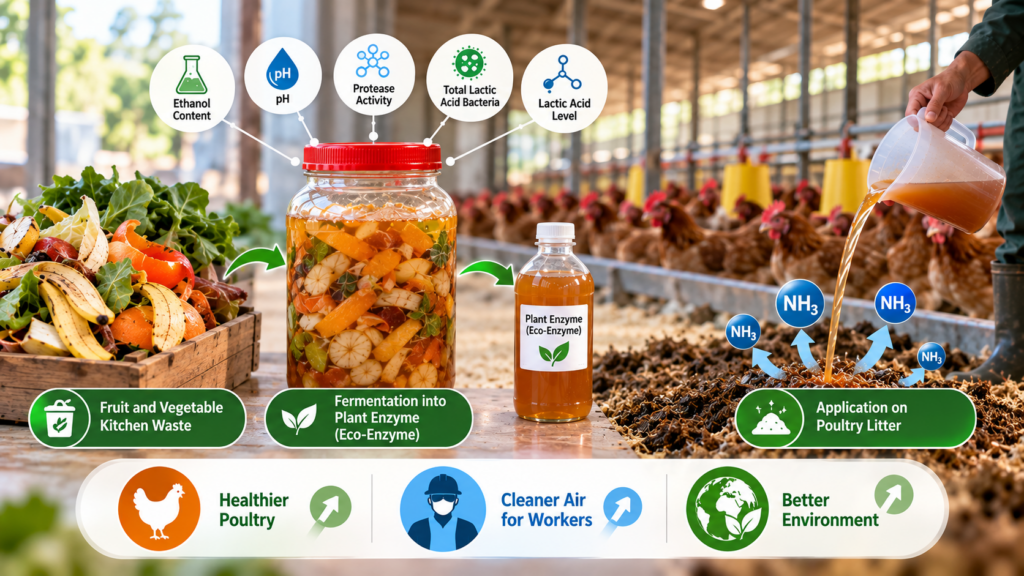
This opportunity is examined in the article “Characterization Plant-Enzyme from Fruit and Vegetable Waste as Ammonia Reducer in the Laying Hen Industry,” published in Advances in Animal and Veterinary Sciences by Nexus Academic Publishers (NAP) on April 15, 2026. The study evaluated plant enzymes made from different combinations of fruit and vegetable waste and compared them with a commercial enzyme. The researchers tested ethanol content, pH, protease activity, total lactic acid bacteria, and lactic acid levels.
The study used five formulations, ranging from 100% fruit waste to 100% vegetable waste. The results showed meaningful differences among the formulations. The formulation made entirely from vegetable waste, En5, produced the highest ethanol content at 17% and the highest lactic acid level at 2.981%. Meanwhile, En4, containing 75% vegetable waste and 25% fruit waste, recorded the highest total lactic acid bacteria population. These characteristics suggest that vegetable-waste-based formulations may have useful properties for supporting ammonia reduction. However, there is an important message behind the findings: promising laboratory characteristics do not automatically mean proven field effectiveness. The researchers identified En5 as the most promising formulation based on its biochemical profile, but they emphasized that its actual ability to reduce ammonia in laying hen manure still needs to be confirmed through further field testing.
The research connects strongly with SDG 3: Good Health and Well-Being. Reducing ammonia exposure can support healthier conditions for poultry and workers. It also relates to SDG 15: Life on Land, because reducing environmental pollution and making better use of organic waste can contribute to healthier terrestrial environments.
For farmers and the wider agricultural sector, the idea is simple but powerful: waste does not always have to remain waste. With fermentation, scientific testing, and proper field validation, fruit and vegetable residues could become part of a more environmentally friendly strategy for managing poultry waste. The future of cleaner poultry production may begin not with throwing something away, but with finding a smarter use for it.
References
DOI:https://dx.doi.org/10.17582/journal.aavs/2026/14.4.820.825
Contact:
Prof. Sri Purwanti
+62 811-4103-775
sripurwanti@unhas.ac.id