
Makassar, Indonesia, August 22, 2026/NUTRIFEED/—For poultry farmers, keeping birds healthy involves more than providing proper feed, housing, and care. Controlling harmful bacteria is equally important, particularly bacteria that can threaten poultry health and food safety. Two major concerns are Salmonella pullorum and Bacillus cereus. At the same time, excessive antibiotic use may encourage bacterial resistance and increase concerns about antibiotic residues in animal products.
Could a familiar local fruit help address this challenge?
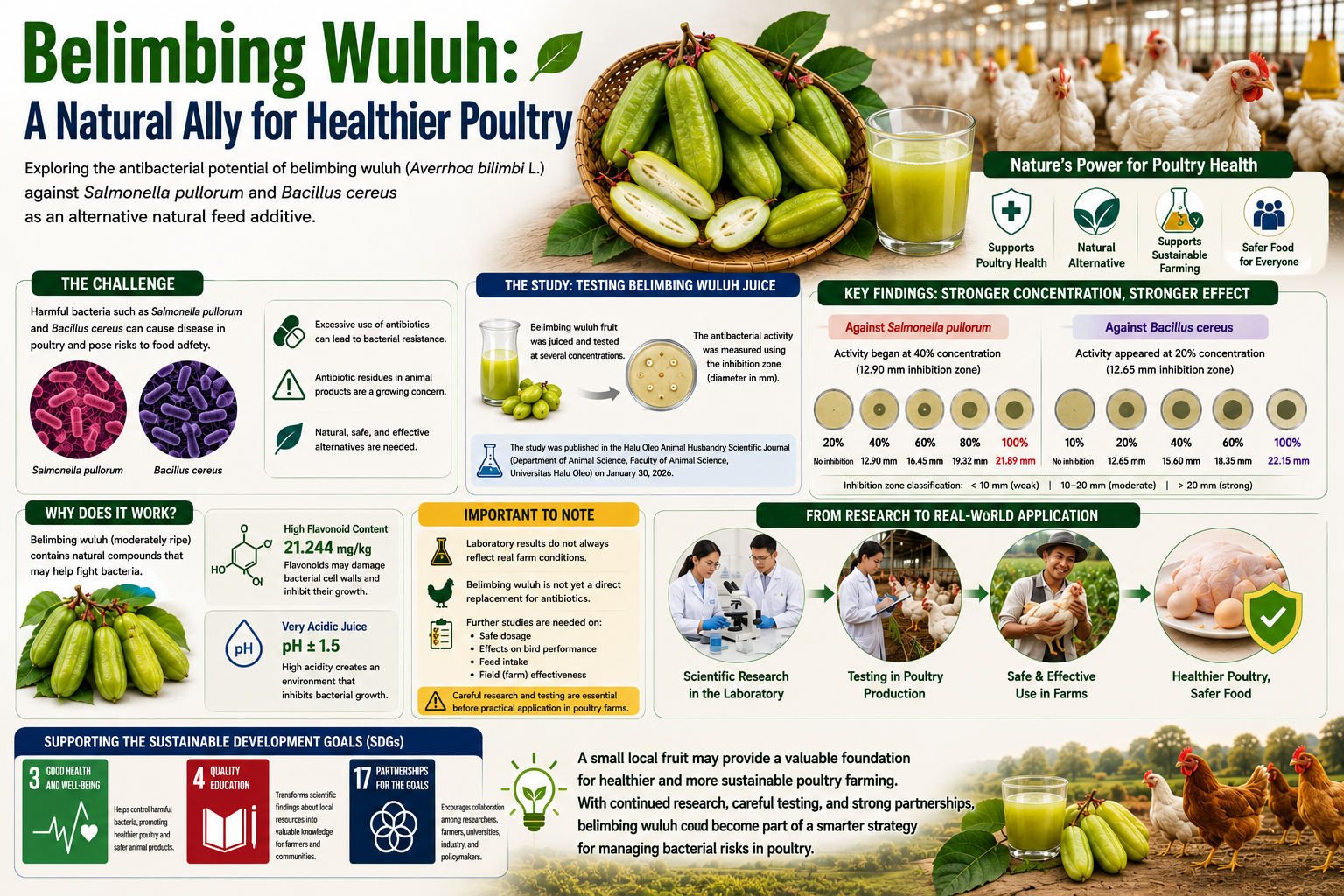
Belimbing wuluh (Averrhoa bilimbi L.) is a small, highly acidic fruit widely found in Indonesia. It is commonly used in cooking, but its natural compounds may also have antibacterial properties. This possibility is increasingly relevant as researchers and farmers seek safer, more natural alternatives to synthetic feed additives.
The potential of this fruit is discussed in the article “Antibacterial Activity of Belimbing Wuluh (Averrhoa bilimbi L.) Fruit Against Salmonella pullorum and Bacillus cereus as an Alternative Feed Additive in Poultry.” The article was published in the Halu Oleo Animal Husbandry Scientific Journal by the Department of Animal Science, Faculty of Animal Science, Universitas Halu Oleo, on January 30, 2026. Researchers tested belimbing wuluh juice at several concentrations to determine its ability to inhibit the growth of both bacteria.
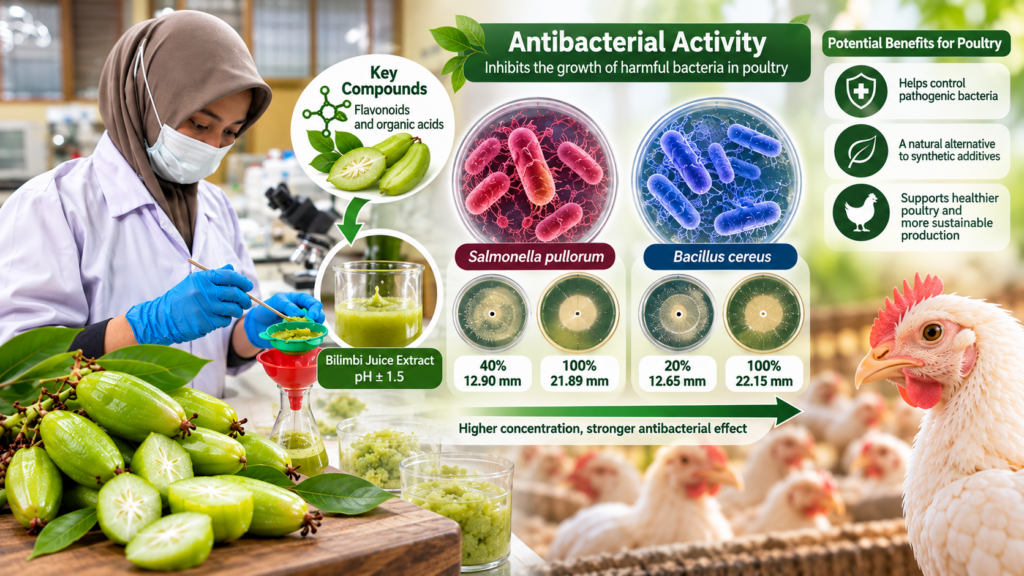
The findings showed a consistent pattern: stronger concentrations produced stronger antibacterial effects. Against Salmonella pullorum, activity began at a 40% concentration, creating an inhibition zone of 12.90 mm. At 100% concentration, the zone expanded to 21.89 mm. Against Bacillus cereus, antibacterial activity appeared at 20%, with an inhibition zone of 12.65 mm, and increased to 22.15 mm at 100%.
The fruit’s natural composition may explain these results. Moderately ripe belimbing wuluh contained the highest flavonoid level, reaching 21.244 mg/kg. Its juice was also highly acidic, with a pH of approximately 1.5. Flavonoids and organic acids may work together to damage bacterial cells and create conditions that discourage bacterial growth. Nevertheless, laboratory findings should be interpreted carefully. Belimbing wuluh cannot yet be considered a direct replacement for antibiotics in poultry production. Further studies are needed to establish safe doses, assess effects on bird performance and feed intake, and evaluate its effectiveness under actual farm conditions.
This research supports SDG 3: Good Health and Well-Being, because controlling harmful bacteria can promote healthier poultry and safer animal products. It also contributes to SDG 4: Quality Education by transforming scientific findings about local resources into useful knowledge for farmers and communities. Furthermore, it reflects SDG 17: Partnerships for the Goals, since developing a practical natural feed additive requires collaboration among researchers, farmers, universities, industry, and policymakers.
For poultry production, the message is encouraging: a small local fruit may provide a valuable foundation for healthier and more sustainable farming. With continued research, careful testing, and strong partnerships, belimbing wuluh could become part of a smarter strategy for managing bacterial risks in poultry.
References
DOI:https://doi.org/10.56625/jipho.v8i1.483
Contact:
Prof. Sri Purwanti
+62 811-4103-775
sripurwanti@unhas.ac.id