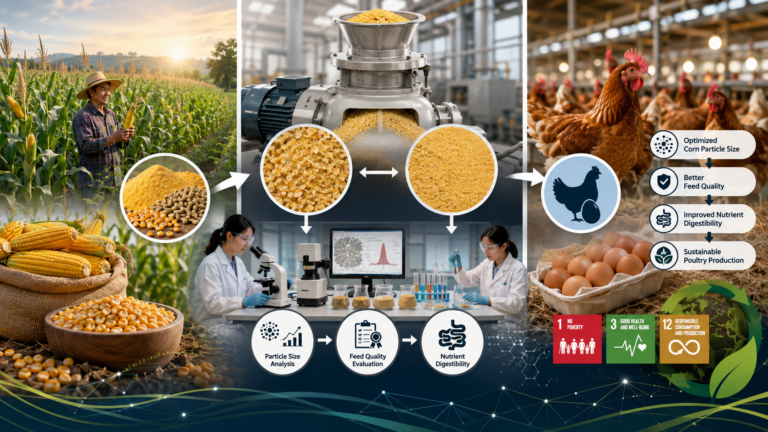

Makassar, August 21 2026 /NUTRIFEED/-For poultry farmers and feed industries, producing healthy livestock begins with one essential factor: feed quality. Corn is a major ingredient in poultry feed because it provides energy for growth and production. However, maintaining high-quality corn remains a challenge due to damaged kernels, mold contamination, poor storage conditions, and differences in physical quality.
What if healthier poultry production could begin with something as simple as a corn kernel?
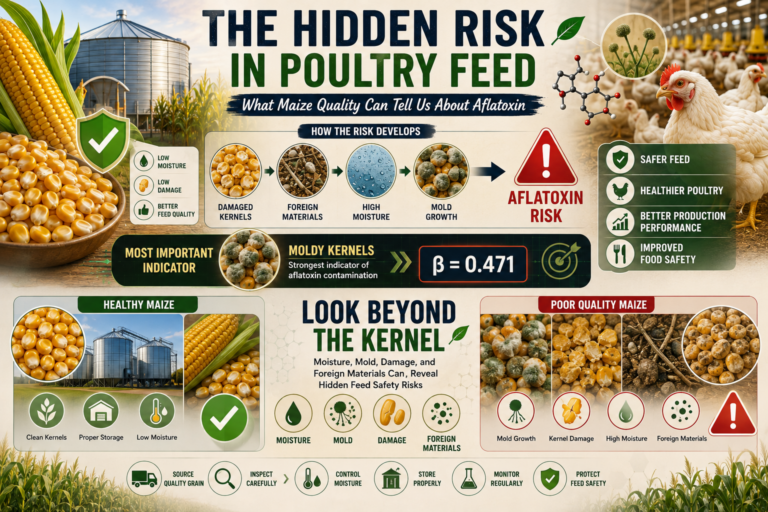
Corn quality depends not only on its nutritional value but also on its physical characteristics. Small differences in kernel condition can influence feed safety, animal health, and production performance. Damaged or moldy kernels may reduce feed quality and increase contamination risks, creating challenges for sustainable poultry production.
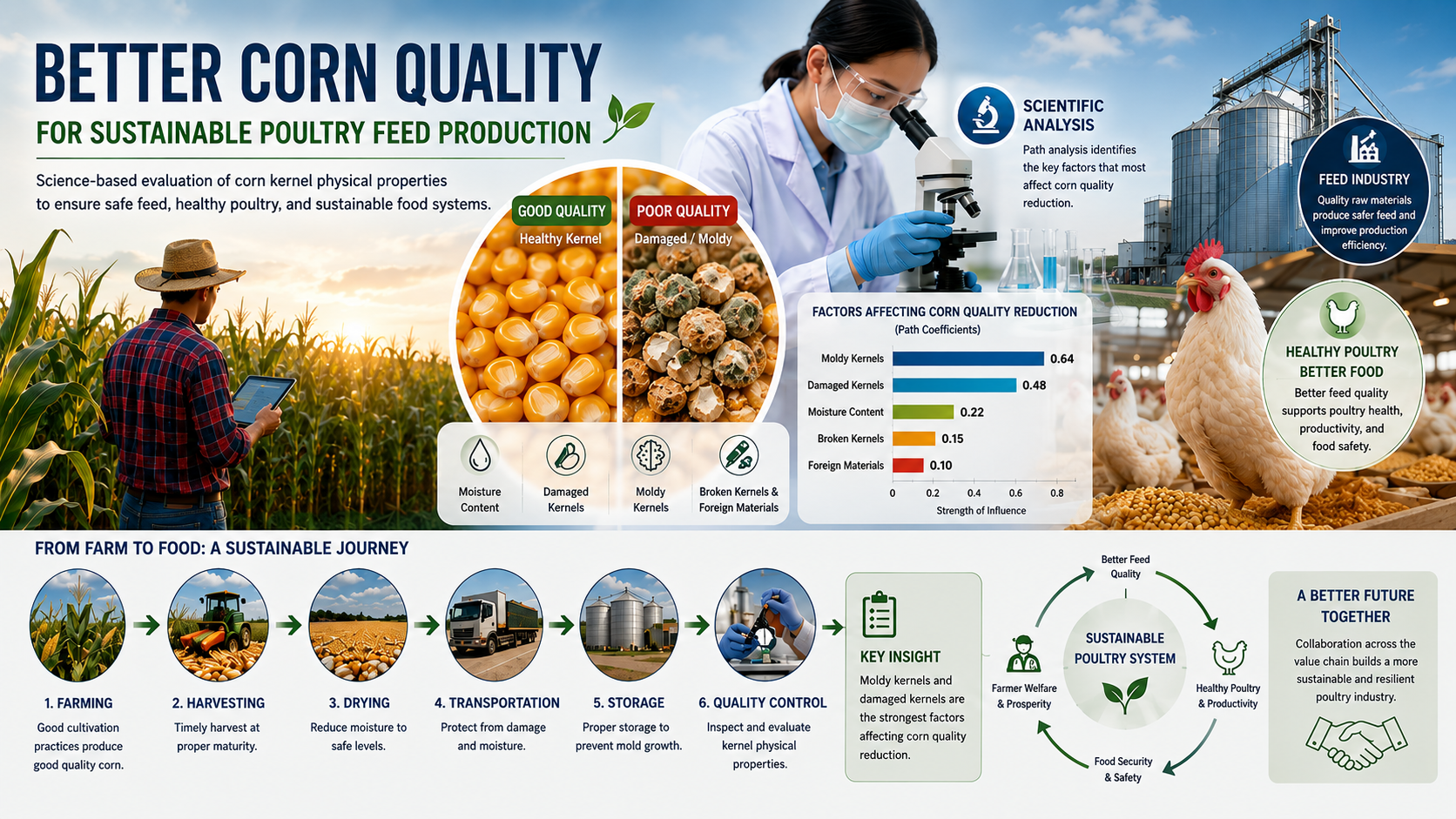
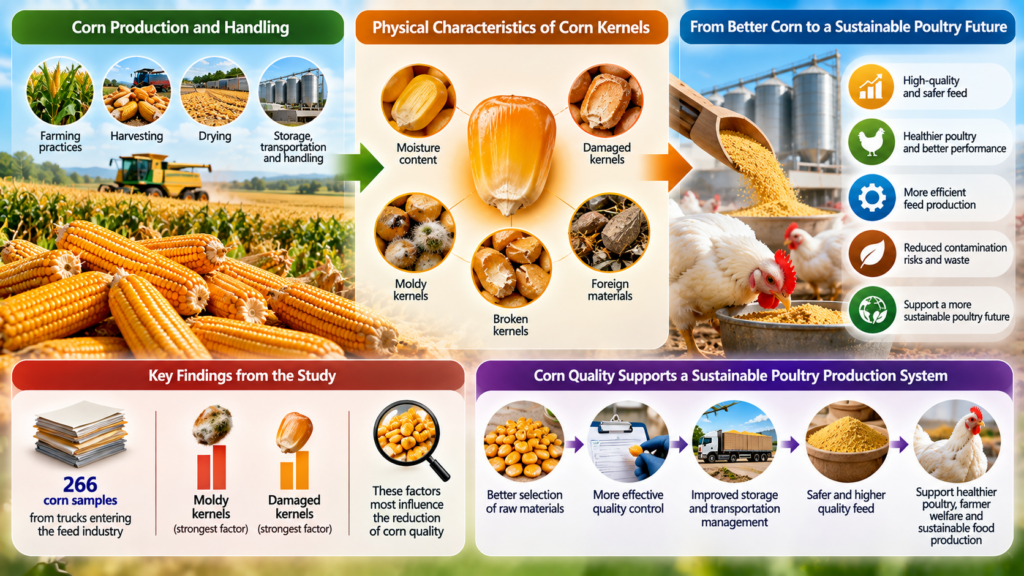
This issue is discussed in the article “Path Analysis of Corn Kernel Physical Properties as Quality Indicators of Poultry Feed Ingredients,” published in the International Journal of Agriculture and Biosciences by Unique Science Publisher on July 11, 2025. The study examined how physical properties of corn kernels can be used as indicators to evaluate their quality as poultry feed ingredients.
The researchers analyzed 266 corn samples collected from trucks entering the feed industry. They evaluated several characteristics, including moisture content, damaged kernels, moldy kernels, broken kernels, and foreign materials. Using path analysis, the study revealed that moldy kernels and damaged kernels were the strongest factors affecting corn quality reduction.
The findings show that improving poultry feed quality does not begin only inside feed factories. It starts from farming practices, harvesting, drying, transportation, and storage processes. Effective quality control can help farmers and feed producers select safer ingredients, reduce contamination risks, and improve efficiency throughout the poultry production system.
The study highlights the importance of applying scientific knowledge to agricultural decisions. By identifying the physical characteristics that most influence corn quality, stakeholders can develop better inspection methods, improve storage management, and maintain poultry productivity.
The research is connected with several Sustainable Development Goals (SDGs). It supports SDG 1: No Poverty by helping improve agricultural productivity and reducing crop losses, which can increase economic opportunities for farmers. It contributes to SDG 3: Good Health and Well-Being because better feed quality supports healthier poultry and safer animal-based food products. The study also relates to SDG 4: Quality Education by emphasizing the need for knowledge transfer and training in agricultural quality management. Farmers and industry workers need practical skills to identify poor-quality kernels and apply proper handling methods. In addition, the research supports SDG 17: Partnerships for the Goals, as improving corn quality requires collaboration among farmers, researchers, industries, governments, and communities.
For the poultry sector, corn quality is more than a technical issue. It is a foundation for sustainable food production. The research by Purwanti and Syamsu demonstrates that scientific evaluation of agricultural materials can create practical solutions for real-world challenges. By improving corn quality, society can strengthen poultry production, support farmer welfare, improve food security, and move toward a more sustainable agricultural future.
References
DOI: https://doi.org/10.47278/journal.ijab/2025.105
Contact:
Prof. Sri Purwanti
+62 811-4103-775
sripurwanti@unhas.ac.id