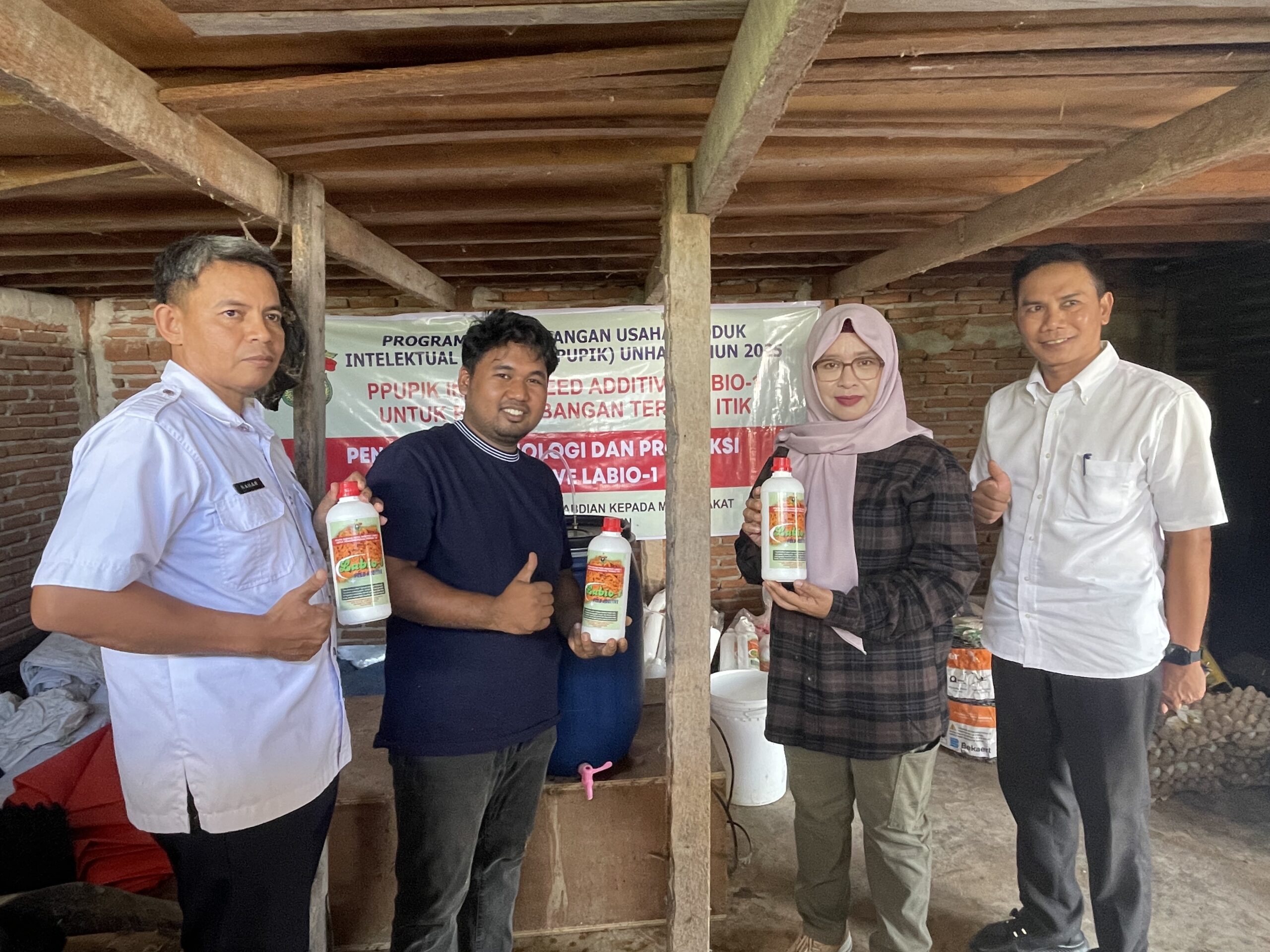

Pinrang– As part of its commitment to the Tri Dharma of Higher Education—education, research, and community service—TRG Poultry Nutrition and Feed Research Group conducted a community engagement program to strengthen the competitiveness and sustainability of duck farming in Malimpung Village, Patampanua Subdistrict, Pinrang Regency. The program focused on Labio-1, an innovative feed additive developed according to phytobiotic principles. It combined technical training with practical guidance on production, application, hygiene, safety, dosage, storage, and proper handling. Through this activity, scientific knowledge was translated into simple, practical, and applicable innovations for local farmers.
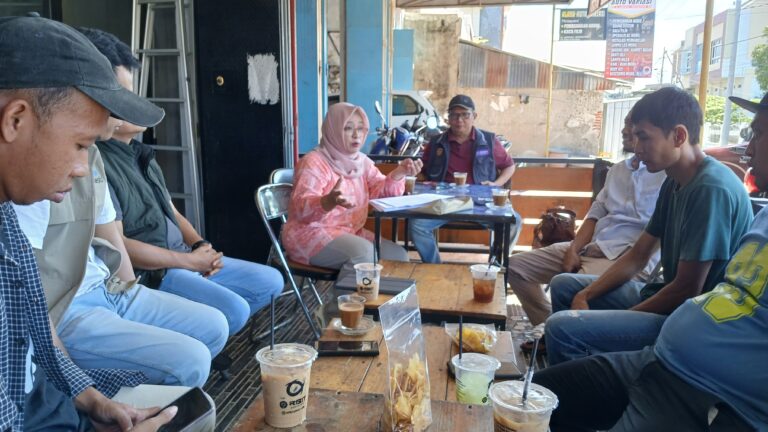
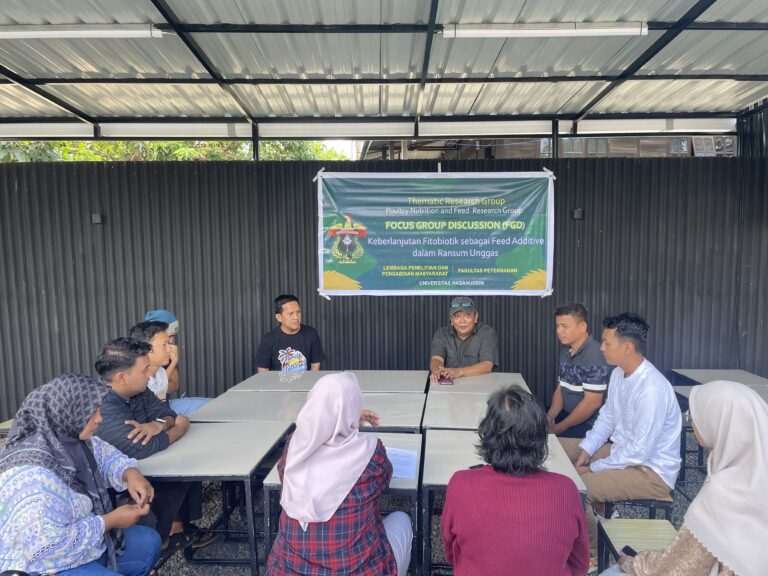
Conducted on 27 July 2025, the program involved 22 duck farmers who actively participated in classroom discussions, demonstrations, and practical sessions. Their involvement demonstrated strong interest in improving feed efficiency, increasing duck productivity, adopting appropriate technology, and developing more sustainable farming practices. The activity also provided an opportunity for farmers to exchange experiences and discuss challenges encountered in daily duck production.
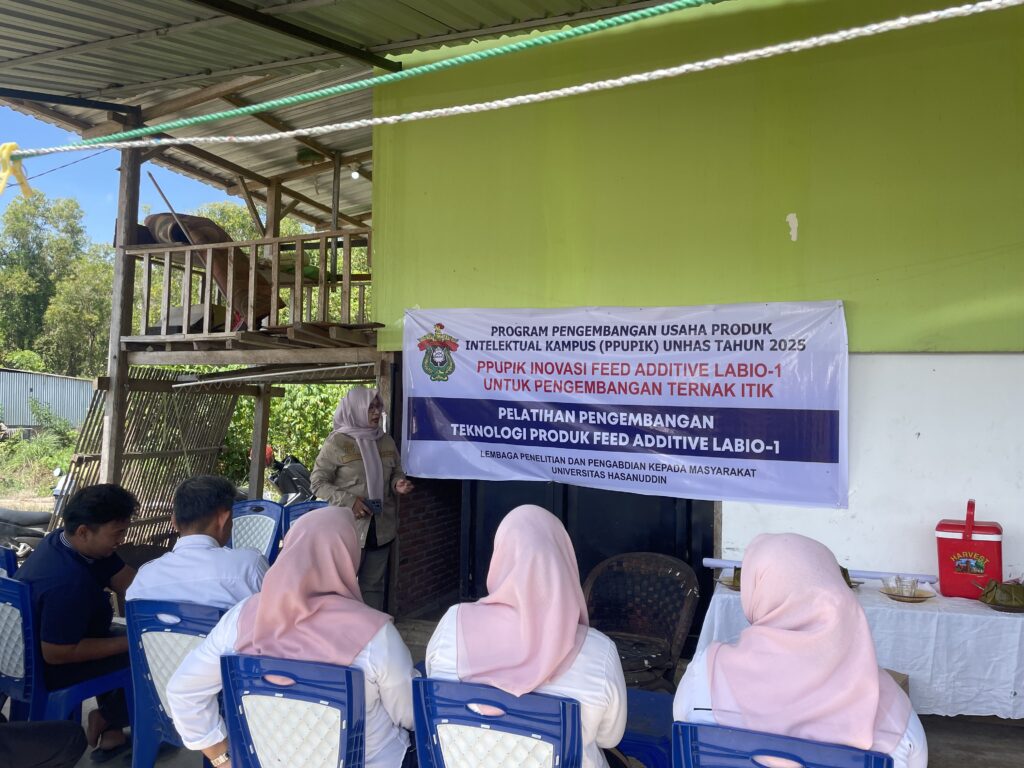
Duck farming has considerable potential to support rural livelihoods and food security. However, farmers commonly face challenges related to feed efficiency, productivity, and limited access to practical innovations. Feed additives, especially those derived from phytobiotic sources, may help address these challenges by supporting digestion, animal health, and production performance. Phytobiotics are natural plant-based substances that can promote beneficial physiological responses in livestock. During the program, participants learned the basic concepts of feed additives and phytobiotics, their potential benefits for ducks, and the function and application of Labio-1 in farm management.
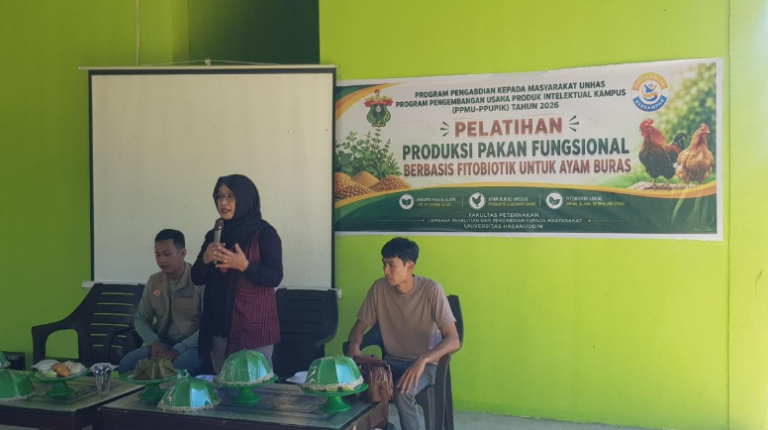
The activity used an interactive combination of classroom instruction and direct practical training. Trainers presented scientific information in clear and accessible language while connecting each topic to farmers’ daily experiences. The materials covered the definition and purpose of feed additives, the role of phytobiotics in livestock production, the expected benefits of Labio-1, and important considerations for its use.
Following the discussion, participants practiced producing Labio-1 under the guidance of facilitators. The practical component emphasized participation, accuracy, and skill development. Farmers prepared the required materials, followed the prescribed procedures, and discussed the importance of cleanliness, dosage, storage, and safe application. This approach was intended to ensure that participants gained not only theoretical understanding but also the confidence and competence to apply the innovation independently.
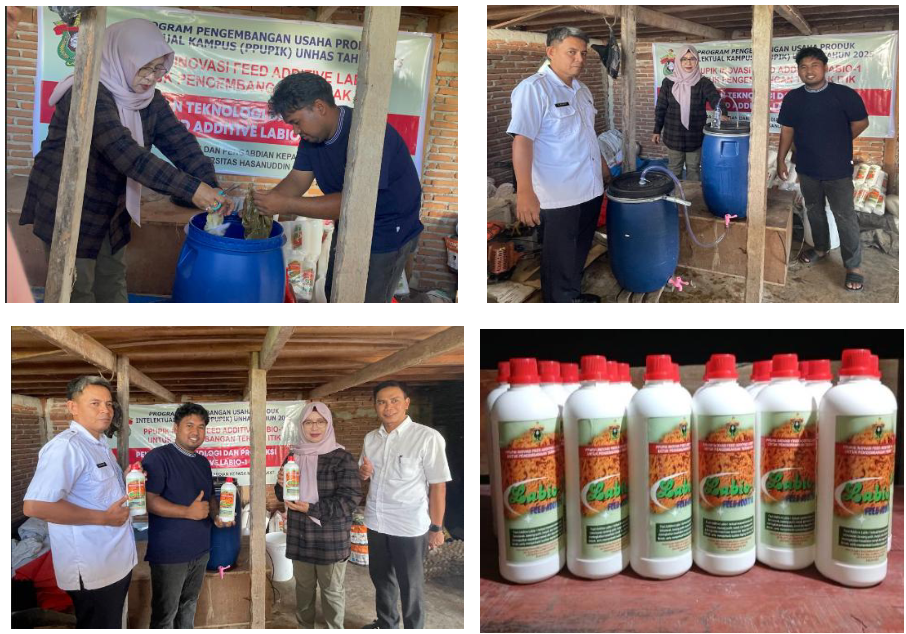
Program effectiveness was evaluated through pre-tests and post-tests covering four knowledge areas: fundamental concepts of feed additives and phytobiotics, their benefits for duck productivity, the technical stages of Labio-1 production, and hygiene and safety standards. The results provided a basis for assessing changes in participants’ understanding.
The program supports SDG 1: No Poverty by strengthening farmers’ capacity to improve productivity and economic resilience. It contributes to SDG 3: Good Health and Well-Being by promoting safer livestock practices, while advancing SDG 4: Quality Education through practical, science-based community learning. It also supports SDG 17: Partnerships for the Goals by fostering collaboration among academics, researchers, and local farmers. Through this initiative, Labio-1 is expected to become an accessible innovation that helps duck farmers build more productive, informed, and sustainable enterprises.