Maros – As part of its commitment to the Tri Dharma of Higher Education—education, research, and community service—a community engagement program entitled “Enhancing Farmers’ Capacity Through Training on Lactic Acid Bacteria Inoculant Production as an Additive for Corn Stover Silage” was conducted. The program introduced research-based innovations to improve livestock feed quality and availability while encouraging farmers to utilize locally available agricultural resources. Through practical knowledge and appropriate technology, the activity aimed to strengthen farmers’ capacity to develop more efficient and independent feed management systems.
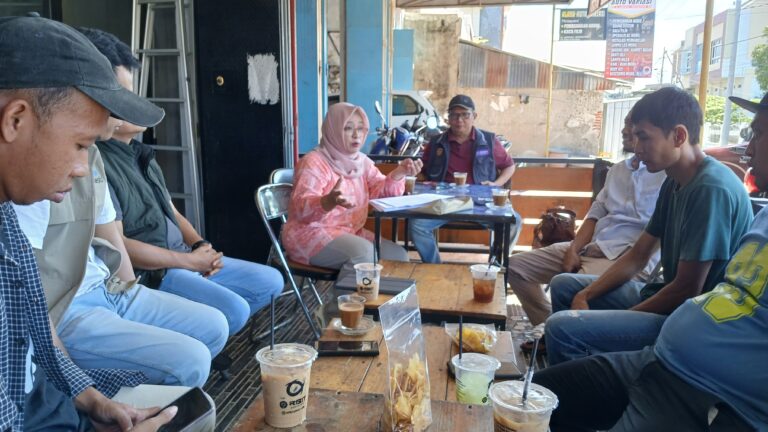
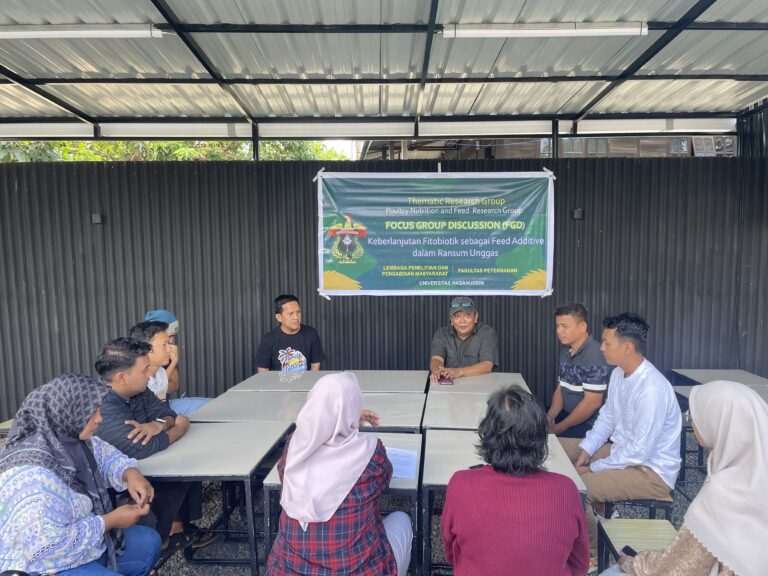
Conducted on August 3, 2025, the program involved 25 participants from Tompobulu Subdistrict, Maros Regency. Participants actively engaged in discussions, demonstrations, and practical training sessions. Their involvement reflected strong interest in improving livestock feed quality while reducing dependence on expensive commercial inputs. The activity also provided an opportunity for farmers to exchange experiences and discuss challenges related to feed availability, preservation, and the utilization of agricultural by-products.
Corn stover is an abundant local agricultural resource with significant potential for livestock feeding. However, without proper processing and preservation, its nutritional value and storage quality may decline. One practical solution is silage production, a preservation method that uses fermentation to maintain feed quality for longer periods. The use of lactic acid bacteria inoculants as silage additives can help support a controlled fermentation process and improve the preservation of feed materials. Through this technology, corn stover can be transformed from an agricultural by-product into a valuable livestock feed resource.
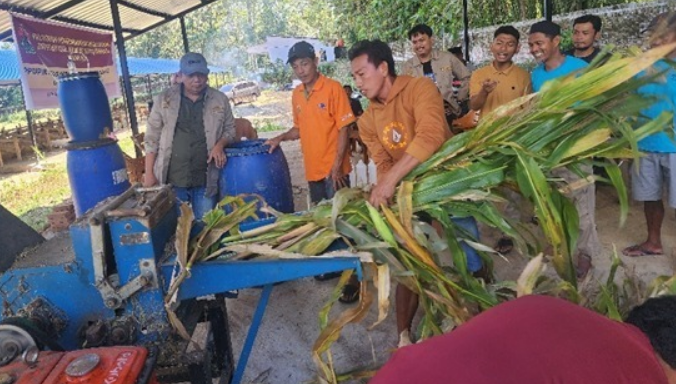
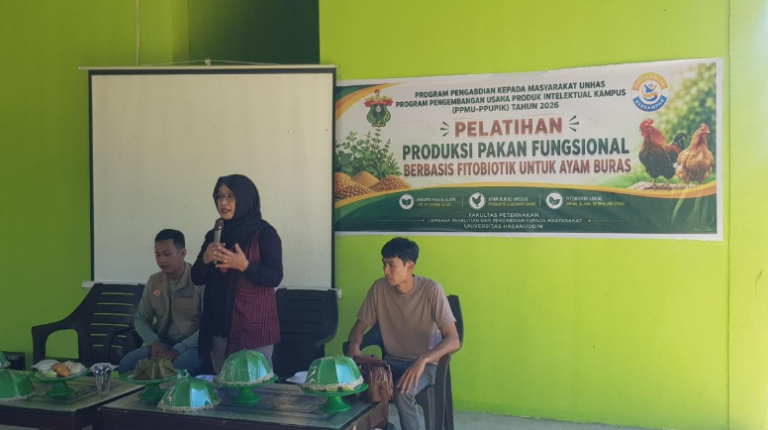
During the program, participants were introduced to the basic principles of silage production and the role of lactic acid bacteria in the fermentation process. Facilitators explained scientific concepts in clear and accessible language while connecting the materials to farmers’ daily practices. Participants learned about feed material preparation, the function of lactic acid bacteria inoculants, and the stages involved in producing inoculants for use as silage additives.
Following the theoretical sessions, the activity continued with practical training on inoculant production. Participants were guided through material preparation, the inoculant-making process, and its application in corn stover silage. The practical component emphasized accuracy, cleanliness, proper handling, and an understanding of fermentation. Through direct participation, farmers gained practical experience and greater confidence in applying the technology independently.
The introduction of this innovation is expected to become an important step toward improving feed efficiency, reducing feed costs, and optimizing local agricultural resources. By adopting research-based technologies developed through higher education, farmers can strengthen their capacity to produce and manage feed independently. This approach also encourages the transformation of agricultural by-products into productive resources that support sustainable livestock production.
The program supports SDG 1: No Poverty by strengthening farmers’ capacity to improve production efficiency and economic resilience through cost-effective feed technologies. It advances SDG 3: Good Health and Well-Being by promoting better feed management to support livestock health and productivity. The activity also contributes to SDG 4: Quality Education through practical, science-based learning and technology transfer. Furthermore, it supports SDG 17: Partnerships for the Goals by strengthening collaboration between academics, researchers, and local farming communities. Through this initiative, research-based innovation is expected to support more productive, efficient, independent, and sustainable livestock enterprises.