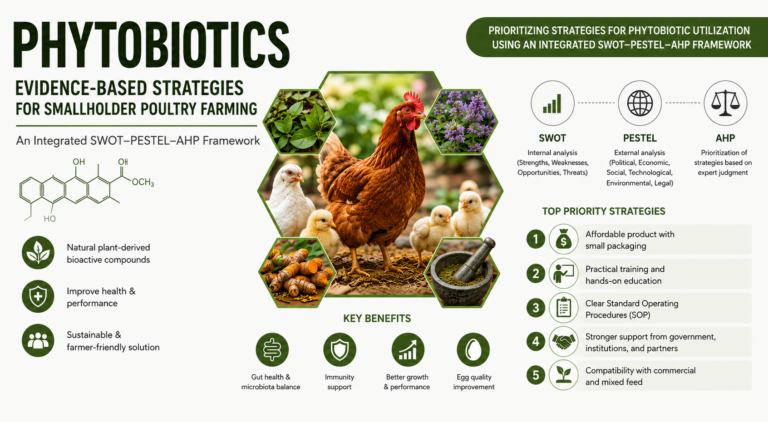

Makassar, Indonesia, August 21, 2026/NUTRIFEED/— For poultry farmers, finding ways to maintain productivity while reducing environmental and health concerns is becoming increasingly important. Growing concerns about antimicrobial resistance have encouraged the search for safer and more sustainable alternatives. One promising option is the use of phytobiotic feed additives—natural products derived from plants that may support animal health and production.
But can replacing conventional additives with plant-based alternatives truly make poultry farming more sustainable?
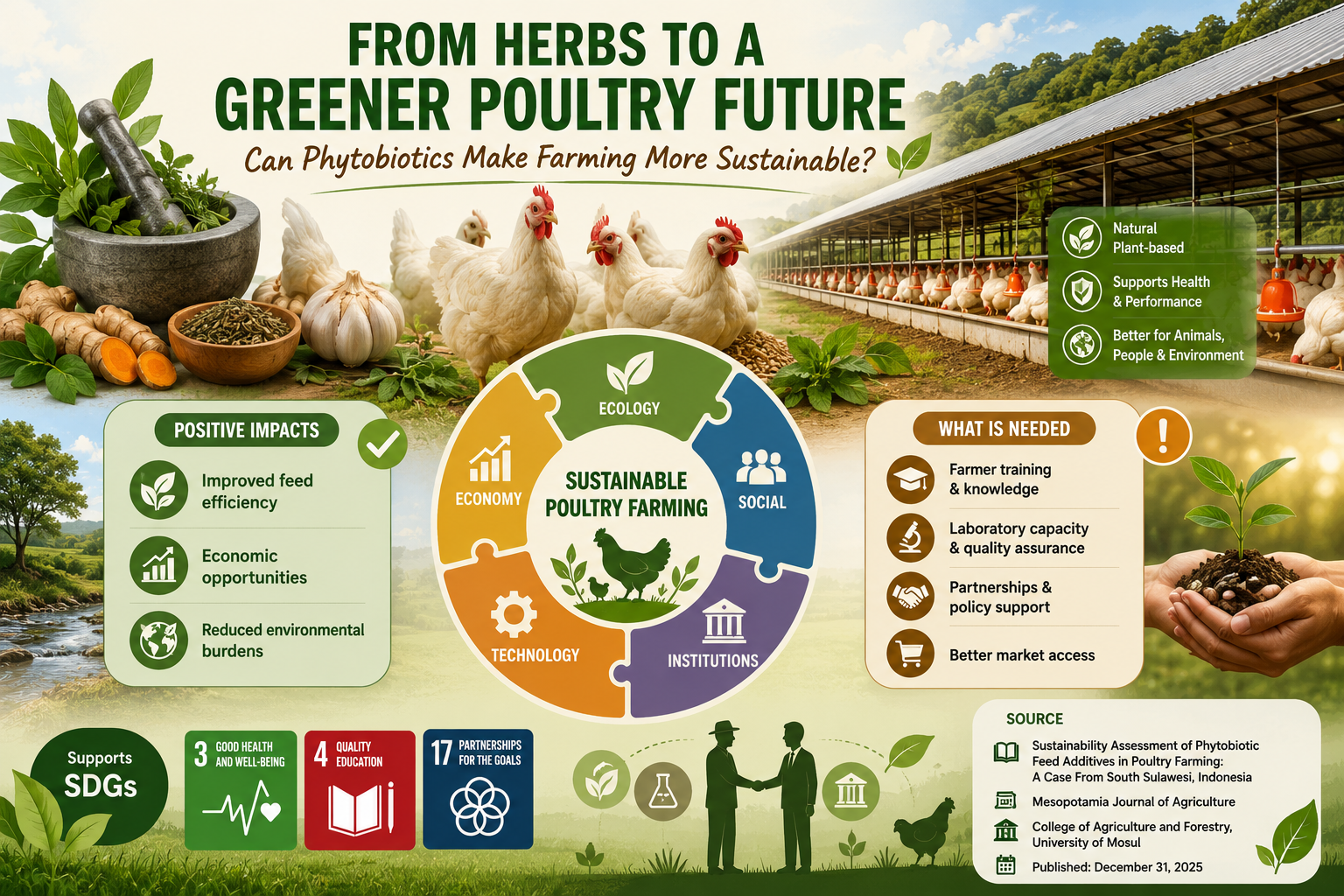
The answer may depend on more than the phytobiotic product itself. Sustainability is influenced by the entire system surrounding its use, including feed efficiency, access to local raw materials, farmer knowledge, laboratory support, technology, market access, and government policy. A promising product can still fail if farmers lack the skills, infrastructure, or support needed to use it effectively.
This issue is examined in the article “Sustainability Assessment of Phytobiotic Feed Additives in Poultry Farming: A Case From South Sulawesi, Indonesia.” Published in the Mesopotamia Journal of Agriculture by the College of Agriculture and Forestry, University of Mosul, on December 31, 2025, the study assessed phytobiotic feed additives through the perspectives of 60 stakeholders, including farmers, extension agents, feed mill representatives, policymakers, and academics across four poultry-producing districts in South Sulawesi.
Using a sustainability assessment approach called RAPPhytoFeed, the researchers evaluated five dimensions: ecology, economy, social factors, technology, and institutions. The ecological dimension recorded the highest sustainability score at 77.7, followed by the economic dimension at 62.3. Social and technological dimensions were more moderate, at 56.5 and 55.0, while the institutional dimension recorded the lowest score at 49.6.
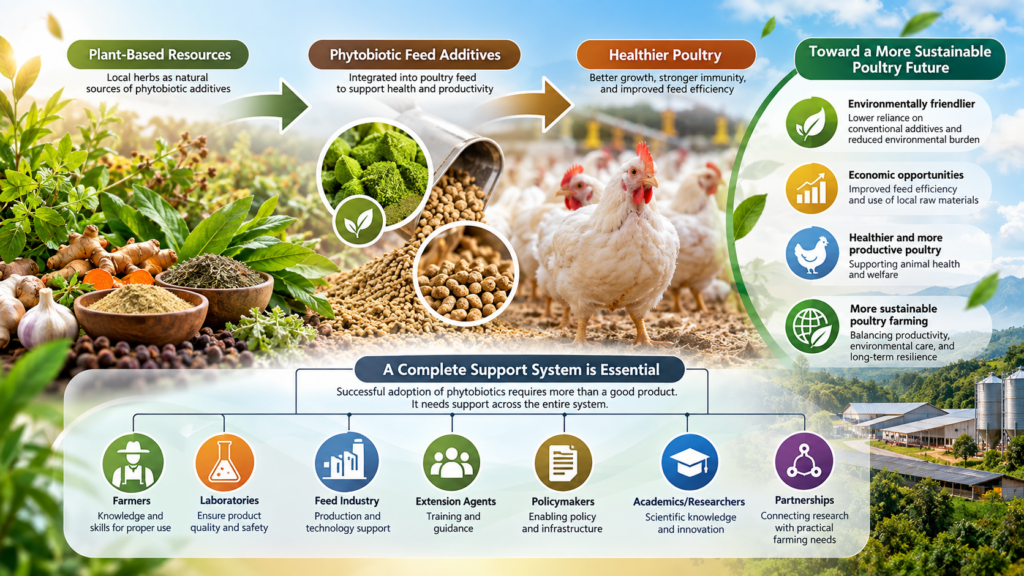
The results show that phytobiotics offer environmental and economic opportunities through improved feed efficiency, local raw materials, and reduced environmental burdens. However, these advantages alone are not enough. Limited trained personnel, laboratory capacity, policy support, and market access can slow wider adoption, especially among smaller poultry producers.
For farmers, phytobiotics should not be viewed simply as a plant-based replacement for conventional feed additives. Their successful adoption requires a complete support system. Training can help farmers understand proper formulation and use, laboratories can help ensure product quality and safety, and partnerships can connect research with practical farming needs.
This research supports SDG 3: Good Health and Well-Being by promoting alternatives that may support poultry health while contributing to efforts to reduce reliance on antibiotic growth promoters. It also supports SDG 4: Quality Education by emphasizing farmer training and scientific knowledge. In addition, the study connects with SDG 17: Partnerships for the Goals, highlighting cooperation among universities, farmers, industry, laboratories, and policymakers.
The message is simple: sustainable innovation needs more than a good product. With knowledge, infrastructure, and strong partnerships, phytobiotics could help create a healthier and more sustainable future for poultry farming.
References
DOI: https://dx.doi.org/10.17582/journal.aavs/2025/13.5.1025.1035
Contact:
Prof. Sri Purwanti
+62 811-4103-775
sripurwanti@unhas.ac.i