
Makassar, Indonesia, August 21, 2026/NUTRIFEED/— For poultry farmers, maintaining healthy and productive broilers has always been an important challenge. Feed additives have long been used to support growth and health, but concerns about the excessive use of antibiotics and their potential residues have encouraged the search for safer alternatives.
One promising answer may come from a familiar Indonesian plant: clove
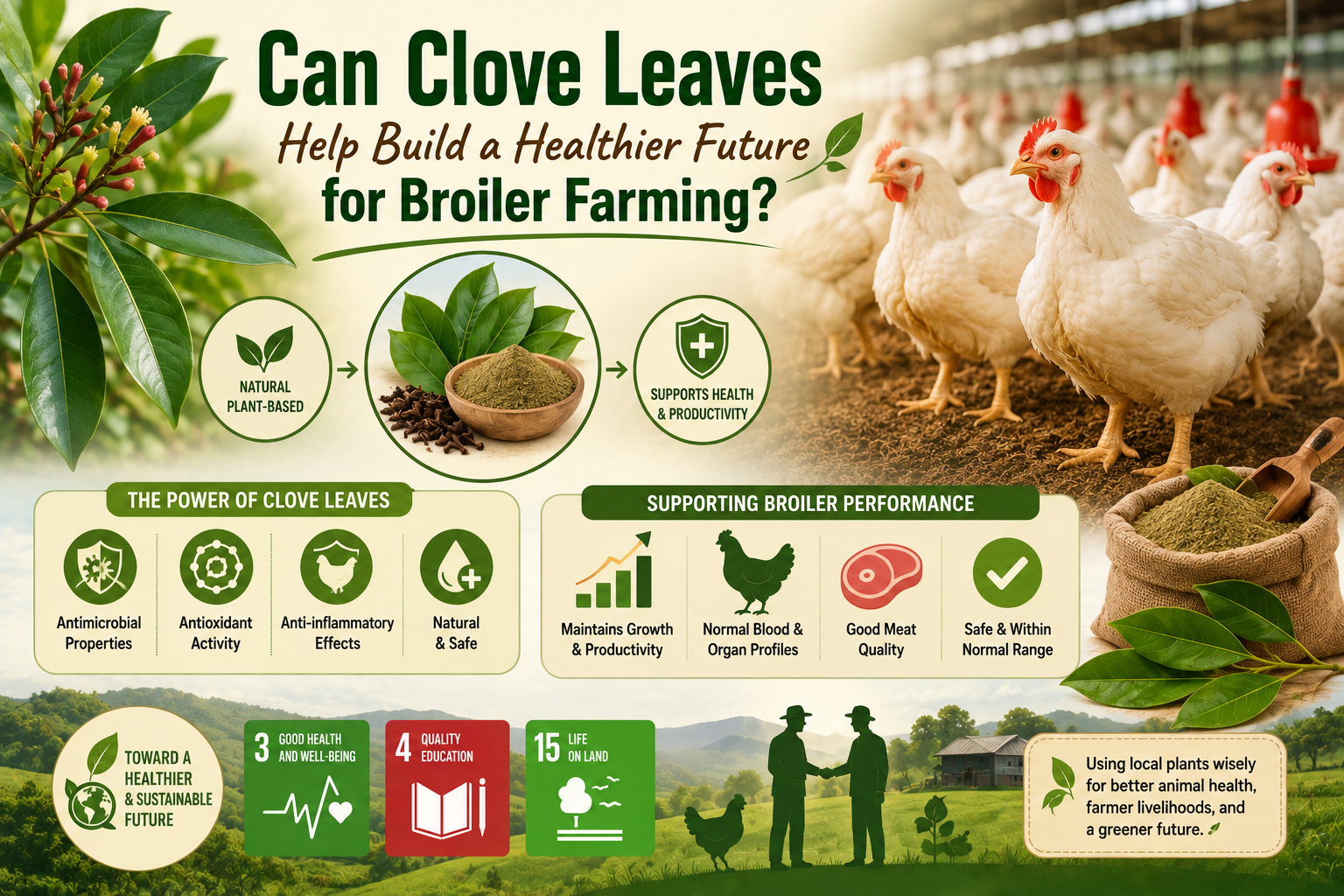
Cloves are widely known as a valuable spice, but their leaves also contain natural compounds with potential biological benefits. Essential oils and phytochemicals, particularly eugenol, have been associated with antimicrobial, antioxidant, anti-inflammatory, and antiseptic properties.
Could clove leaves become a natural alternative to conventional antibiotic growth promoters in broiler production?
This question is explored in the article “The Effect of Supplemented Clove Leaf Meal on Broiler Productivity.” Published in BIO Web Conferences by EDP Sciences on May 22, 2025, the study investigated the effects of adding clove leaf meal to broiler diets as a potential natural alternative to antibiotic growth promoters.
The researchers tested five levels of clove leaf meal supplementation in broiler feed: 0%, 2%, 4%, 6%, and 8%. The study was conducted over 30 days and evaluated several indicators of productivity, including broiler performance, blood profiles, internal organ profiles, and meat quality.
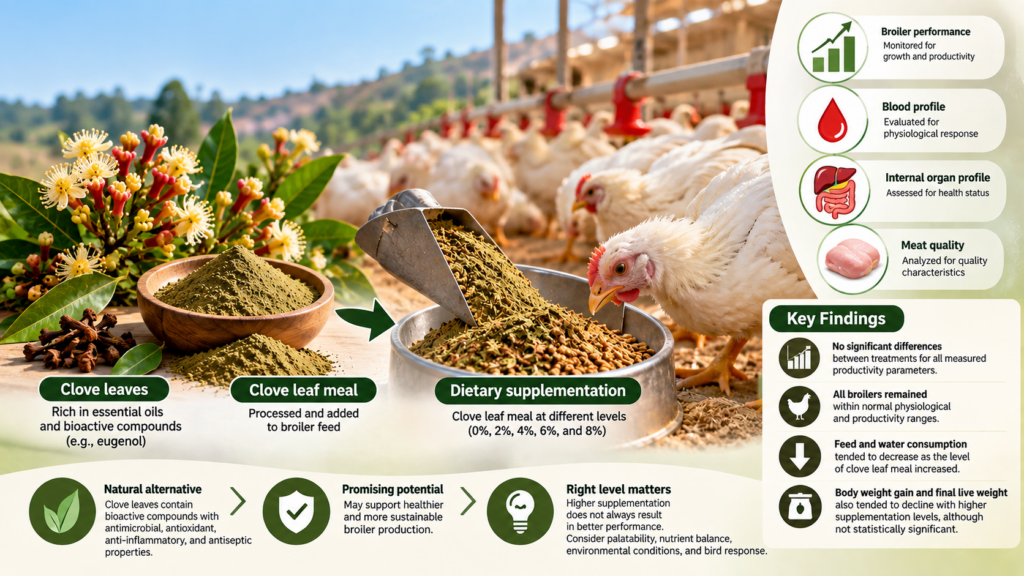
The results showed that the different levels of clove leaf supplementation did not produce statistically significant differences in the measured productivity parameters. However, this does not mean that the treatment caused harmful effects. The broilers in all treatment groups remained within normal physiological and productivity ranges.
The study also showed that feed and water consumption tended to decrease as the level of clove leaf meal increased. This may be related to the strong aroma, spicy taste, and bitter or astringent compounds naturally present in cloves. Body weight gain and final live weight also tended to decline as supplementation increased, although these differences were not statistically significant.
For poultry farmers, clove leaf meal should not simply be viewed as a guaranteed replacement for conventional feed additives. The findings highlight the importance of determining the right level of supplementation. A higher concentration of a natural ingredient does not necessarily produce better results. Palatability, nutrient balance, environmental conditions, and the biological response of the birds must all be considered.
The researchers therefore recommended further studies to better understand the mechanism of action of clove leaf meal and to identify supplementation levels that may provide optimal benefits for broilers.
This research supports SDG 3: Good Health and Well-Being by exploring natural alternatives that may contribute to healthier poultry production. It also supports SDG 4: Quality Education by transforming scientific research into practical knowledge for farmers and students. In addition, the study connects with SDG 15: Life on Land, encouraging the use of locally available plant resources and more environmentally responsible livestock production.
The message is simple: sometimes, the search for better poultry nutrition can begin with the plants growing around us. With further research and proper application, clove leaves may offer another pathway toward safer and more sustainable broiler farming.
References
DOI: https://doi.org/10.1051/bioconf/202517701005
Contact:
Prof. Sri Purwanti
+62 811-4103-775
sripurwanti@unhas.ac.id