
MAKASSAR, Indonesia, 24 August 2026/neuro-onc – A stroke can change a person’s life within minutes. Beyond problems with movement or speech, stroke can also affect memory, attention, thinking, and the ability to perform everyday activities. These cognitive problems may make recovery more difficult and reduce a person’s independence. But what if the brain could be encouraged to recover from the very beginning?
A study entitled “Effectiveness of early cognitive exercise intervention on improvement cognitive function of stroke patients in the acute phase” explored this question. The article was published in the Journal of Vascular Nursing, Volume 42, in 2024, by Elsevier. The publication date is March 2024. The study was conducted by Nurcaya, Rosyidah Arafat, and Elly L. Sjattar from Latemmamala Hospital and the Faculty of Nursing, Hasanuddin University, Indonesia.
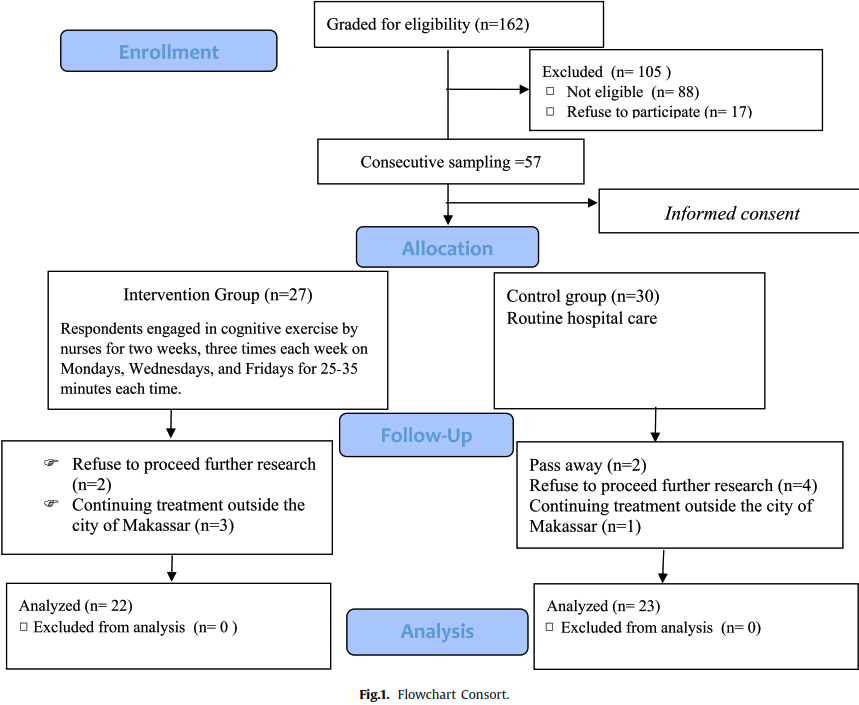
The researchers studied stroke patients during the acute phase—the first days and weeks following the onset of stroke. A total of 45 patients completed the study. Twenty-two patients received early cognitive exercises, while 23 patients received routine hospital care. Cognitive function was measured using the Indonesian version of the Montreal Cognitive Assessment (MoCA-Ina).
The intervention was surprisingly practical. For two weeks, nurses provided cognitive exercises three times a week, with each session lasting about 25–35 minutes. Patients were encouraged to identify the date, time, place, and people around them. They practiced simple daily activities such as eating, bathing, dressing, and sitting independently. They also trained their memory, discussed topics they enjoyed, and practiced simple arithmetic.
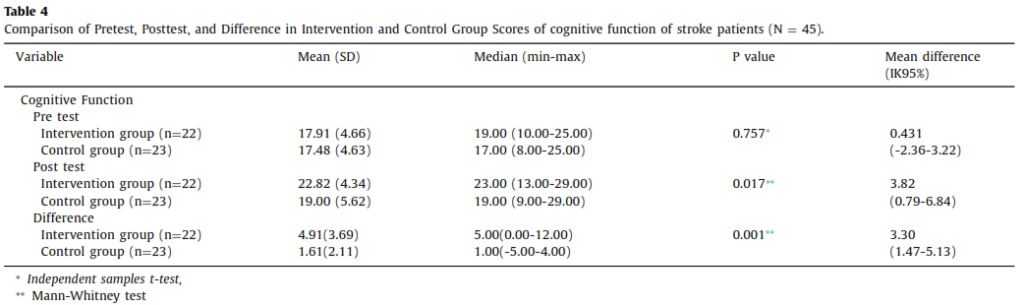
The results were promising. Cognitive function improved significantly in both groups, but the improvement was greater among patients who received early cognitive exercise. The intervention group’s average MoCA-Ina score increased from 17.91 before the intervention to 22.82 afterward. The control group increased from 17.48 to 19.00. The difference in improvement between the two groups was statistically significant, with p = 0.001.
Why does this matter? Recovery after stroke is not only about moving the arms and legs. The brain also needs stimulation. Simple conversations, remembering information, solving problems, and performing everyday activities can become meaningful parts of rehabilitation.
This study supports Sustainable Development Goal (SDG) 3: Good Health and Well-being, particularly the effort to promote effective healthcare and rehabilitation for people affected by stroke. It also highlights the important role of nurses in starting rehabilitation early rather than waiting until later stages of recovery. The researchers acknowledge that the study involved a small sample from one hospital and had a relatively short duration. Therefore, larger and longer studies are still needed.
Still, the message is powerful: when it comes to stroke recovery, the first days may be an opportunity—not a time to wait. With appropriate guidance and repeated cognitive stimulation, nurses can help patients begin rebuilding their cognitive abilities, one small exercise at a time.
Reference:
https://doi.org/10.1016/j.jvn.2023.11.010
Contact:
Dr. Rosyidah Arafat, S.Kep., Ns.,M.Kep., Sp.KMB
+6282112862492