
MAKASSAR, Indonesia, 24 August 2026/neuro-onc – A stroke can change everyday life in an instant. Simple activities such as getting out of bed, communicating, eating, or moving around may suddenly become difficult. Recovery is not only about physical strength. It is also about confidence—the belief that a person can take part in rehabilitation, manage challenges, and gradually regain independence.
A recent study explored this idea through the Look After Yourself (LAY) self-care management model. The article, “The effect of self-care management with the look after yourself (LAY) model on self-efficacy and functional status of stroke patients,” was published in the Journal of Vascular Nursing by Elsevier on July 17, 2026. The study was conducted by Yutia Ferianti Yunus Padu, Rosyidah Arafat, and Elly L. Sjattar from the Faculty of Nursing, Hasanuddin University. The article is available with DOI 10.1016/j.jvn.2026.07.002.
The researchers involved 92 hospitalized stroke patients at a stroke center in South Sulawesi, Indonesia. After four participants dropped out, 88 completed the study, with 44 receiving the LAY intervention and 44 receiving standard hospital education. The LAY program lasted four weeks and combined group learning with individual counseling.
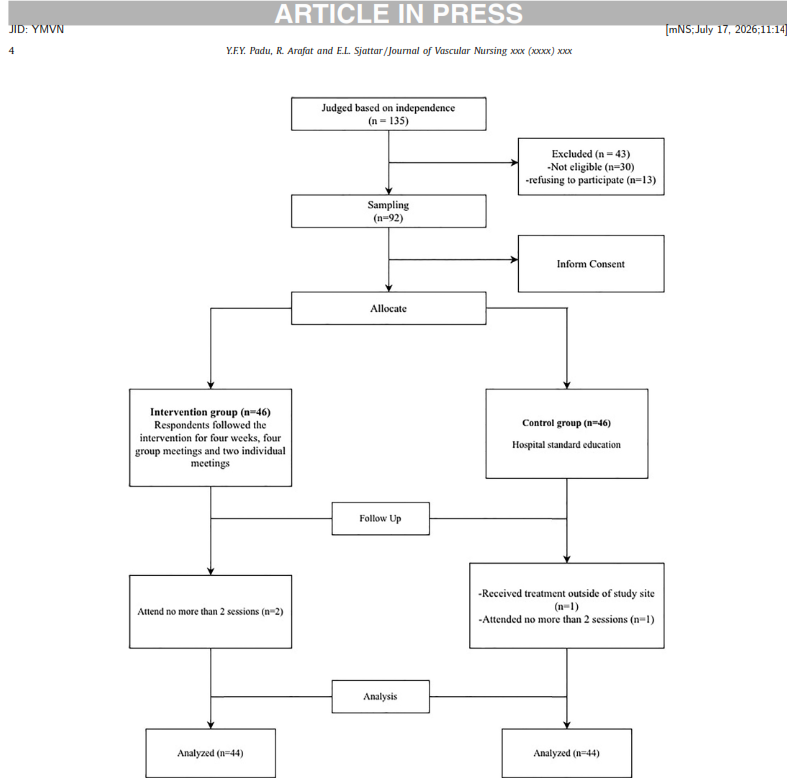
What made LAY different was its focus on helping patients become active participants in their own recovery. The program covered emotional management, communication and asking for help, sleep and fatigue, nutrition and medication management, safe physical activities, and access to community services. Patients also created a personal SMART Action Plan, helping turn general advice into practical goals for daily life.
The results were encouraging. In the LAY group, average self-efficacy scores increased from 60.04 to 77.77, a statistically significant improvement. Functional status also improved within the group, from an average of 59.29 to 67.02. However, the researchers found that the difference in functional status between the LAY and control groups after the intervention was not statistically significant. This is an important reminder that physical recovery after stroke can take longer and may depend on factors such as stroke severity, neurological damage, rehabilitation intensity, and neuroplasticity.
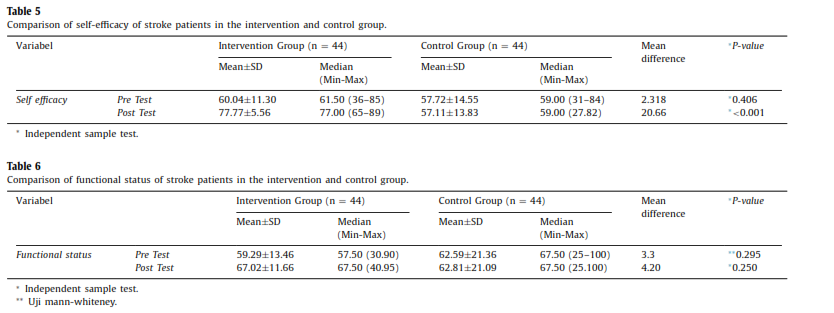
The biggest message is simple: recovery needs more than treatment—it needs participation. Nurses can help patients build confidence through education, emotional support, goal setting, exercise facilitation, and discharge planning. When patients believe they can contribute to their own recovery, rehabilitation may become a more active and meaningful process.
This study supports Sustainable Development Goal (SDG) 3: Good Health and Well-being, particularly by highlighting approaches that can strengthen rehabilitation and support better long-term health outcomes for people living with stroke. It also shows how nursing research can turn evidence into practical, patient-centered care.
The LAY model does not promise an instant recovery. Instead, it offers something equally important: a structured way to help stroke survivors understand their condition, set realistic goals, and regain confidence—one step at a time.
Reference:
Contact:
Dr. Rosyidah Arafat, S.Kep., Ns.,M.Kep., Sp.KMB
+6282112862492