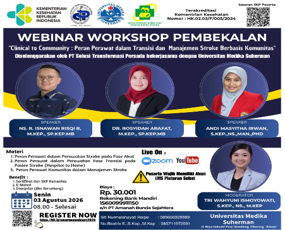
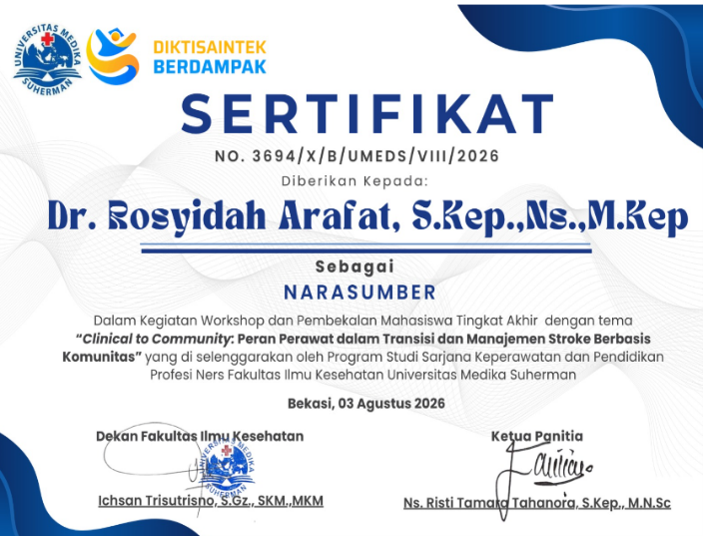
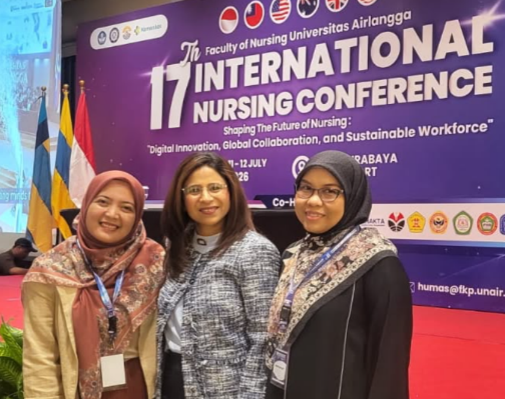
The Faculty of Nursing, Hasanuddin University, participated in the workshop “The Role of Nurses in Stroke Care During the Acute Phase” and “The Role of Nurses in Transitional Care for Stroke Patients (Hospital to Home),” held at Universitas Medika Suherman, Bekasi, on 3 August 2026. The activity was attended by around 200 participants, including nurses, academics, healthcare professionals, students, and other stakeholders with an interest in stroke care and nursing practice.
The workshop aimed to strengthen nurses’ knowledge and competencies in providing comprehensive stroke care across different stages of the patient’s journey. In particular, the activity focused on enhancing participants’ understanding of the nursing role during the acute phase of stroke and strengthening approaches to transitional care from hospital to home. Through knowledge sharing and professional discussion, the workshop sought to promote evidence-based, patient-centered, and continuous nursing care.
Stroke is a major health challenge that can cause substantial physical, cognitive, psychological, and social impacts on patients and their families. The acute phase requires rapid assessment, continuous monitoring, timely intervention, and effective coordination among healthcare professionals. Nurses play a central role in identifying changes in patients’ conditions, preventing complications, supporting treatment, and communicating effectively with patients and families.
The first workshop session, “The Role of Nurses in Stroke Care During the Acute Phase,” explored the responsibilities of nurses in managing patients during the critical early period following stroke. The discussion emphasized clinical assessment, patient monitoring, prevention of complications, patient safety, and multidisciplinary collaboration. Strengthening nurses’ competencies in these areas is essential to support timely care and improve patient outcomes.
The second session, “The Role of Nurses in Transitional Care for Stroke Patients (Hospital to Home),” highlighted the importance of continuity of care following hospital discharge. Successful transition requires effective communication and coordination between healthcare providers, patients, and families. Participants discussed key aspects of transitional care, including discharge planning, medication management, rehabilitation, health education, self-management, family involvement, and follow-up care. These approaches can help patients and families become better prepared to continue stroke recovery safely at home.
The workshop also provided an opportunity for participants to exchange experiences and discuss challenges encountered in stroke care. Such professional engagement is important for translating knowledge into practical improvements in healthcare services and strengthening the capacity of nurses to provide holistic and sustainable care.
This activity supports several Sustainable Development Goals (SDGs), particularly SDG 1: No Poverty, SDG 3: Good Health and Well-Being, SDG 4: Quality Education, and SDG 17: Partnerships for the Goals. Strengthening nurses’ competencies contributes to SDG 3 by supporting better health outcomes and quality of care. The workshop also advances SDG 4 through continuing professional education and knowledge development. Improved health and professional capacity can contribute to SDG 1 by reducing the socioeconomic burden associated with illness and disability. Furthermore, collaboration and knowledge exchange among academic and healthcare communities support SDG 17 by strengthening partnerships for sustainable health development.
Through this workshop, the Faculty of Nursing, Hasanuddin University, reaffirmed its commitment to advancing nursing education, strengthening professional capacity, and promoting quality and continuous stroke care from hospital to home.