

MAKASSAR, Indonesia, 26 August 2026/neuro-onc – Imagine a nurse facing an important clinical decision. A patient needs care, but several possible approaches are available. Which one is safest? Which one is supported by the best research? And how can the nurse know whether the chosen intervention is actually effective?
This is where evidence-based practice (EBP) becomes important. EBP is not simply about reading scientific articles. It means bringing together the best available evidence, professional expertise, and the needs and preferences of patients when making healthcare decisions.
A recent study, “Translation and psychometric validation of the Evidence-Based Practice Competency Questionnaire for Registered Nurses (EBP-COQ Prof©) in Bahasa Indonesia,” focused on an important challenge: how can we accurately understand Indonesian nurses’ competence in using evidence in their practice? The article was published in Applied Nursing Research, an Elsevier journal, with its publication metadata associated with 2024. The article was subsequently assigned to Volume 81, February 2025, Article 151881.
The researchers translated and culturally adapted the EBP-COQ Prof© questionnaire into Bahasa Indonesia using a rigorous seven-step process. The questionnaire was then tested among nurses working in direct patient care. In total, 119 nurses completed the questionnaire. The instrument was designed to assess several important dimensions of EBP competency, including nurses’ knowledge, skills, attitudes, and use of evidence in practice.
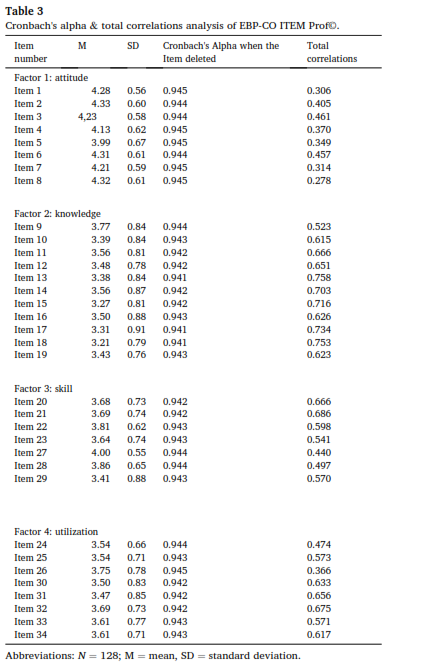
The findings were encouraging. The Indonesian version demonstrated strong content validity, with item-level scores ranging from 0.81 to 1.00 and a scale-level score of 0.95. Its reliability was also excellent, with a Cronbach’s alpha of 0.94. Although the researchers identified some areas requiring further testing, the results indicated that the Bahasa Indonesia version was a reliable and valid tool for assessing nurses’ EBP competency.
Why does this matter beyond research? Because healthcare is constantly changing. New treatments, technologies, and clinical guidelines emerge every day. Nurses therefore need more than practical experience—they need the ability to find, understand, evaluate, and apply trustworthy evidence.
This research supports Sustainable Development Goal (SDG) 4: Quality Education by highlighting the importance of continuous professional learning and competency development among healthcare workers. Better education and stronger evidence-based skills can help nurses make more informed decisions and contribute to higher-quality patient care. The message is simple: evidence-based nursing begins with nurses who know how to use evidence. With an appropriate tool to identify their strengths and learning needs, nurses can receive better training, strengthen their clinical decision-making, and become more confident in turning research into real-world care.
Reference:
DOI: 10.1016/j.apnr.2024.151881
Contact:
Dr. Rosyidah Arafat, S.Kep., Ns.,M.Kep., Sp.KMB
+6282112862492