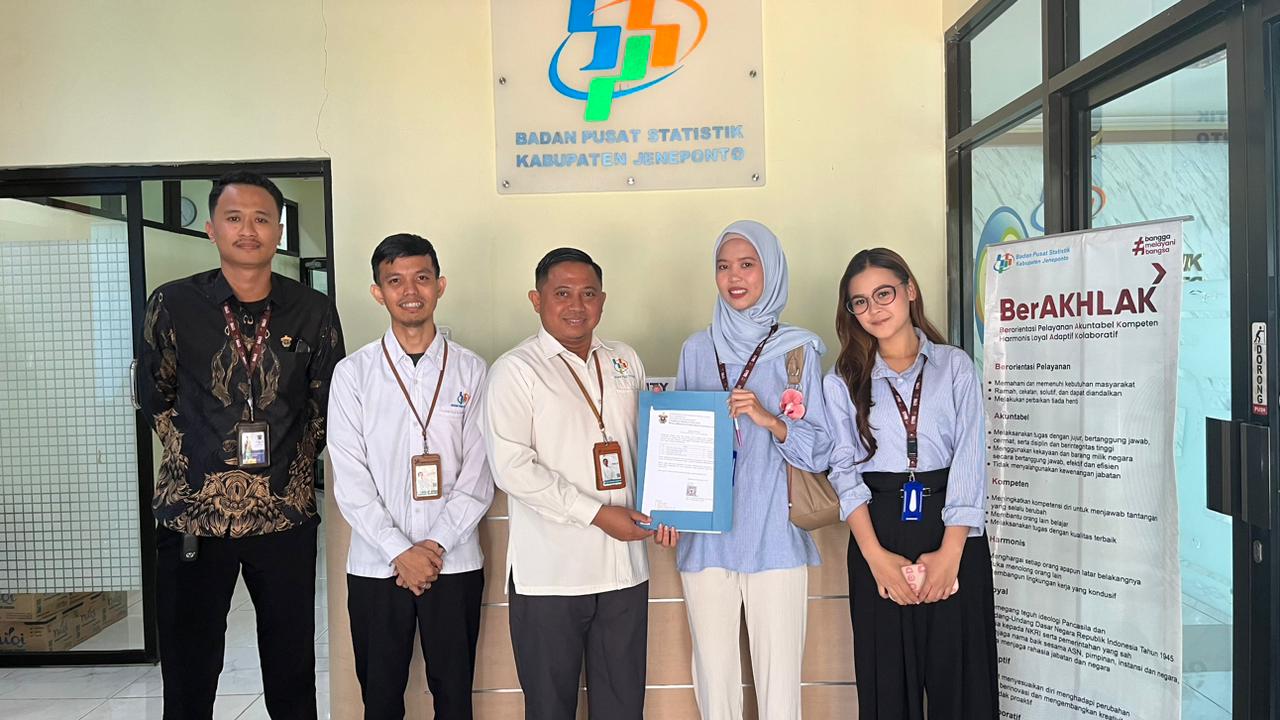
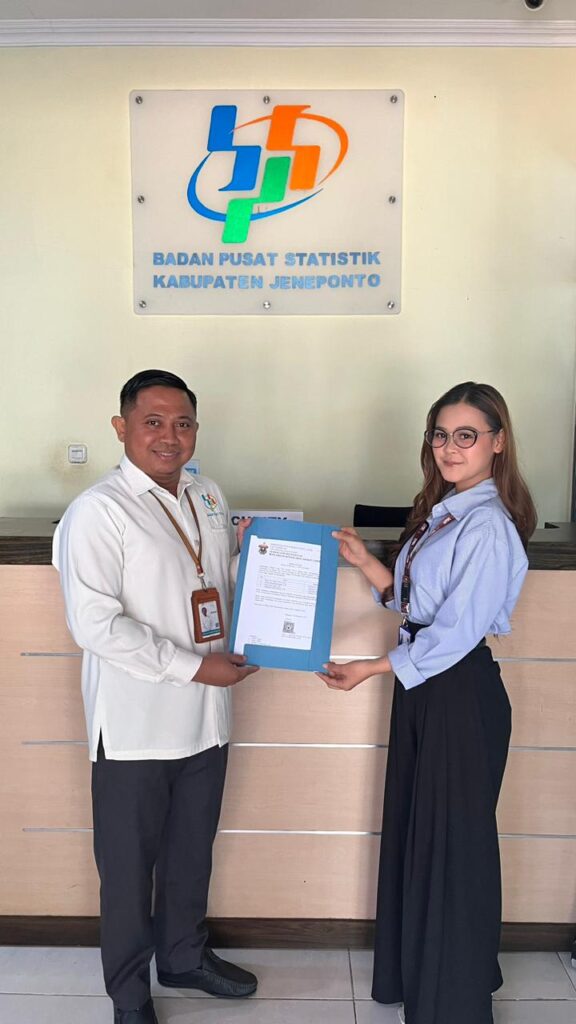
Jeneponto, South Sulawesi, Indonesia — A field visit under the Partnership for Australia-Indonesia Research (PAIR) Program was conducted on November 25, 2025 at the Central Statistics Agency Office of Jeneponto Regency, South Sulawesi. The activity involved five participants and aimed to obtain firsthand information through discussions and interviews concerning statistical information, institutional roles, and the availability of data relevant to community empowerment and the development of seaweed farming.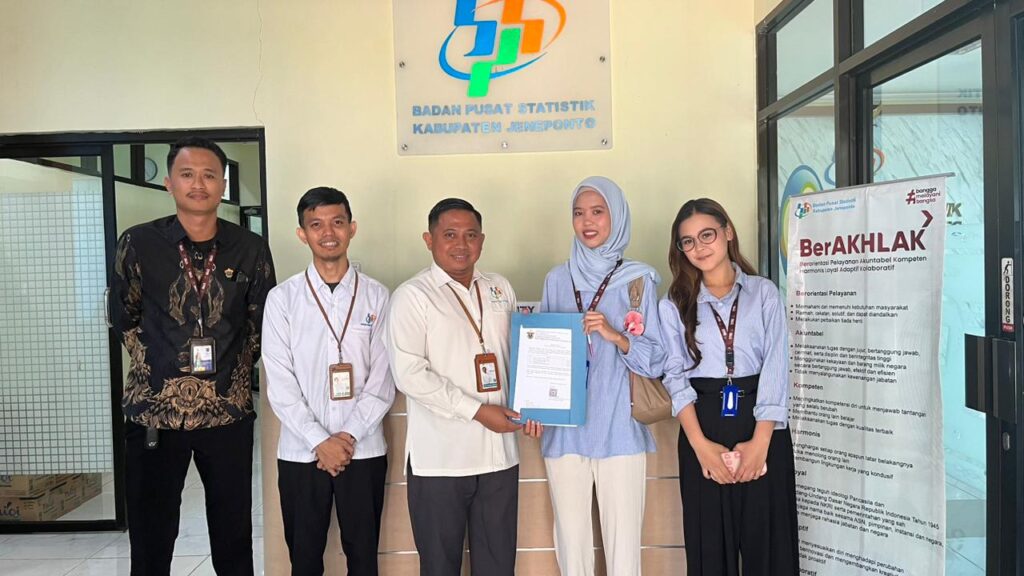 The visit provided an opportunity to understand the importance of reliable data in describing the socioeconomic conditions of coastal communities and supporting regional development. In coastal areas such as Jeneponto, seaweed farming is closely associated with community livelihoods and local economic activities. Therefore, accurate and relevant information is essential for understanding the characteristics of communities, identifying development challenges, and supporting policies that respond to local needs. During the discussion, participants explored the role of Central Statistics Agency in providing statistical information that can support research and development planning. The information discussed was considered valuable for complementing firsthand findings obtained through field observations, discussions, and interviews with seaweed farmers. While community-based information provides insights into farmers’ experiences and challenges, statistical data can provide a broader perspective on demographic, social, and economic conditions. The interaction also emphasized the importance of using data as a foundation for evidence-based decision-making. Development programs for seaweed farming require an understanding of the communities involved, their livelihood conditions, and the broader socioeconomic context in which farming activities take place. Integrating statistical information with field-based knowledge can therefore provide a more comprehensive basis for identifying priorities and designing appropriate interventions. Another important aspect of the visit was institutional connectivity.
 The development of the seaweed sector involves multiple stakeholders with different responsibilities and areas of expertise. Government agencies, research institutions, communities, and other stakeholders need to exchange information and coordinate their efforts to ensure that development initiatives are effective and responsive. Reliable statistical information can serve as an important reference for strengthening this coordination. The field visit contributes to several Sustainable Development Goals (SDGs). It supports SDG 1: No Poverty by strengthening the information base for understanding livelihood opportunities and socioeconomic conditions among coastal communities. The learning and knowledge exchange process supports SDG 4: Quality Education by connecting research activities with practical data and development issues. The sustainable development of seaweed farming also contributes to SDG 14: Life Below Water, particularly through promoting responsible utilization of coastal and marine resources. Furthermore, collaboration and information exchange between researchers and government institutions reflect SDG 17: Partnerships for the Goals, emphasizing the importance of institutional cooperation in achieving sustainable development. Overall, the PAIR Program field visit to the Central Statistics Agency Jeneponto demonstrated that reliable data are an important foundation for understanding coastal communities and developing appropriate strategies for the seaweed sector. The information obtained through the visit is expected to strengthen research and support more evidence-based approaches to community empowerment and regional development. By connecting statistical information with field-based perspectives, the activity reinforced the importance of collaboration between researchers, government institutions, and communities. Such collaboration can contribute to more inclusive, informed, and sustainable development of coastal livelihoods and the seaweed sector in Jeneponto.