Mamuju, Indonesia — A PAIR Program visit to the Environmental and Sanitation Office of Mamuju Regency, West Sulawesi, was conducted on April 20, 2026 as part of a discussion and interview activity aimed at gaining a deeper understanding of policies, institutional roles, and inter-agency linkages in supporting community empowerment, particularly in relation to seaweed farming. The activity involved six participants and provided an opportunity to explore institutional perspectives on the relationship between coastal community activities, natural resource utilization, and sustainable environmental management. In the development of seaweed farming, the environment is inseparable from the sustainability of community activities. The condition of coastal waters and surrounding areas is an important factor in maintaining farming activities and supporting communities whose livelihoods depend on these resources. Therefore, development approaches need to consider not only economic aspects but also how coastal spaces and natural resources can be utilized responsibly. Through discussions and interviews, participants explored the role of environmental institutions in supporting community development and regional environmental management. The discussion also addressed the relationship between environmental policies, community activities, and the need to strengthen awareness and capacity for maintaining environmental quality. This perspective is important because the sustainability of seaweed farming depends not only on production capacity but also on the condition of the ecosystems that support it.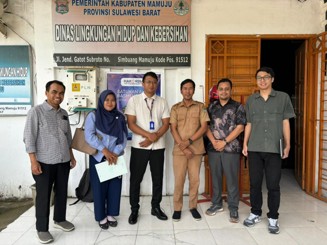 The activity was closely related to SDG 1 (No Poverty) because the sustainability of coastal resources is directly connected to the sustainability of community livelihoods. Healthy coastal environments can support economic activities over the long term and help maintain livelihood opportunities for communities that depend on natural resources. The activity also supported SDG 4 (Quality Education) through field-based learning and knowledge exchange on environmental governance. Discussions with the local government institution provided participants with an opportunity to understand how environmental perspectives can be incorporated into development planning and community empowerment. From an ecosystem perspective, the activity directly supported SDG 14 (Life Below Water) because seaweed farming is closely connected to the sustainability of coastal and marine environments. Responsible management is essential to ensure that the use of coastal waters continues to provide economic benefits without compromising their ecological functions. A broader environmental management perspective also relates to SDG 15 (Life on Land), particularly in promoting approaches that recognize the connections among terrestrial environments, coastal areas, and human activities. Integrated environmental management is an important component of sustainable regional development. Furthermore, the activity contributed to SDG 17 (Partnerships for the Goals) through communication and knowledge exchange between the PAIR Program and the local government institution. Cross-sector collaboration is essential for connecting policies, knowledge, community needs, and sustainability objectives within a shared development framework. Overall, the visit highlighted that coastal community empowerment needs to progress alongside environmental protection. Understanding the role of environmental institutions provides an important foundation for developing seaweed-related approaches that are not only economically beneficial but also environmentally responsible and supportive of long-term community welfare. The activity demonstrated the value of connecting institutional perspectives, community interests, and environmental considerations in pursuing more sustainable coastal development.