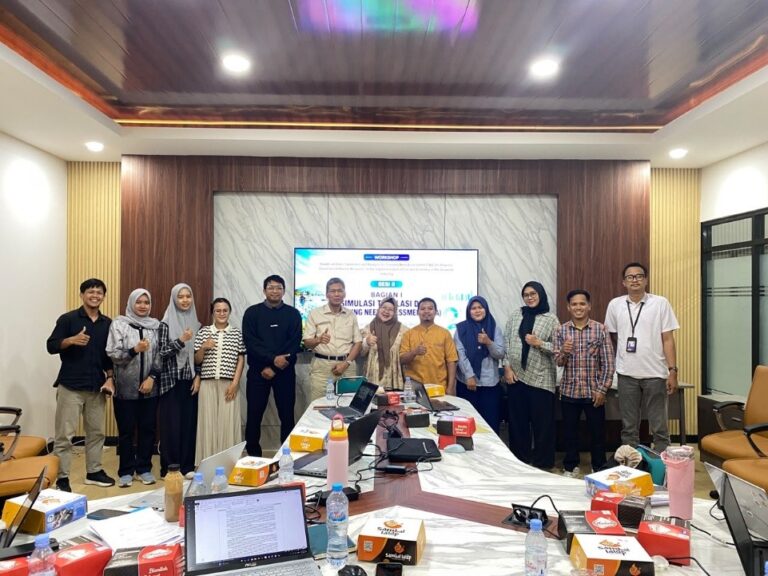
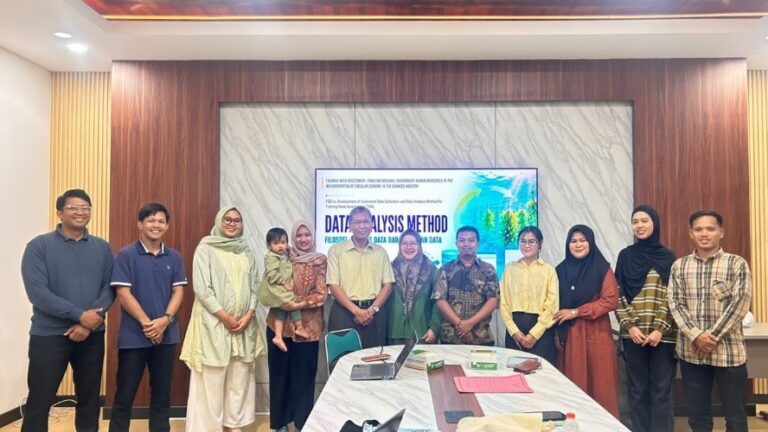
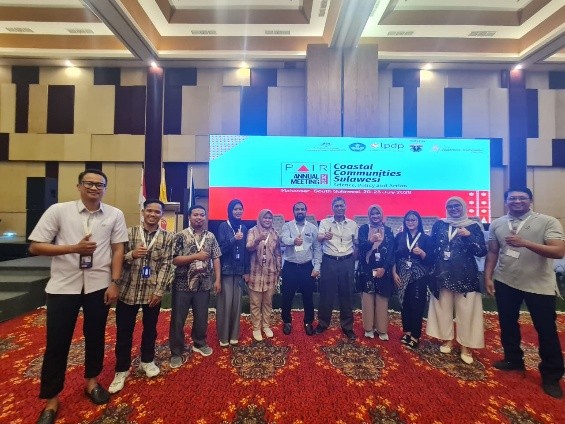
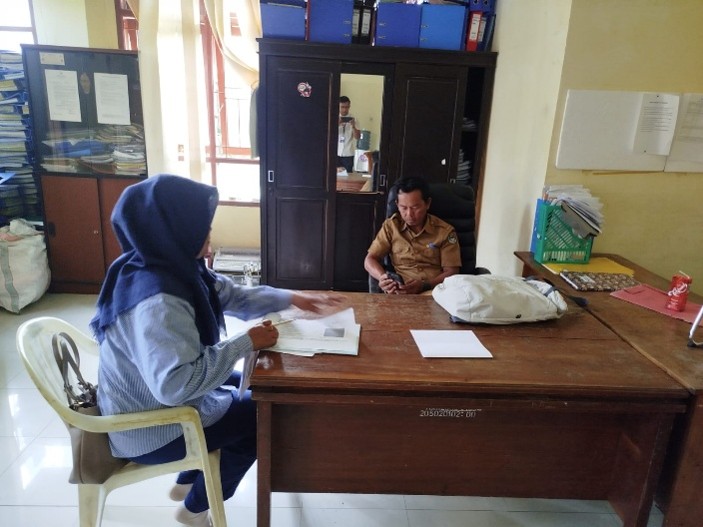
Mamuju, Indonesia — A PAIR Program visit to the Office of Cooperatives, Micro, Small, and Medium Enterprises (MSMEs), and Industry of Mamuju Regency, West Sulawesi, was conducted on April 20, 2026 as part of a discussion and interview activity aimed at understanding policies, institutional roles, and inter-agency linkages in supporting community empowerment related to seaweed farming and economic development. The activity involved eight participants and provided an opportunity to exchange information on the relationship between seaweed resources, community-based enterprises, and regional economic development.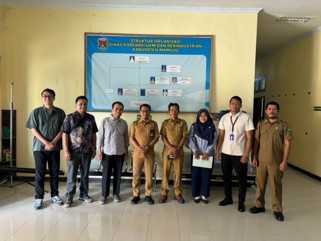 The discussion with the local government office provided a broader perspective on the development of seaweed beyond primary production. Seaweed can become part of a wider economic value chain involving processing, product development, value addition, marketing, and strengthening of local enterprises. Within this framework, MSMEs play an important role in creating opportunities for communities to obtain greater economic benefits from locally available resources. Through interviews and discussions, participants explored how policies and institutional support can contribute to strengthening the capacity of local businesses and communities. The discussion also highlighted the importance of connections among seaweed farmers, MSME actors, local government, and other stakeholders. Such linkages are needed to ensure that seaweed development does not stop at increasing production but can progress toward value-added economic activities that generate broader benefits for communities. The activity was closely related to SDG 1 (No Poverty) because seaweed-based enterprises can contribute to strengthening livelihoods and expanding economic opportunities for local communities. Increasing value through processing and local business development may also support the economic resilience of communities whose livelihoods depend on coastal resources.
 The learning and knowledge-exchange dimension of the activity supported SDG 4 (Quality Education). Discussions with a local government institution provided participants with field-based learning opportunities to understand how economic policies and community empowerment can be approached within a specific regional context. Such exchanges help connect institutional knowledge with practical development conditions. The activity was also relevant to SDG 14 (Life Below Water). Economic development based on seaweed needs to be accompanied by responsible utilization of coastal and marine resources. An approach that considers environmental sustainability is important to ensure that economic benefits can be maintained over the long term while coastal resources remain productive. Furthermore, the visit supported SDG 17 (Partnerships for the Goals) through dialogue and information exchange between the PAIR Program and local government. Cross-institutional collaboration provides an important foundation for connecting policies, knowledge, enterprise development, and community needs within a shared development framework. Overall, the PAIR Program visit to the Mamuju Office of Cooperatives, MSMEs and Industry highlighted the importance of an integrated approach to seaweed-based economic development. Strengthening institutional support, community capacity, and stakeholder networks can contribute to the development of local enterprises that are more inclusive, value-oriented, and sustainable. The activity also demonstrated the importance of connecting community experiences with institutional perspectives in shaping development approaches that respond to local potential and needs.