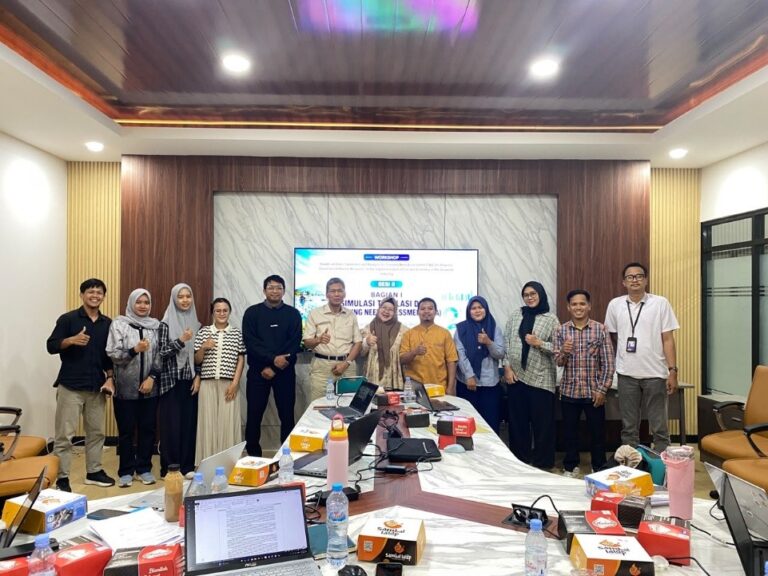
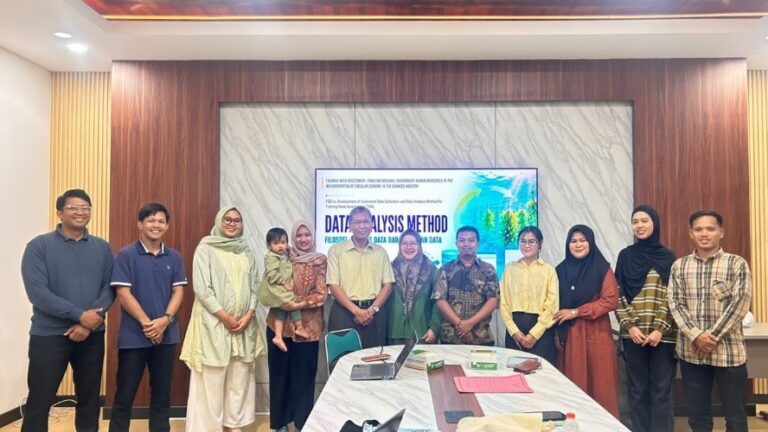
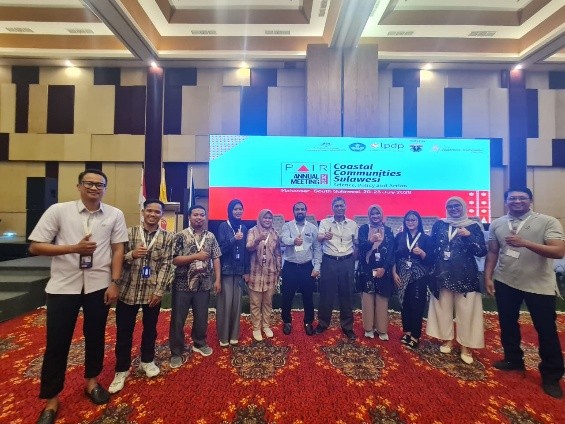
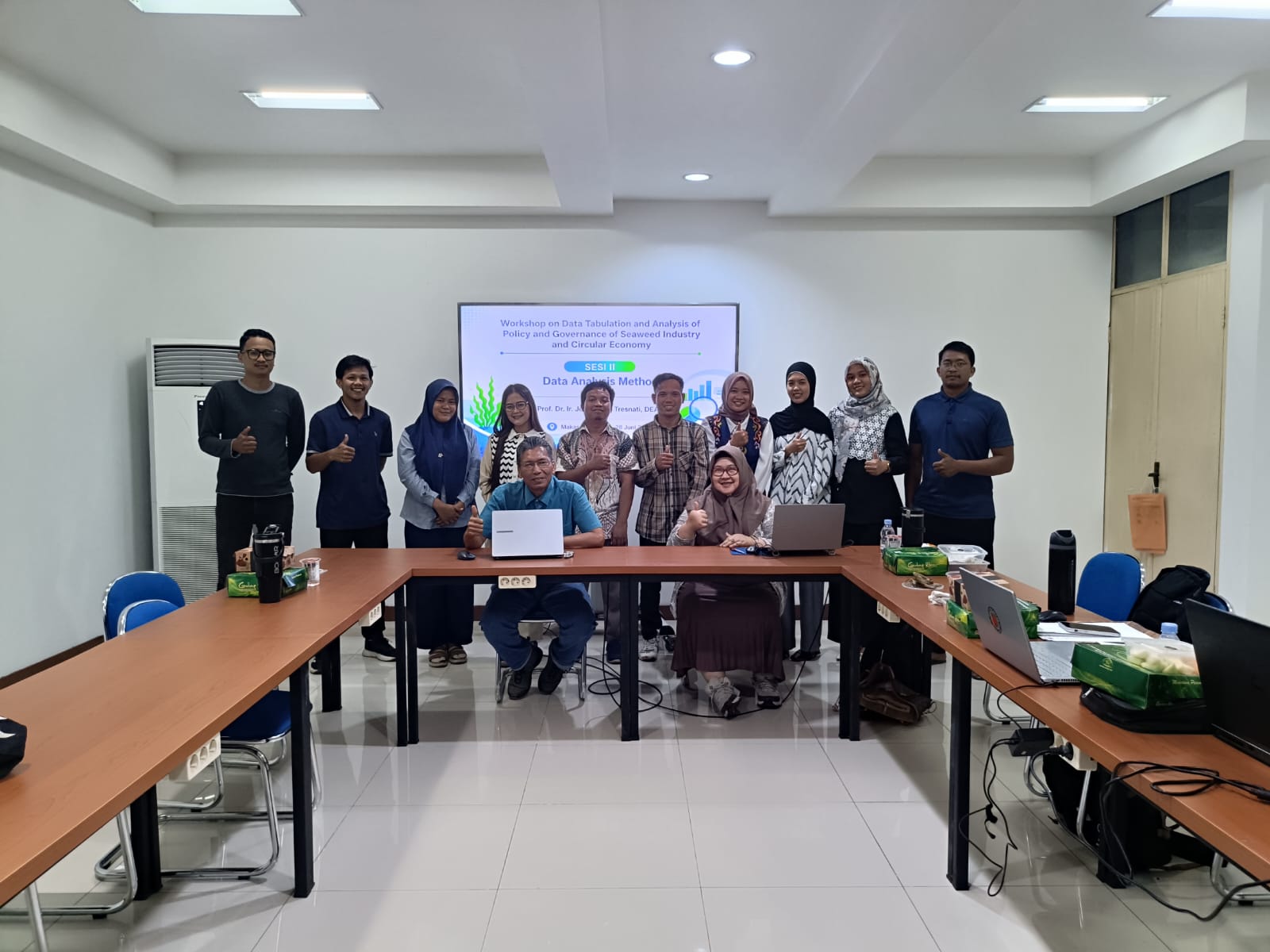
 Makassar, Indonesia — The FGD Workshop on Data Tabulation and Analysis of Policy and Governance of Seaweed Industry and Circular Economy was held on June 28, 2026, providing an important platform for 13 participants to strengthen data tabulation and analysis while advancing research on policy, governance, and circular economy development in the seaweed industry. The workshop was conducted as part of the Partnership for Australia-Indonesia Research (PAIR) program under the research initiative “Strengthening Policy and Governance to Support the Circular Economy in the Seaweed Industry: A Focus on South Sulawesi and West Sulawesi.” The activity took place at Meeting Room A, LPPM Building, Hasanuddin University, Makassar, South Sulawesi.
The workshop represented an important stage in preparing and strengthening research data for the analysis of policy, governance, and circular economy practices within the seaweed industry. Through focused discussions and collaborative sessions, participants explored approaches to organizing, tabulating, and analyzing information collected from different sources. This process aimed to ensure that research data could be presented systematically, interpreted consistently, and used to generate evidence-based insights. Beyond technical aspects of data management, the workshop created a space for participants to exchange perspectives on the relationship between seaweed industry practices, governance systems, resource utilization, and opportunities for circular economy development. Data were viewed not simply as numbers or records, but as an important foundation for understanding conditions within the seaweed sector and identifying opportunities for policy improvement. Strengthening analytical capacity is therefore essential for translating research findings into meaningful recommendations for stakeholders and decision-makers.
The activity involved 13 participants, including Prof. Joeharnanti Tresnati, who contributed to the academic discussion and collaborative learning process. The engagement of researchers and academic team members highlighted the importance of knowledge sharing and collaboration in addressing the complex challenges facing the seaweed industry. Through collective discussion, participants developed a more integrated understanding of how research data can support better policy and governance. The workshop contributes directly to Sustainable Development Goal (SDG) 4: Quality Education by strengthening research capacity, knowledge development, and continuous learning among academic participants. It also supports SDG 17: Partnerships for the Goals by encouraging collaboration and knowledge exchange in pursuit of sustainable development. Furthermore, the activity is closely connected to SDG 14: Life Below Water, as improved governance and circular economy practices can contribute to more responsible and sustainable utilization of coastal and marine resources. Ultimately, the workshop reinforced the importance of reliable data and collaborative analysis in building a sustainable seaweed industry. By strengthening the capacity to organize and interpret policy and governance data, the activity contributes to the broader PAIR research agenda and supports efforts to develop a more circular, resilient, inclusive, and sustainable seaweed industry in South and West Sulawesi.