
The kidneys may not get as much attention as the heart or brain, but they perform a vital job every day: filtering waste from the blood and helping maintain the body’s fluid balance. When kidney function suddenly declines, a condition called acute kidney injury (AKI) can occur. Surprisingly, a combination of commonly used medicines may sometimes increase this risk.
This combination is known as the “triple whammy.” It involves three types of medicines: a diuretic, an ACE inhibitor, and a non-steroidal anti-inflammatory drug (NSAID). When used together, they can reduce blood flow to the kidneys and interfere with filtration, potentially triggering kidney injury.
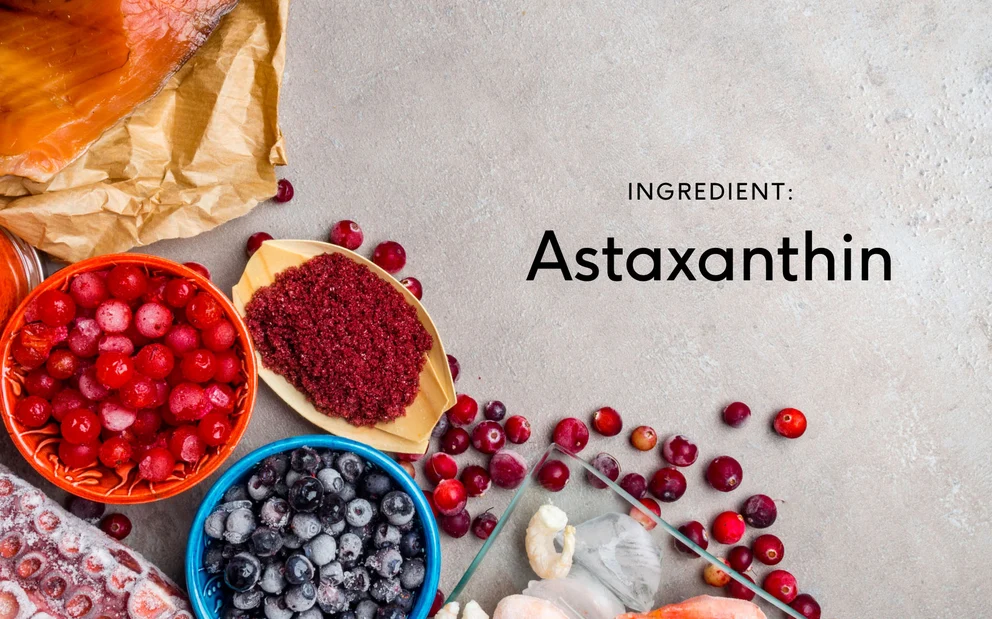
Researchers are now investigating whether natural compounds could help protect the kidneys from this type of damage. One interesting candidate is astaxanthin, a naturally occurring red-orange pigment found in microalgae, yeast, and marine organisms. It belongs to a group of compounds called carotenoids and is known for its antioxidant properties.
In a recent study, scientists tested astaxanthin in 30 male Wistar rats. The animals were divided into six groups, including a normal control group, a group exposed to the triple-whammy combination, a group receiving N-acetylcysteine, and three groups receiving different doses of astaxanthin. The treatment was given before and during exposure to the drug combination.
The results were promising.
The triple-whammy combination increased markers of kidney injury, including serum creatinine, urea, and urinary protein. It also caused visible structural damage in kidney tissue. Astaxanthin, particularly at 1.6 mg/kg, significantly reduced these harmful changes and improved the appearance of kidney tissue.
The researchers also explored why astaxanthin might be protective. Laboratory testing showed that astaxanthin had strong antioxidant activity. Molecular docking analysis suggested that it could interact with NF-κB and caspase-3, two proteins involved in inflammation and programmed cell death. These findings support the possibility that astaxanthin may protect kidney cells through antioxidant, anti-inflammatory, and anti-apoptotic mechanisms.
However, there is an important limitation: this was an animal study. The results cannot yet be assumed to apply directly to humans. The researchers also noted that molecular docking provides predictions that require experimental confirmation. Further studies are needed before astaxanthin can be considered a proven preventive treatment for drug-related kidney injury.
This research supports SDG 3: Good Health and Well-Being by exploring new ways to prevent serious kidney injury and improve medication safety.
The bigger lesson is that protecting the kidneys involves more than simply drinking water or avoiding unhealthy food. Understanding how medicines interact—and discovering safe ways to protect vulnerable organs—could become an important part of better healthcare in the future.
Article Metadata
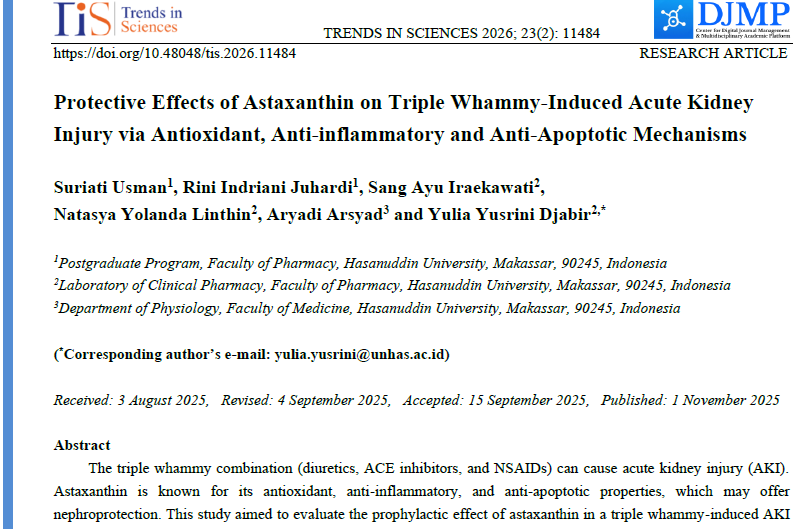
Article title: Protective Effects of Astaxanthin on Triple Whammy-Induced Acute Kidney Injury via Antioxidant, Anti-inflammatory and Anti-Apoptotic Mechanisms
Journal: Trends in Sciences 2026;23(2):11484
Publisher: Walailak University, Thailand
Publication date: 1 November 2025
DOI: https://doi.org/10.48048/tis.2026.11484
Authors: Suriati Usman; Rini Indriani Juhardi; Sang Ayu Iraekawati; Natasya Yolanda Linthin; Aryadi Arsyad; Yulia Yusrini Djabir
Aryadi Asryad
Email: aryadi.arsyad@med.unhas.ac.id