
A fall, traffic accident, or sports injury can cause more than a bruise or broken bone. A serious blow to the head can lead to traumatic brain injury (TBI), potentially affecting memory, movement, behavior, and everyday life for years. With effective long-term treatments still limited, scientists are exploring whether familiar natural substances could offer new possibilities for brain recovery.
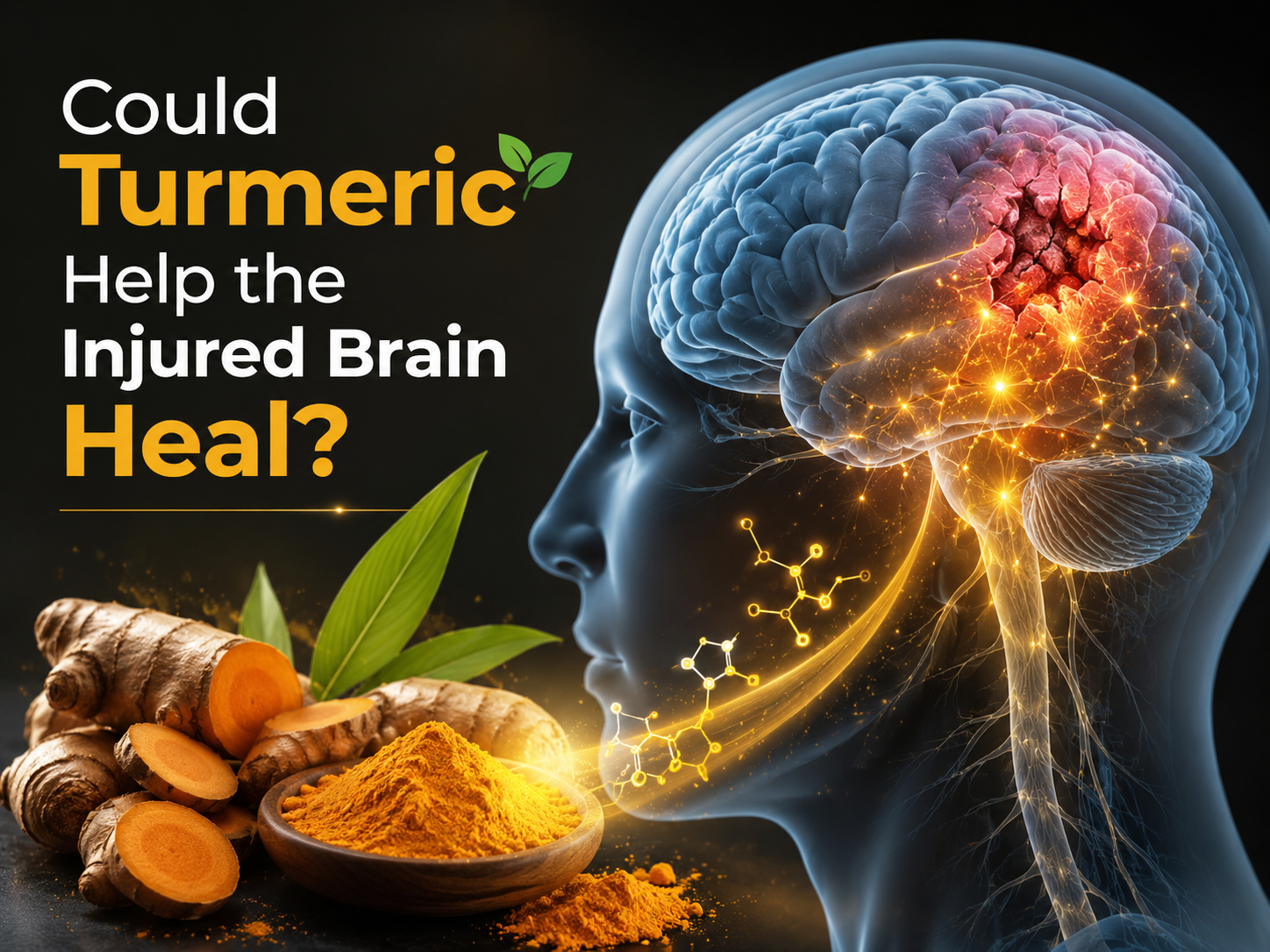
One promising candidate is turmeric, scientifically known as Curcuma longa. Its bright yellow color comes largely from curcumin, a compound that has attracted scientific attention because of its antioxidant and anti-inflammatory properties.
But can turmeric really help an injured brain?
A recent systematic review examined this question by bringing together evidence from studies published between 2019 and 2024. The researchers searched three major databases—Scopus, PubMed, and Crossref—and initially identified 237 potentially relevant articles. After screening titles, abstracts, and full texts, 15 studies were included in the final review.
The findings suggest that curcumin may influence several biological processes involved in brain injury. First, it may help reduce oxidative stress by activating the Nrf2 pathway, which plays an important role in the body’s antioxidant defense system. Second, curcumin may reduce inflammation by interfering with NF-κB signaling, a pathway involved in inflammatory responses.
Curcumin may also support neurogenesis—the process through which new nerve cells develop. The review highlights evidence that curcumin can increase brain-derived neurotrophic factor (BDNF), a protein involved in neuronal survival, growth, and brain plasticity. These mechanisms could potentially support the brain as it attempts to recover after injury.
There is another challenge, however: getting enough curcumin into the body. Curcumin has relatively low bioavailability, meaning that only a limited amount may be absorbed and used by the body. The review therefore highlights emerging delivery technologies, including nanoparticles and phytosomes, which may improve curcumin’s bioavailability.
This does not mean that eating turmeric or taking a curcumin supplement can currently replace medical treatment for brain injury. The evidence reviewed includes both human and animal studies, and the authors emphasize that more clinical research is needed to confirm its effectiveness and determine appropriate applications.
The study supports SDG 3: Good Health and Well-Being by highlighting the importance of developing better approaches to managing diseases and injuries that can cause long-term disability.
The message is encouraging but realistic: turmeric may contain a compound with remarkable biological potential, but science is still working to determine how that potential can safely become an effective treatment. For now, curcumin should be viewed as a promising research avenue—not a proven cure for traumatic brain injury.
Article Metadata
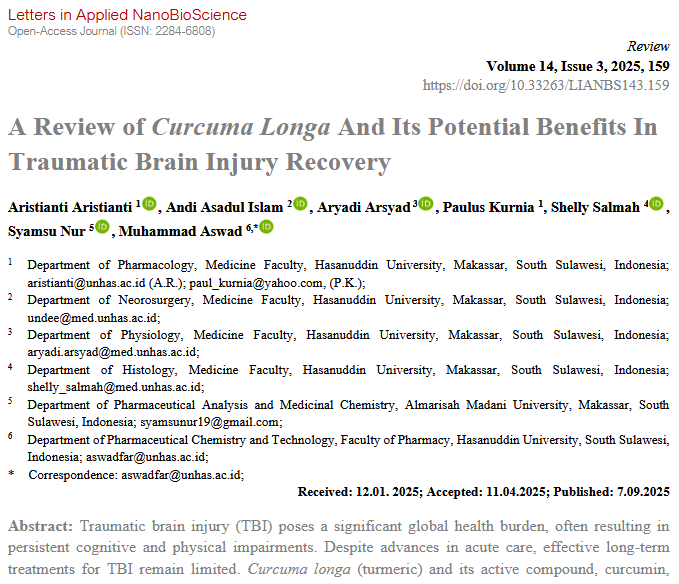
Article title: A Review of Curcuma Longa And Its Potential Benefits In Traumatic Brain Injury Recovery
Journal: Letters in Applied NanoBioScience 2025;14(3):159
Publisher: Letters in Applied NanoBioScience
Publication date: 7 September 2025
DOI: https://doi.org/10.33263/LIANBS143.159
Authors: Aristianti Aristianti; Andi Asadul Islam; Aryadi Arsyad; Paulus Kurnia; Shelly Salmah; Syamsu Nur; Muhammad Aswad
Aryadi Asryad
Email: aryadi.arsyad@med.unhas.ac.id