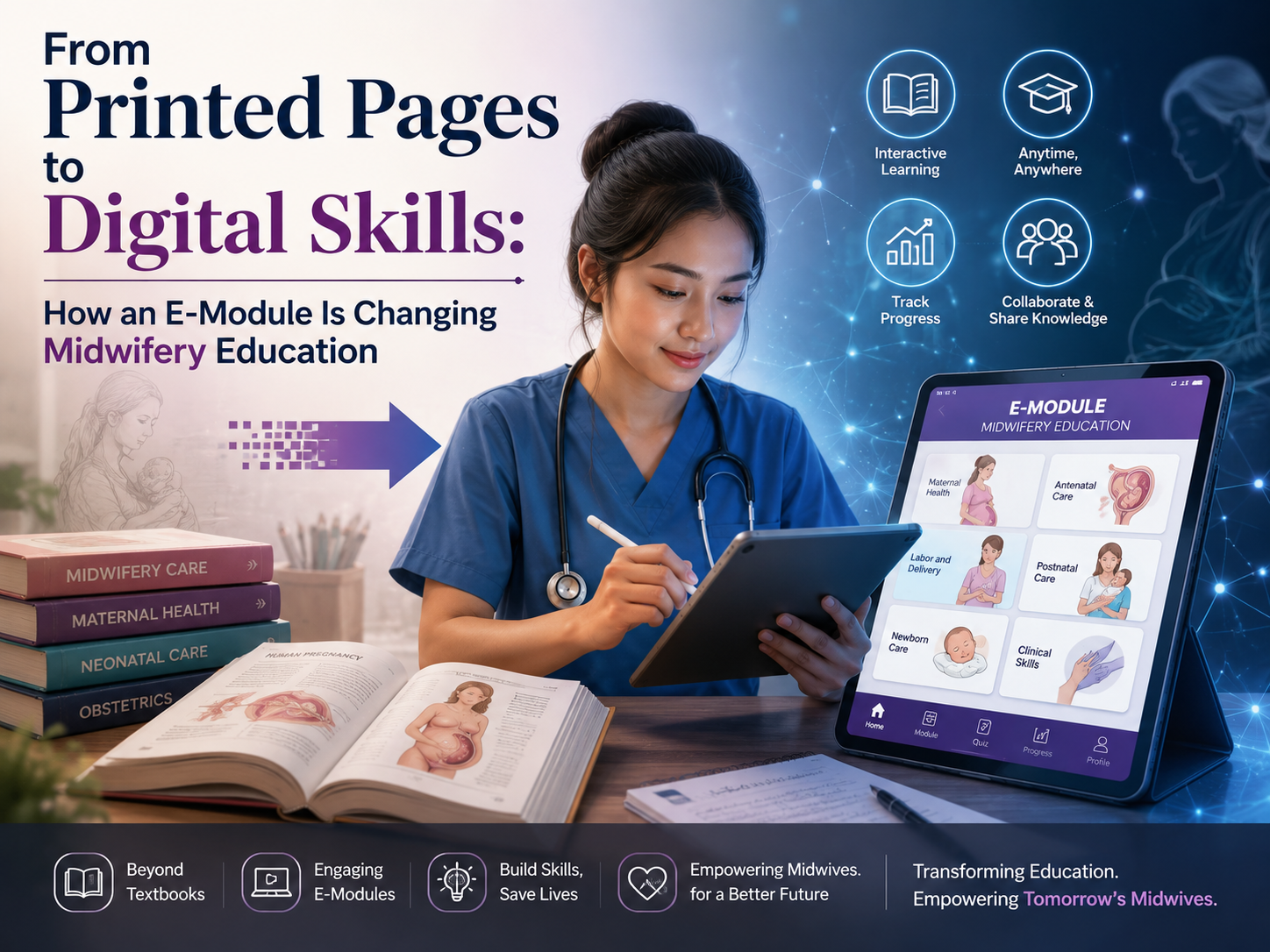

Learning how to perform a medical procedure is very different from simply reading about it. For midwifery students, knowing the theory is important—but being able to perform a procedure correctly and confidently is essential. So, could digital learning tools make clinical skills easier to master?
A recent study in Makassar explored this question by examining the use of an electronic module, or e-module, combined with blended learning to teach students how to insert an intrauterine device (IUD), also known in Indonesia as an intrauterine contraceptive device (AKDR).
The study involved 72 second-year Diploma III midwifery students at the Pelamonia Institute of Health Sciences. They were divided into two groups of 36 students. One group learned using an e-module supported by blended learning, while the control group received conventional learning using printed materials and face-to-face instruction. Students’ clinical skills were assessed before and after the learning process.
The results were encouraging.
Students who used the e-module showed a substantial improvement in their average skill scores. Their scores increased from 69.03 before learning to 80.44 after learning. Students in the control group also improved, although their reported post-test score was lower than that of the intervention group. Statistical analysis showed a significant difference between the two groups, indicating that the e-module approach produced greater improvement in clinical skills.
Why might digital learning work so well?
Unlike a traditional printed module, an electronic module can combine text, images, videos, and simulations. Students can revisit difficult material, study independently, and access learning resources without always needing an instructor beside them. For practical skills such as IUD insertion, this flexibility can be especially valuable.
The researchers also found that students who had both a mobile device and a laptop had greater odds of improving their skills than students who only had a mobile device. The intervention group itself also had significantly higher odds of skill improvement than the control group.
However, technology does not replace teachers. Instead, the study suggests that digital resources can strengthen classroom instruction by giving students another way to learn, practice, and review.
This research directly supports SDG 4: Quality Education, particularly the goal of providing effective learning opportunities and developing relevant skills. Better educational tools can help prepare future healthcare professionals to deliver safer and higher-quality services.
The lesson extends beyond midwifery. Education is changing from something students simply receive into something they can actively explore. When technology is designed around real learning needs, a digital module can become more than an electronic textbook—it can become a bridge between knowledge and practical skill.
For tomorrow’s healthcare professionals, that bridge could make a meaningful difference.
Article Metadata
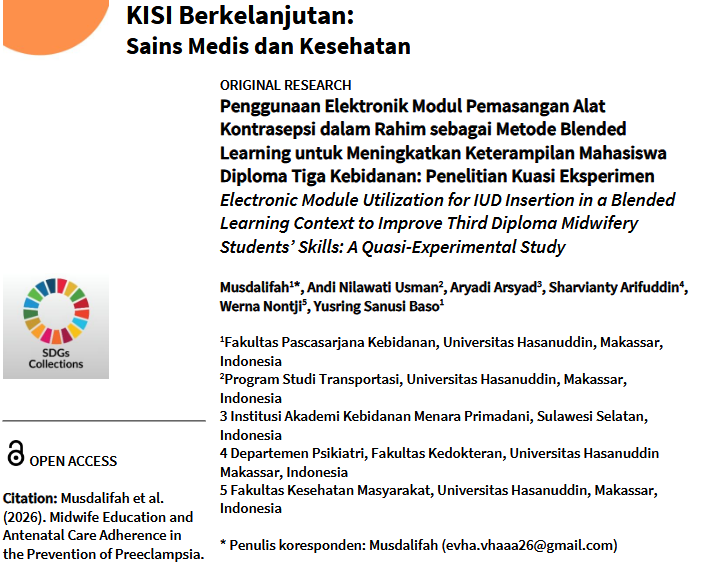
Article title: Electronic Module Utilization for IUD Insertion in a Blended Learning Context to Improve Third Diploma Midwifery Students’ Skills: A Quasi-Experimental Study
Journal: Kisi Berkelanjutan: Sains Medis dan Kesehatan 2026;3(1)
Publisher: PT Karya Inovasi Berkelanjutan, Indonesia
Publication date: 30 March 2026
DOI: https://doi.org/10.5281/zenodo.20017823
Authors: Musdalifah Musdalifah; Andi Nilawati Usman; M. Aryadi Arsyad; Sharvianty Arifuddin; Werna Nontji; Yusring Sanusi Baso
Aryadi Asryad
Email: aryadi.arsyad@med.unhas.ac.id