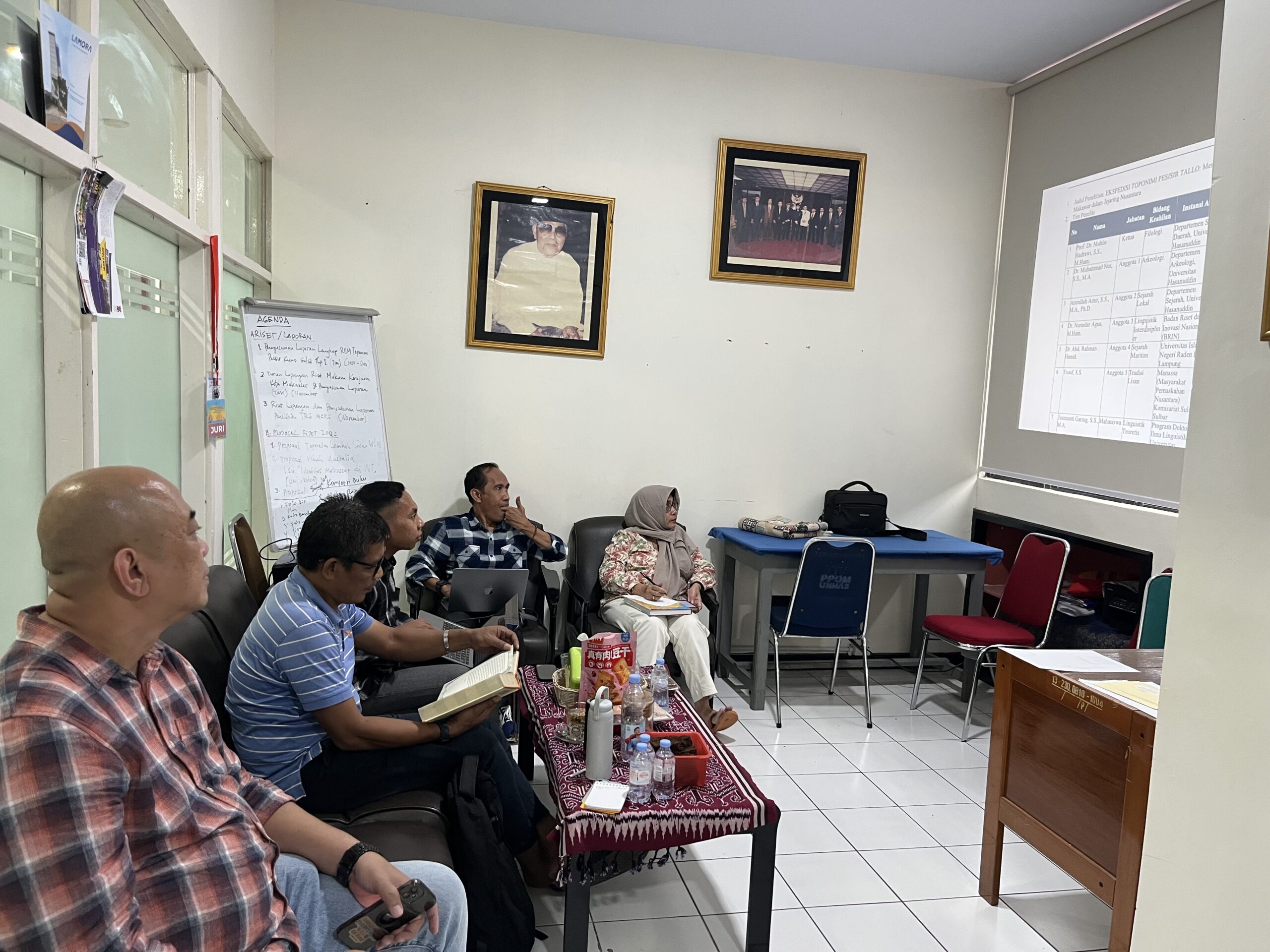

Makassar, South Sulawesi, Indonesia – On December 8, 2025, the TRG Manuscript and Culture Research Team convened at the Institute for Research and Community Service (LPPM), Hasanuddin University, to hold a comprehensive preparatory meeting for an upcoming coastal toponymy study in the Tallo area of Makassar City. This activity marked an essential pre-fieldwork phase, focusing on strengthening coordination among researchers, designing a structured research plan, and mapping key locations to be examined during the field study.
The meeting brought together a total of eight participants, including six researchers attending offline and two joining virtually. The session was led by Prof. Muhlis Hadrawi, the team leader, and supported by Dr. Muhammad Nur from the Department of Archaeology, Hasanuddin University, and Amrullah Amir, Ph.D., from the Department of History, Hasanuddin University. The team also included Dr. Nuraidar Agus from the National Research and Innovation Agency (BRIN), as well as two young researchers from the TRG Manuscript and Culture Research Group, Yusuf Sirajuddin, S.S., and Nur Amaliah Ramadhani, S.S. Additionally, the online participants were Dr. Abdul Rahman Hamid from UIN Raden Intan Lampung and Jusmianti Garing, M.A., from BRIN, whose contributions enriched the discussion through broader academic perspectives.
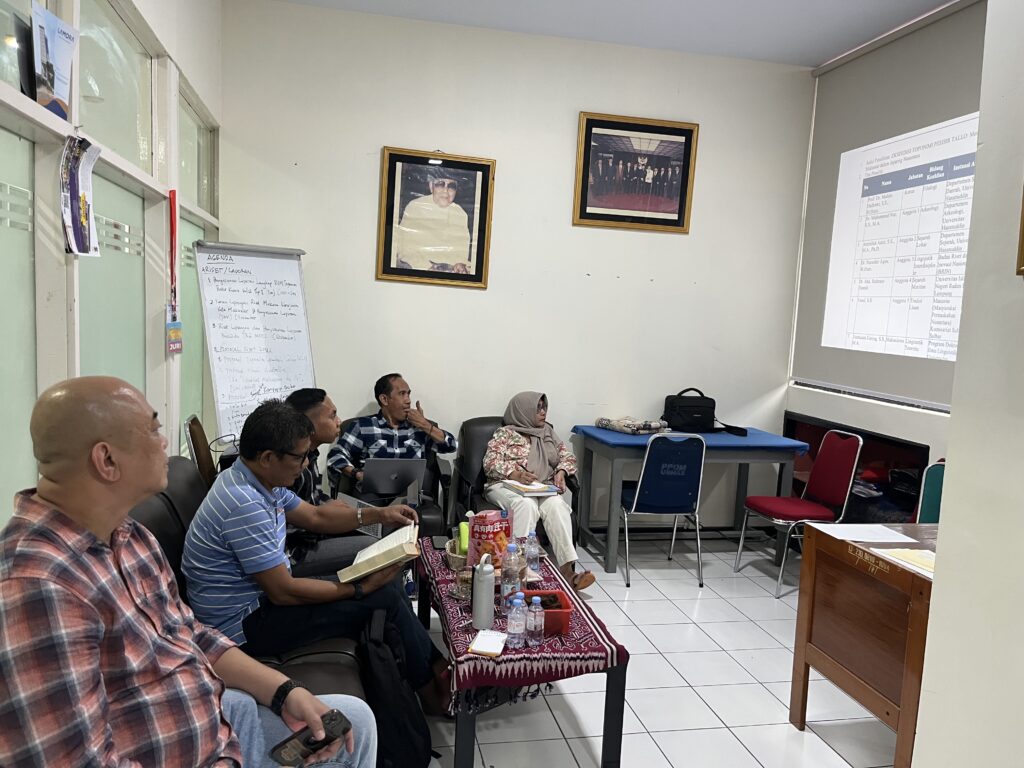
The primary objective of this preparatory session was to ensure that all aspects of the field study were systematically organized. Discussions covered the development of research instruments, the division of responsibilities among team members, the scheduling of field visits, and the preliminary mapping of coastal toponymic sites in the Tallo region. The study is expected to explore the historical and cultural meanings embedded in place names across the coastal landscape, reflecting long-standing interactions between local communities and their maritime environment.
This initiative is closely aligned with several Sustainable Development Goals (SDGs), particularly SDG 4: Quality Education, SDG 1: No Poverty, and SDG 17: Partnerships for the Goals, and is also relevant to SDG 14: Life Below Water. Through rigorous academic preparation and research, the activity contributes to SDG 4 by generating knowledge that can be disseminated for educational purposes, particularly in history, culture, and maritime studies. The documentation and promotion of coastal cultural heritage also hold potential to support SDG 1, as such knowledge can foster sustainable local development, including cultural tourism initiatives. Furthermore, the collaborative nature of this research, involving multiple institutions and interdisciplinary expertise, clearly reflects SDG 17 by strengthening partnerships in advancing scientific inquiry. The focus on coastal areas also connects to SDG 14, emphasizing the importance of understanding and preserving marine and coastal ecosystems through cultural and historical perspectives.
The meeting concluded with a clear operational framework for the upcoming field study, including agreed timelines, targeted research locations, and defined methodological approaches. This preparatory effort underscores the importance of careful planning in ensuring the success of field-based research.
Overall, the activity represents a significant step in advancing the study of coastal toponymy in Makassar. It highlights the role of collaborative research in bridging cultural heritage, academic inquiry, and sustainable development, ultimately contributing to a deeper understanding of the relationship between people, place, and the environment.